
Nantucket Board of Health continues public hearing on short-term rental large-event rules
Get AI-powered insights, summaries, and transcripts
Subscribe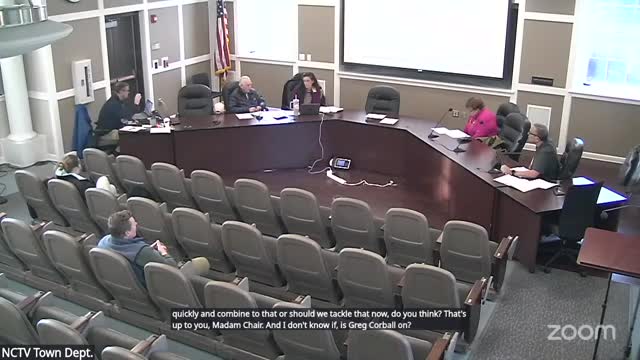
Summary
The Nantucket Board of Health on a continued public hearing Monday took up a proposed regulation that would require short-term rental properties to obtain a permit before hosting large gatherings and allow the board to place conditions on those permits.
The Nantucket Board of Health on a continued public hearing Monday took up a proposed regulation that would require short-term rental properties to obtain a permit before hosting large gatherings and allow the board to place conditions on those permits.
The draft regulation, prepared by town counsel Greg Corbould, would give the board authority—under the town’s short-term rental bylaw—to require a permit for gatherings that exceed the registered overnight capacity and to impose conditions such as limits on hours, outdoor speakers, alcohol, parking plans and police details. Corbould described the draft as a “working document” intended to start the discussion, not a final form.
Board members and the public pressed for clearer definitions and practical enforcement measures. Several board members said the draft’s initial definition of “gathering” was too broad; Carrie (board member) warned that a literal reading could treat small dinners as violations and be used to harass renters. Board members discussed several options that would scale the threshold to a property’s approved capacity—examples included doubling the registered capacity as the point that triggers permitting.
Town counsel said his intent was to focus the regulation on short-term rentals because owners who live on-site have different accountability to neighbors than transient renters. Corbould said enforcement would be complaint-driven: police and health complaints about noise or parking would trigger investigations and, if violations were found, fines or suspension of a short‑term rental registration could follow.
Board members sought explicit language placing responsibility on property owners to prevent unauthorized gatherings and to notify renters. Members discussed requiring owners or their on-island agents to sign acknowledgements, to post guest limits in listings (Airbnb, VRBO, agent pages) and to include lease language making clear that gatherings require permits. The board asked counsel to craft sample language that could be included in rental listings and occupancy agreements.
The draft also would require applicants to submit a parking plan approved by the police chief or designee; multiple members asked the board to clarify realistic turnaround times and whether police have capacity to review plans during peak summer months. Counsel said the police review is intended to give technical input on whether a proposed parking plan is feasible, not to reserve public parking spaces.
Members debated lead time for permit applications. Several board members and members of the public said lengthy lead times (45+ days) would be appropriate for large, planned events such as weddings; others pointed out that last-minute gatherings occur and requested a balance—staff or board review timelines and whether staff could issue permits administratively must be resolved.
The draft initially barred charging admission at any gathering; members recommended narrowing that restriction to address bona fide nonprofit fundraisers and First Amendment activities. The board discussed exemptions or special handling for nonprofit fundraising events (for example, by requiring 501(c)(3) documentation) and asked counsel to return revised text.
Public commenters, including owners of event businesses and neighbors in Madaket, emphasized two recurring points: large gatherings can create traffic and safety hazards if not planned, yet many community events rely on local caterers and support businesses; and owners of primary residences who host occasional events should not be treated the same as commercial short-term rental operators. Several attendees urged the town to coordinate with the town’s events and culture office and licensing to avoid duplicative permitting.
After extended discussion, the board voted to continue the public hearing to the next meeting and instructed counsel to revise the draft to incorporate tightened definitions (including the double-capacity proposal for a gathering), clearer language on owner responsibility and agent availability, treatment of fundraising events, and practical timelines and procedures for parking and police-review requirements. The board also asked staff to consult with the town office that handles larger events and to return suggested fines and other enforcement options.
The board made no final policy changes Monday; the hearing was continued to allow staff and counsel to redraft and to permit additional public comment at the next meeting.