Get Full Government Meeting Transcripts, Videos, & Alerts Forever!
Get email alerts on the Streets Resurfacing topic
No spam. Unsubscribe anytime.
Council Members Raise Alarm Over Street Resurfacing Budget; Seek Ward-by-Ward Breakdown
Summary
Councilmembers questioned whether the proposed $12 million resurfacing allocation is sufficient after a severe winter, asked for ward-level spending reports and urged the administration to show material and labor breakdowns for resurfacing and pothole work.
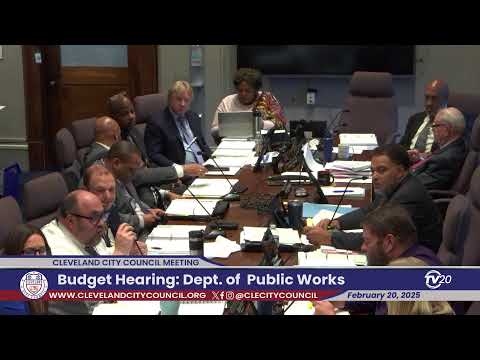
Councilmembers used the street-construction review to press city staff on whether the proposed 2025 resurfacing funds are sufficient after a severe winter that council members said left many local streets in poor condition.
The administration told the committee the 2025 resurfacing program totals roughly $12 million across a combination of capital and operating transfers; finance staff said some reimbursements and bond proceeds are accounted for in separate lines and agreed that the total can be difficult to read in the packet. Councilmembers asked the administration to provide a clear, ward-by-ward breakdown showing what the city has actually committed for resurfacing and what remains available, excluding council members— individual supplemental allocations.
Members repeatedly asked what the city pays per ton for asphalt and whether in-house resurfacing work yields cost savings compared with outside contractors. Administration staff said many resurfacing activities have been brought in-house to capture efficiencies but acknowledged that a formal cost-benefit analysis should be provided. They also warned that lead times for paving equipment and material price volatility could make rapid scaling difficult and that spring may require supplemental funding to meet pothole repair needs.
Council asked for quick follow-ups: (1) an itemized, easily readable reconciliation that shows the total resurfacing budget (capital plus operating transfers), (2) the per-ward allocations already committed and (3) a short cost-comparison showing typical per-street material and labor costs for in-house versus contracted resurfacing.