Get Full Government Meeting Transcripts, Videos, & Alerts Forever!
Get email alerts on the Housing Rehabilitation topic
No spam. Unsubscribe anytime.
LaSalle informational meeting details $650,000 CDBG housing‑rehab program; applications now open
Summary
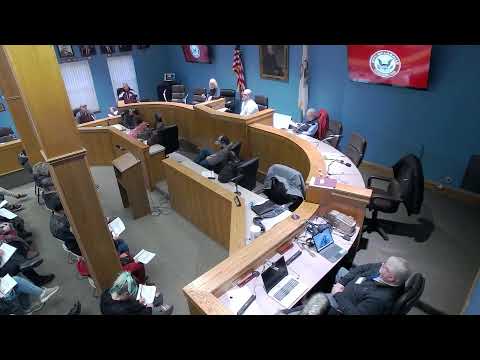
The City of LaSalle and the North Central Illinois Council of Governments (NCICG) held an informational meeting about a $650,000 Community Development Block Grant (CDBG) housing rehabilitation program that will fund repairs for owner‑occupied homes in LaSalle.
The City of LaSalle and the North Central Illinois Council of Governments (NCICG) held an informational meeting about a $650,000 Community Development Block Grant (CDBG) housing rehabilitation program that will fund repairs for owner‑occupied homes in LaSalle.
Connie Buchanan, grant administrator with NCICG, said the program "is to renovate approximately 10 single family owner occupied homes for persons that have low to moderate income," and described the project as a two‑year grant that aims to make homes safer, healthier and more energy efficient.
Nut graf: The grant, provided through the Illinois Department of Commerce and Economic Opportunity (DCEO) and administered under the federal CDBG program, targets very‑low‑income seniors and people with developmental or physical disabilities for the highest priority work. Officials said the program also prioritizes health‑and‑safety improvements such as handicap‑accessible bathrooms, electrical upgrades and new roofs, and will coordinate weatherization with Tri‑County Opportunities to extend the grant’s reach.
Program basics and eligibility Connie Buchanan explained that eligible properties must be single‑family, owner‑occupied homes inside the City of LaSalle limits and that rentals, mobile homes and multi‑unit properties are not eligible. Applicants must meet income guidelines; Buchanan gave an example that a two‑person household with gross income under about $53,400 would qualify for a particular income band, and said households in the very‑low‑income bracket receive additional points on the application.
Applicants must supply proof of gross income for every household member over 18 (W‑2s, pay stubs or Social Security statements), a homeowner’s insurance declaration page, current utility bills and a copy of the real estate tax bill. Buchanan said NCICG can scan documents at appointment times and will assist applicants who need help completing the packet.
Application, selection and timeline Buchanan said NCICG will accept applications until it receives a sufficient pool of qualifying applications (staff said they typically want about 15 qualifying applications to select roughly 10 homes and keep 4–5 on standby). She said the program is not strictly first‑come, first‑served: applications are scored and a housing committee will select the highest‑scoring properties.
The first six months after applications open will be used to process applications and verify eligibility; environmental reviews required by the grant typically take about 90 days to clear. After environmental clearance, a project manager will revisit selected homes to finalize the scope of work and reverify eligibility. Construction will be scheduled in groups of about three to four homes on roughly 12‑week rotations until funds are expended over the grant’s two‑year period.
Funding terms and homeowner obligations Work funded by the grant is provided through what Buchanan described as a five‑year forgivable loan: homeowners agree to remain in the rehabilitated home for five years after work completion to prevent quick resale for profit. Buchanan said the forgivable loan is null and void if the homeowner moves in with family, enters a nursing home, or in the event of death, and that these circumstances do not create obligations against an estate.
Scope of work and contractor rules Buchanan listed typical eligible work: roofs, windows, siding, flooring, plumbing, electrical (including replacement of knob‑and‑tube wiring), bathroom accessibility (walk‑in showers, grab bars, ADA‑height toilets), and installation of interconnected smoke and CO detectors. She confirmed tuckpointing and door repairs are eligible when necessary to preserve or make the home safe.
Contractors will bid on sealed packages; bids are opened by the housing committee and the contract is awarded to the lowest responsible bidder. Contractors must be licensed general contractors, carry minimum insurance, be lead‑certified for work on pre‑1978 paint, and not be debarred in SAM.gov, Buchanan said.
Coordination with other programs Buchanan said NCICG works with Tri‑County Opportunities for weatherization and HVAC work. She explained combining weatherization services with CDBG funds can allow the grant dollars to stretch further by shifting eligible items to the partner program when appropriate.
Questions from residents and administrative details Residents asked whether the application is available online; Buchanan said she can email a printable copy but the form is not fillable online, and that City Hall can print copies on request. She said applications are submitted sealed in a Manila envelope stamped by NCICG so the City does not review or receive applicants’ private documents. Applicants keep the required lead‑risk information packet; contractors performing work must be lead certified.
Buchanan said homeowners cannot be reimbursed for work already completed and cannot personally select and pay contractors; contracts and payments are handled through the grant process. She offered appointments and assistance — including home visits for homebound applicants — and said additional printed applications will be left at City Hall after the meeting.
Where to get more information Brent Bader, deputy city clerk and director of community development for the City of LaSalle, opened and closed the meeting and said the event was being livestreamed and that applications will be available at City Hall. NCICG representatives encouraged interested homeowners to contact Connie Buchanan at the address and phone information provided on the application packet handed out at the meeting.
Ending: The informational meeting concluded after a resident question period and distribution of printed applications; officials said they will notify applicants about application status as the housing committee ranks and selects properties.