Get Full Government Meeting Transcripts, Videos, & Alerts Forever!
Get email alerts on the Human Trafficking Education topic
No spam. Unsubscribe anytime.
Senate approves bill requiring age-appropriate human-trafficking prevention education in grades 4–12
Summary
SB 23-30 requires schools to provide annual, age-appropriate human-trafficking prevention and awareness education for students in grades 4–12 and provides an appropriation for implementation support; bill passed 45–2.
Senate Bill 23-30, requiring annual human-trafficking and exploitation prevention education for students in grades 4–12 and offering resources for parents and guardians, passed the Senate 45–2 on Feb. 20, 2025.
Senator Axman, sponsor, said the bill mandates developmentally appropriate instruction covering trafficker tactics, online exploitation risks, reporting and community resources. The bill permits schools to partner with nonprofit third parties to deliver instruction and requires the Department of Public Instruction (DPI) to receive an appropriation to assist implementation and provide resources. Schools must offer parents and guardians workshops or materials to support the school-based instruction. The amendment on the floor included an appropriation of $48,000 for initial curriculum support; the sponsor acknowledged some stakeholders considered that amount limited for statewide curriculum development.
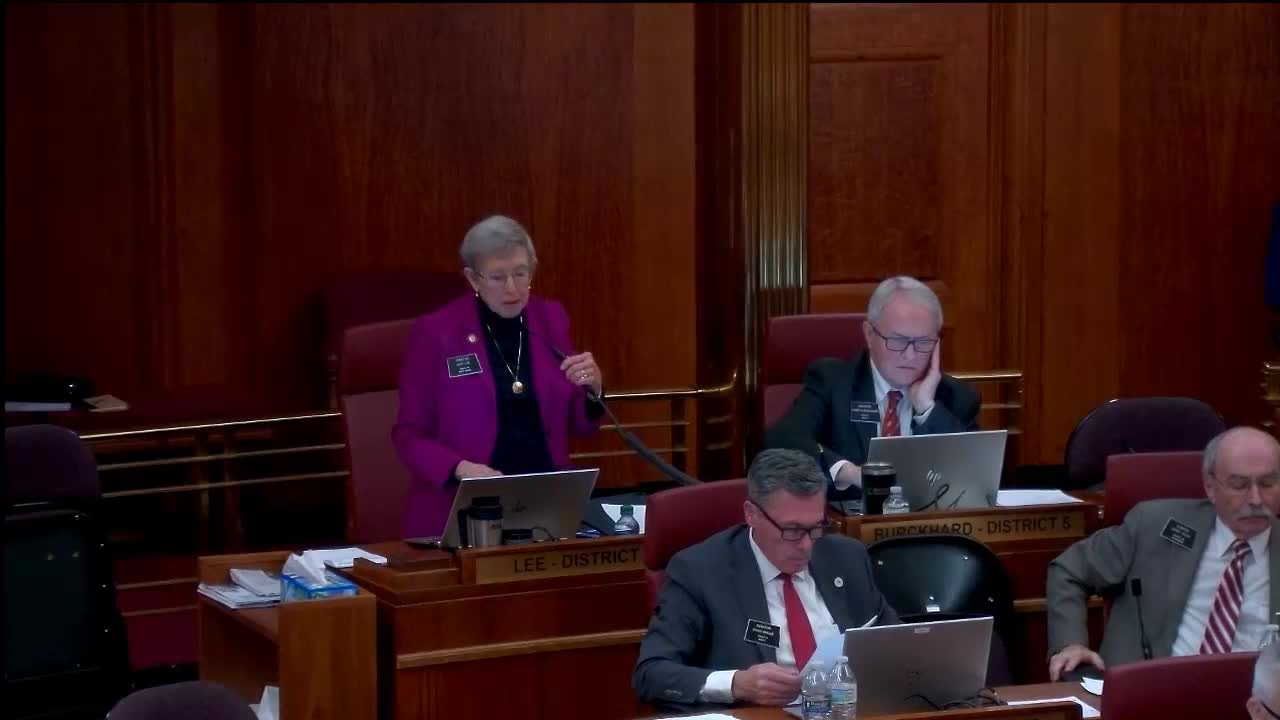
Proponents argued the measure is preventative and pointed to national statistics cited by witnesses showing minors are often targeted online; sponsors emphasized the highest-risk age ranges are typically middle school years. Opponents cautioned that some districts already integrate related topics into health and safety curricula and asked for flexibility and sufficient funding. Senator Lee noted the State School Boards Association recommended allowing districts to integrate trafficking prevention into existing personal-safety and online-safety programs, to ensure developmentally appropriate materials and to minimize administrative reporting burdens. The sponsor said the bill was amended after committee testimony to address some of those concerns, and he emphasized flexibility for districts to partner with outside organizations and use free resources.
The bill passed on final reading, 45 ayes, 2 nays. The measure requires DPI to assist implementation and offers districts flexibility on delivery methods while setting a statewide requirement for annual education on trafficking prevention for grades 4–12.