Get Full Government Meeting Transcripts, Videos, & Alerts Forever!
Get email alerts on the Lobbying Restrictions topic
No spam. Unsubscribe anytime.
Bill would bar registered lobbyists from chamber floors; proponents cite quiet work space, opponents call it a step backward
Summary
Senate Bill 2315 would prohibit registered lobbyists from being on the legislative chamber floors and attach a misdemeanor penalty for violations; sponsor said the move would create a quieter workspace for lawmakers.
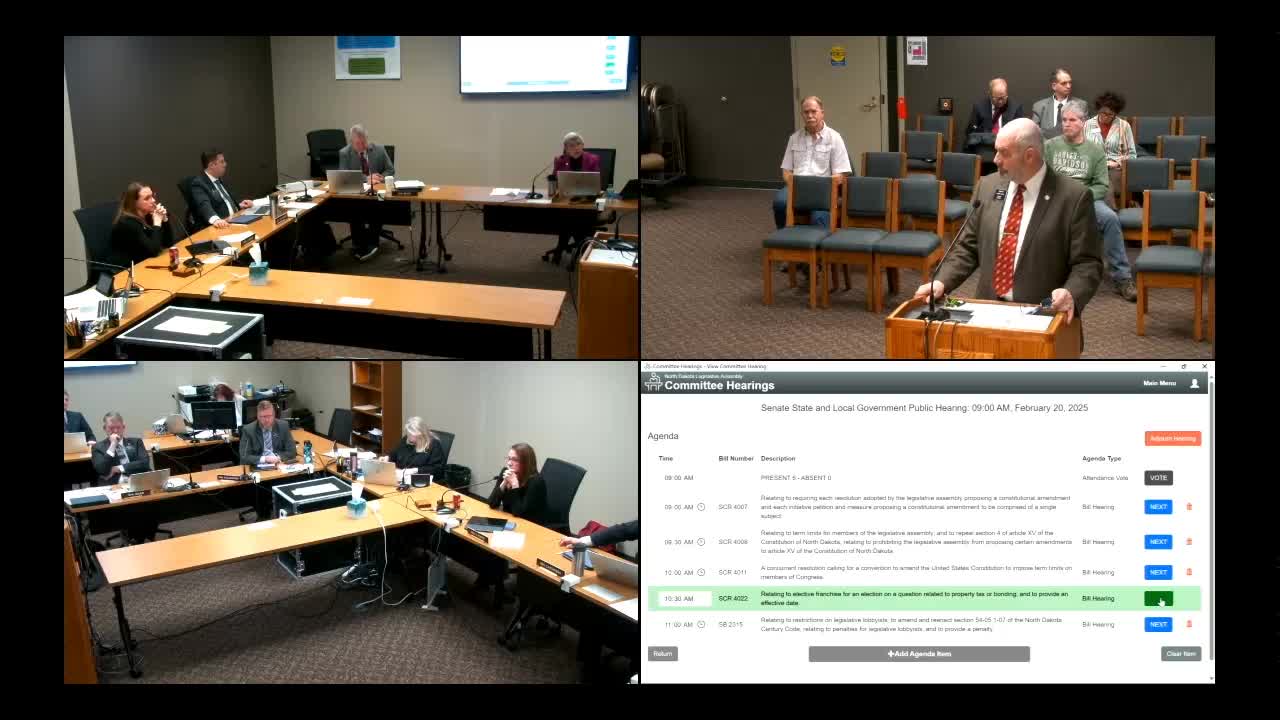
Senate Bill 2315, sponsored by Senator Grama, would prohibit registered lobbyists from being on the floor of the legislative chambers and make a violation a misdemeanor. The bill would allow lobbyists in the gallery and in other areas of the building and would permit entry to the majority leader’s office with written permission, according to the sponsor’s explanation.
Supporters described the measure as a way to preserve the chamber as a workspace for lawmakers. Lanny Kenner testified in favor and said, "Our our legislators need a safe place away from the lobbyists," and urged legislators to spend more time taking constituent input rather than hearing from lobbyists on the chamber floor.
Several members of the committee and multiple industry witnesses opposed the bill. Julie Ellingson of the North Dakota Stockmen's Association told the committee restricting lobbyists from the chambers would "impair, not improve, the legislative process in North Dakota" given the state's citizen legislature and lack of staff. Jonathan Fortner of the Lignite Energy Council and Jeff Simon of the Western Dakota Energy Association said lobbyists serve as educators who gather information from members and operators, sort technical details and bring back concise, timely information to legislators who otherwise lack the staff to perform that work.
Committee members raised operational and fairness questions. Senator Brownberger asked whether a rule granting access only through the majority leader could disadvantage the minority party; Senator Castaneda and others asked how the proposal would affect constituents who register as lobbyists to speak on behalf of organizations. Sponsor Senator Grama said the bill was intended to create quieter workspace on the floor and pointed to other states with time limits or floor restrictions; he acknowledged the criminal penalty language was present in current law and was not newly introduced by his bill.
The committee heard multiple witnesses and did not advance the bill during the hearing.