Get Full Government Meeting Transcripts, Videos, & Alerts Forever!
Get email alerts on the Term Limits State topic
No spam. Unsubscribe anytime.
Opponents urge committee to respect voters' 2022 approval as hearing opens on term‑limits resolution
Summary
Witnesses and lawmakers debated Senate Concurrent Resolution 4,008, a resolution tied to legislative term limits. Proponents argued courts and future campaigns could make the change necessary; opponents said the 2022 voter-approved term limits expressly restrict the legislature from altering them and urged the committee to defer to voters.
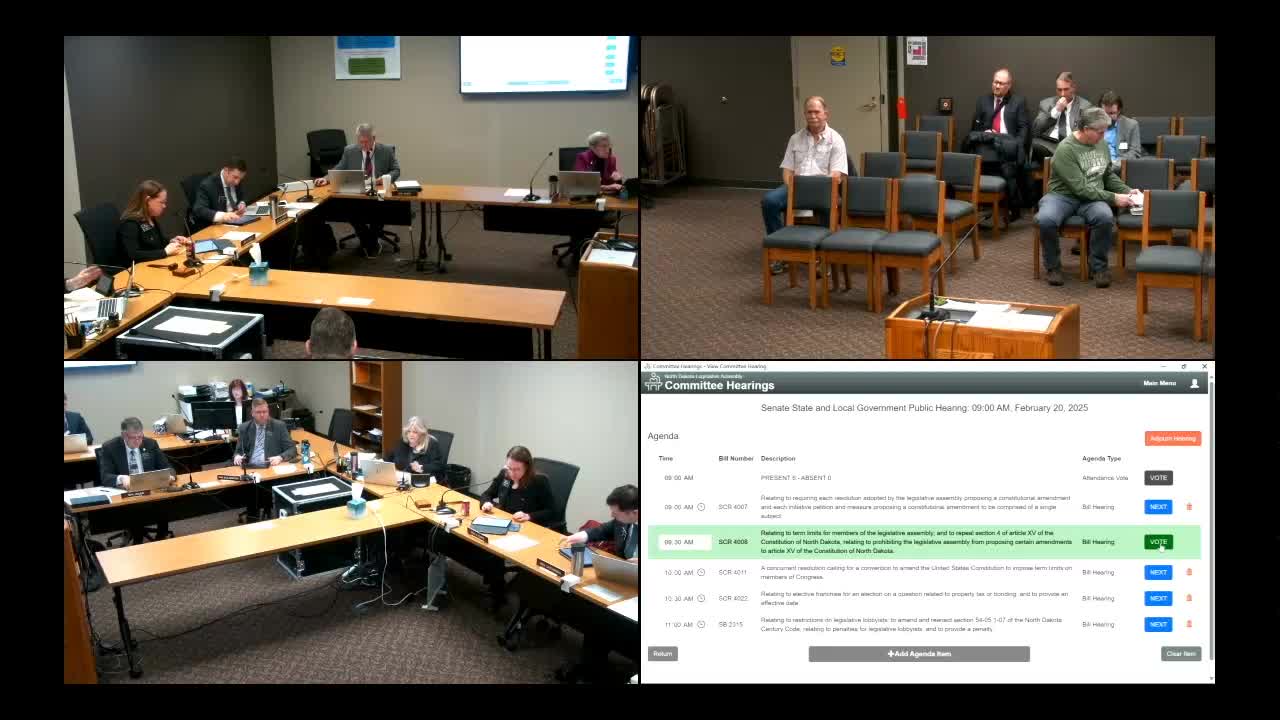
The committee opened a hearing on Senate Concurrent Resolution 4,008, a measure addressed by multiple witnesses as an attempt to alter or circumvent voter‑approved legislative term limits. Testimony focused on whether the legislature has authority under Article 4 to propose changes the electorate reserved to citizen initiative.
Scott Tillman, chief operations officer for U.S. Term Limits, testified in opposition to SCR 4,008. He said the 2022 amendment limiting legislative terms included language that reserves authority to change those limits to the people through the initiative process and that the legislature is therefore prohibited from proposing changes to those term limits. Tillman told the committee the group will continue pushing for a national article‑V convention to impose term limits on Congress but urged lawmakers to "honor the choice of voters from only 2 years ago, and oppose SCR 4,008."
Multiple witnesses from around the state echoed that position. Lanny Kenner, a District 7 resident, asked the committee to give SCR 4,008 a "do not pass" recommendation, saying the voters approved term limits with more than 63 percent support in 2022 and that changing the rule would be a "slap in the face" to citizens. Dustin Geverlo of the North Dakota Watchdog Network said he drafted language used in Section 4 of Article 15 and that the provision reserved to the people the right to change the term-limits provision; he urged clarity on partial terms and suggested drafting changes to avoid unintended gaps caused by vacancies or redistricting.
Senators on the committee asked how the amendment affects current legislators. Senator Brownberger said the change already affects some members who now face shortened term limits as a result of redistricting and staggered terms. Senators and witnesses debated whether the legislature should be able to correct drafting errors or address partial terms without returning to voters.
The committee held testimony and left the record open; no vote occurred during the hearing.