Get Full Government Meeting Transcripts, Videos, & Alerts Forever!
Get email alerts on the Nuisance Ordinance topic
No spam. Unsubscribe anytime.
City attorney outlines broad rewrite of Rollins nuisance and abandoned-vehicle rules
Summary
City Attorney Mayberry presented a largely rewritten nuisance code in a Feb. 18 work session, proposing clearer definitions, a 10-day "fix-it" notice, a tiered fine schedule, a new abatement and lien recovery process, and moving abandoned-vehicle procedures into the motor-vehicle code to follow Wyoming statutes.
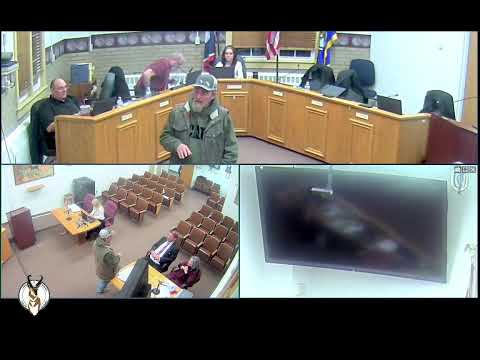
City Attorney Mayberry presented proposed, largely rewritten nuisance and abandoned-vehicle ordinances at the Rollins City Council work session on Feb. 18, 2025, telling the council the package is intended to simplify enforcement and better align nuisance enforcement with the city’s beautification goals.
Mayberry said the rewrite separates and clarifies matter currently bunched in Title 8, chapter 16, provides clear definitions for terms such as “abate,” and streamlines enforcement by using the city’s existing citation process with an initial grace period. “What we want to do is…we came out a 10 day time to clear it,” Mayberry said, describing the proposed default notice period. He said the draft would allow a person who receives a citation to request an extension, but if an extension is not requested, the opportunity is waived and penalties could apply.
The nut of the proposal is shifting from a multi-step administrative appeal structure to a citation-first system that preserves due process while reducing enforcement burden. Mayberry said the draft builds in (1) a written notice with a 10-day cure period (adjustable by council), (2) an option to request an extension, (3) a tiered fine schedule for repeat violations and (4) a conversion to misdemeanor prosecution if citations are not resolved through the citation path. “This complies with all due process requirements,” he said.
Key provisions and council discussion
- Notice and cure: The draft relies on a short cure period (10 days by default). Mayberry said the shorter, fixed period reduces variable discretion by officers but can be lengthened if council prefers.
- Extension process: Citation recipients would be permitted to request an extension; if no extension is requested they would forfeit that avenue. Mayberry explained the aim is to provide a fair but administrable process for residents who need more time (for example, work schedules) while avoiding unequal discretionary application.
- Tiered fines and collection: The draft replaces a near-uniform $300 citation with a tiered fine structure (Mayberry suggested $100 for a first violation that is not cured, rising to higher amounts for repeats within specified time windows). He said unpaid abatement costs would be recoverable through existing city collection procedures and by special assessment mechanisms with the county, where available; the draft would bill owners or persons in control for city abatement costs plus an administrative charge (Mayberry described a 50% admin fee on abatement costs in the draft example).
- Abatement authority and city entry: The draft states that, after required notice, the city may abate a nuisance and recover costs. For issues not visible from public rights-of-way, the draft allows the usual consent/ warrant process: first seek consent to enter; if denied, seek a warrant. Mayberry said this preserves constitutional protections while allowing inspectors to investigate concealed hazards.
- Derelict and abandoned vehicles: Mayberry proposed clearer definitions. Under the draft, “derelict vehicle” would include vehicles lacking major components (wheels, motor, battery, transmission) that have been inoperable for more than 10 days except when undergoing active repair. He said abandoned-vehicle procedures would move from the nuisance chapter into the motor-vehicle title and adopt Wyoming statutory procedures for removal and notice.
- Weeds and noxious plants: The draft incorporates state statute language for noxious weeds and references a noxious-weed handbook as an attachment. Mayberry said the handbook would guide enforcement of listed noxious species.
- Snow, ice and sidewalk clearing: Council members and others raised ADA access concerns downtown and in residential areas. Mayberry noted the downtown sidewalk clearing requirement exists in Title 12 and that ADA-funded curb-and-gutter projects carry compliance obligations. He said he removed a strict residential sidewalk-clearing mandate because Rollins’ weather and wind can make strict enforcement impractical, but asked council whether they wanted distinct rules for downtown walkability versus other neighborhoods.
- Dead animals and processing: The current code requires disposal of game and animal carcasses within 12 hours after being “dressed.” Several council members and attendees questioned that time frame as too short for hunters who may field-dress on weekends and suggested 24–48 hours or definitions that align with Wyoming Game and Fish processing terminology. Mayberry said he would research statutory and Game & Fish definitions and return with recommended language and timelines.
- Noise, odors and other enumerated nuisances: The draft retains broad nuisance provisions for noise, offensive odors, stacked tires, stagnant water, obstruction of watercourses and dense smoke. Mayberry noted the ordinance language is intentionally broad in places and would leave certain assessments of “reasonableness” to enforcement officers, while encouraging council to identify high-priority health-and-safety categories that should receive expedited attention.
- Tracking and data: Mayberry proposed systematizing recordkeeping and citation data (he referenced the city’s citation software) so the city could measure activity by street and violation type and adapt programs as needed.
Why it matters
Mayberry framed the rewrite as both a technical clean-up and an operational change: clearer definitions and a citation-based path aim to reduce administrative appeal loops and create a practical enforcement model that preserves due process, supports a planned beautification program, and gives staff the tools to prioritize hazards. He said the draft had been developed with input from code officers, police, court staff, community development staff and the municipal judge.
Next steps and outstanding issues
City Attorney Mayberry said he will return with a redlined ordinance and will research statutory definitions (Game & Fish; Wyoming statutes) and the county special-assessment MOU that enables the city to place liens for unpaid abatement costs. Council members requested more detail on snow/sidewalk rules, the dead-animal time frame and how derelict-vehicle exceptions for active repair would be handled. Mayberry asked council for guidance on the 10-day cure period, extension standards and priorities for beautification-driven enforcement. He did not present an adoption vote at the work session.
Ending
Mayberry closed by noting the draft is intended to be iterative: “If something isn't working, we can fix it,” he said, and asked council for feedback to guide the next draft for formal readings.