Get Full Government Meeting Transcripts, Videos, & Alerts Forever!
Get email alerts on the Charitable Gaming Bingo topic
No spam. Unsubscribe anytime.
Subcommittee votes to raise per‑session bingo prize cap and allow additional sessions and locations
Summary
House Bill 455, which would lift several legacy restrictions on charitable bingo—allowing up to three sessions per day, raising per‑session prize caps and increasing payment allowances for workers—passed the subcommittee by voice vote.
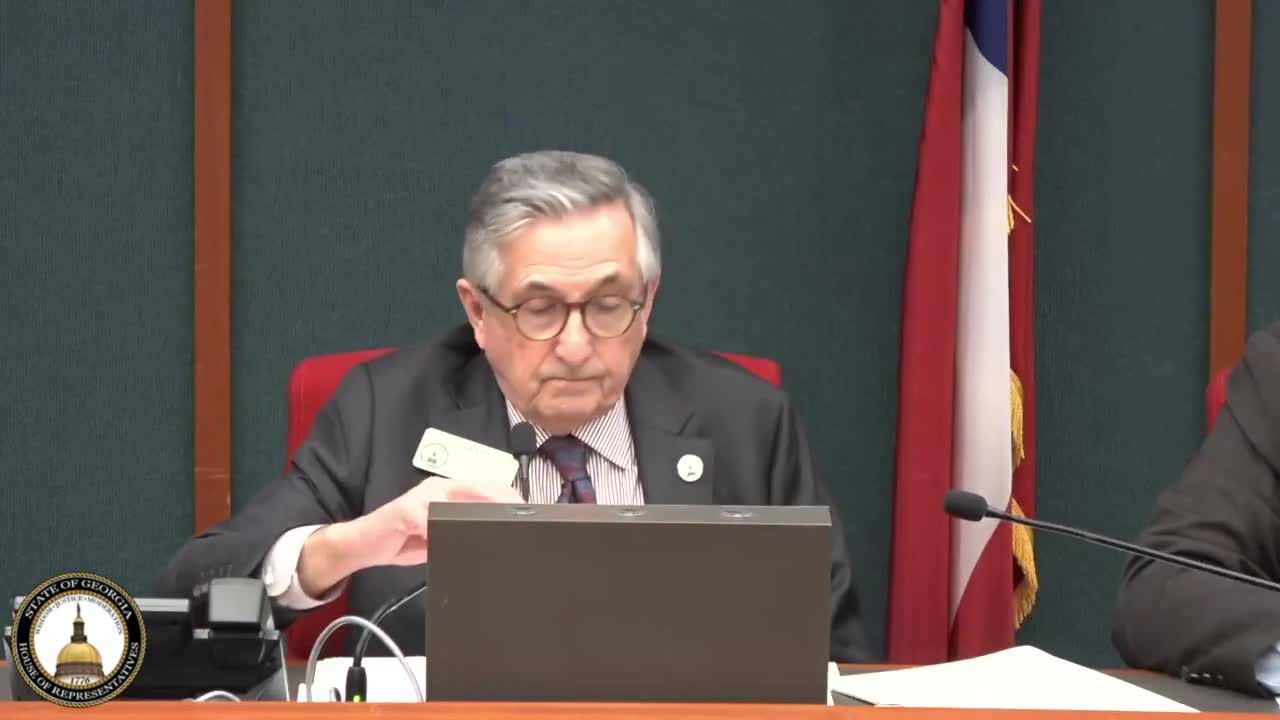
House Bill 455, a set of revisions to Georgia’s charitable bingo statutes, was advanced by the regulated‑industries special subcommittee on Oct. 12, 2025.
The presenter described the bill as modernizing antiquated limits on charitable gaming: increasing allowable sessions per day from one to up to three, keeping a monthly cap of 31 total sessions, raising the per‑session cash/gift cap from $3,000 to $6,000, and adjusting allowable payments to session personnel from $30 per session to up to $150.
"If you look online... we're moving it to they can have 3 bingo sessions in a day," the presenter said. The presenter said the monthly cap of 31 sessions remains: organizations could run multiple sessions on a single day but not exceed 31 sessions in a month. He described the changes as intended to help charitable organizations that use bingo proceeds for charitable purposes.
Committee members asked how proceeds are monitored. The presenter said the Internal Revenue Service and the Georgia Department of Revenue can review reporting by nonprofits and charities, and law enforcement may investigate potential abuses. "That would be the Internal Revenue Service, and it would also be the Department of Revenue," he said.
Members also asked about allowing games at multiple locations under a license; the presenter explained the bill replaces a single‑location restriction with a location‑specific license approach so, for example, a licensee with multiple event spaces on the same property (a ballroom, beach club, etc.) could move sessions between those spaces without needing separate licenses.
A motion to pass the bill was made, seconded and carried by voice vote; the chair announced the bill passes out of the subcommittee. No roll‑call tally is recorded in the transcript.