Get Full Government Meeting Transcripts, Videos, & Alerts Forever!
Get email alerts on the Motor Vehicle Franchise topic
No spam. Unsubscribe anytime.
Subcommittee advances update to Georgia motor vehicle franchise law, including data protections and OTA rules
Summary
A regulated‑industries subcommittee passed Senate Bill 81, updating Georgia’s motor vehicle franchise law to address data protection, over‑the‑air updates, allocation transparency and showroom/gallery limits for direct‑sale manufacturers.
Senate Bill 81, a package of updates to Georgia’s motor vehicle franchise law, was advanced by the special subcommittee of the Regulated Industries Committee on Oct. 12, 2025.
The bill, presented by Chairman Powell on behalf of Senator Brass, would add findings about modern vehicle technology, impose data‑protection obligations for dealerships, require manufacturers to disclose and compensate dealers for over‑the‑air (OTA) changes, and increase transparency and fairness in vehicle and parts allocation. It would also clarify limits on direct‑sale manufacturer showrooms, allowing display but not on‑site sales.
The legislation updates a franchise framework the presenter said dates to the early 1970s and was later embedded in the Georgia Constitution in the early 1990s. "This is from Senator Brass," Chairman Powell said. "You've got the manufacturers and you got the dealers... it’s all based about the integrity for the consuming public in Georgia." Powell summarized five sections: legislative findings including recall service; dealer data protections; OTA disclosure and compensation; allocation transparency; and showroom/gallery rules for direct sellers.
On data, the bill aims to prevent "unauthorized access, sharing, and selling of dealership databases," to permit dealers to audit and back up their systems, and to allow data integrators access where authorized. On OTA updates, Powell said the bill would "require manufacturers to disclose to each dealer each accessory function on a new vehicle that might be initiated, updated, changed, or mandated through the OTA" and to compensate dealers for work tied to those updates. The allocation provisions would require manufacturers to distribute parts and vehicles on a "fair and equitable" basis and increase transparency when shortages occur.
The bill also addresses manufacturers who sell directly to consumers without franchise dealers. Under the proposal, direct sellers could operate showrooms or galleries for display and information but could not complete sales contracts on the showroom floor; sales would have to occur online or through other channels that do not circumvent the franchise system, Powell said.
Committee members asked clarifying questions about direct sales and consumer protections; Powell and other committee members noted past disputes involving manufacturers who bypass franchise dealers and said the bill reflects negotiated compromises among manufacturers and dealers. "Every bit in this bill has been agreed on by the manufacturers, by the dealerships and all the parties," Powell said.
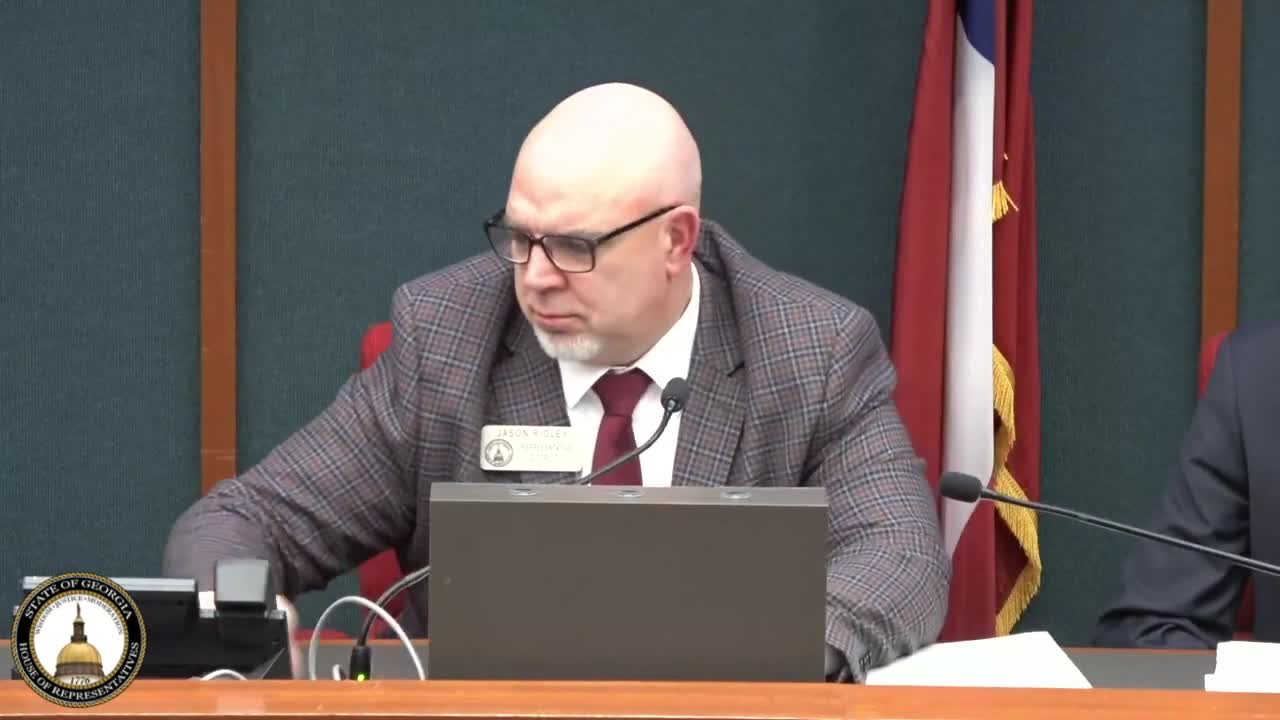
A motion to pass the bill was made, seconded, and the chair called the voice vote. Committee members answered "aye" and the chair announced the bill passes out of the subcommittee. The transcript does not record a roll‑call tally.
If enacted, the bill would change dealer obligations and manufacturer disclosures but would not be final law until the full legislature considers the measure and, where applicable, subsequent legislative steps are completed.