Get Full Government Meeting Transcripts, Videos, & Alerts Forever!
Get email alerts on the Blue Bikes topic
No spam. Unsubscribe anytime.
Boston committee reviews $775,855 MPO grant to replace Bluebikes stations, pilot electrified docks and convert meter poles to bike racks
Summary
The Boston City Council Committee on Planning, Development, and Transportation on Feb. 20 held an informational hearing on a $775,855 Community Connections grant to replace Bluebikes stations, pilot two electrified docks and convert decommissioned single-space parking meter poles into bicycle racks.
The Boston City Council Committee on Planning, Development, and Transportation on Feb. 20 reviewed Docket 0396, an order to accept and expend $775,855 from the Massachusetts Department of Transportation’s Community Connections Program (passed through the Boston-region MPO) to fund replacement of aged Bluebikes stations, pilot electrification at a small number of docks, and conversion of decommissioned single-space parking meter poles to bicycle racks. The committee held an informational hearing and did not vote; Chair Sharon Durkin said she intends to move the acceptance at the next full Council meeting.
What the grant would fund
Kim Fultz, Director of Boston Bluebikes, told the committee the $775,855 grant would support three projects: (1) replacement of roughly 10–12 existing Bluebikes stations that have reached the end of their useful life (stations are typically replaced after about 10 years); (2) a pilot to electrify two Bluebikes stations so e-bikes can charge in-dock rather than relying on battery swapping; and (3) conversion of parking meter poles—made surplus by the city’s meter modernization—into bike racks using sleeves that slide over the poles. Fultz said the grant requires municipal matching funds of $193,963, which will be drawn from the Transportation Department’s existing budget and does not require a new appropriation.
Fultz described the electrification pilot as a limited test to learn permitting, design and operating costs before any larger rollout: “Electrified stations are expensive … before we decide that it makes sense to invest at a larger scale, we want to try this out,” she said. The Bluebikes team notes that electrifying roughly 30 of the busiest stations in a larger program could all but eliminate the need for battery swapping, because the highest-use stations see the most turnover.
Accessibility, parking and liability questions
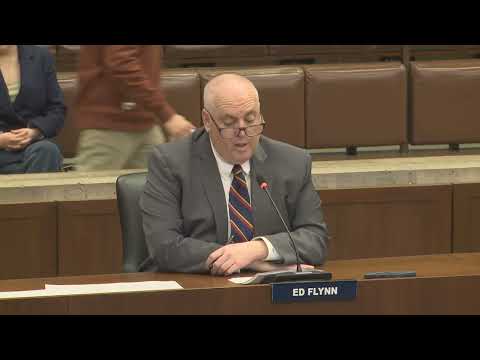
Councilors raised concerns about sidewalk access and parking. Councilor Edward Flynn said constituents in neighborhoods such as South Boston and Chinatown report a “parking crisis” and expressed concern that station placement could reduce parking available to families, seniors and people with disabilities. Fultz said the stations listed for replacement are existing locations and that the grant would replace stations in their current configurations; she said she did not believe any replacements in District 2 would require removing additional parking spaces but offered to confirm in writing.
On sidewalk access, Fultz said Bluebikes maintains a standard to preserve at least six feet of clear pedestrian passage beyond the back of a station or the rear tire of a docked bike; she said occasional pinch points may occur but the program strives to keep clearance well above ADA minimums.
Councilor Flynn also asked whether electrified shared bikes create liability exposure and whether the city requires registration or insurance for users. Kim Fultz said Bluebikes’ shared e-bikes are capped at 18 miles per hour and the operator (contracted as Lyft Bikes and Scooters) and the city share maintenance and ownership responsibilities under the contract. Users sign a usage agreement as a condition of riding; Fultz said she was not aware of any lawsuits related to Bluebikes during her tenure.
Station list, helmet programs and community input
Fultz read a preliminary list of stations proposed for replacement by neighborhood (East Boston, Allston, Fenway, Roxbury, Seaport, South Boston, Brighton, Charlestown, Roslindale, Dorchester and others) and offered to provide a district-level breakdown in writing. A previously proposed site at the Bridal of Honor Park (Meadow Livona Park in transcript) will not be installed following community input, the department said; councilors thanked veterans and neighborhood residents who weighed in.
The committee also discussed helmet access and safety programming. Bluebikes’ operator is contractually required to offer helmets for sale at a discounted rate online, and the Transportation Department said it will continue to require that provision in future contracts. The city’s income-eligible membership program (a $5 per year membership option) includes provision of helmets on request from City Hall stock, and the Boston Public Health Commission runs grant programs enabling local organizations to apply for helmet-distribution funding.
Next steps
No committee vote was taken Feb. 20. Chair Sharon Durkin said she will bring both grant acceptance orders to the next full City Council docket for a vote and that staff will provide requested additional material, including a station-level list and written confirmation on parking impacts where requested.