Get Full Government Meeting Transcripts, Videos, & Alerts Forever!
Get email alerts on the Elections topic
No spam. Unsubscribe anytime.
Committee advances measures to change early-ballot return rules and require ID for in-person drop-offs
Summary
Senate Bill 1,001 would change when and how early ballots can be returned and requires ID or signature-roster attestation for late drop-offs; sponsors said the changes will speed election night results and equalize treatment of in-person voters, while civil-rights groups warned of disenfranchisement and lines.
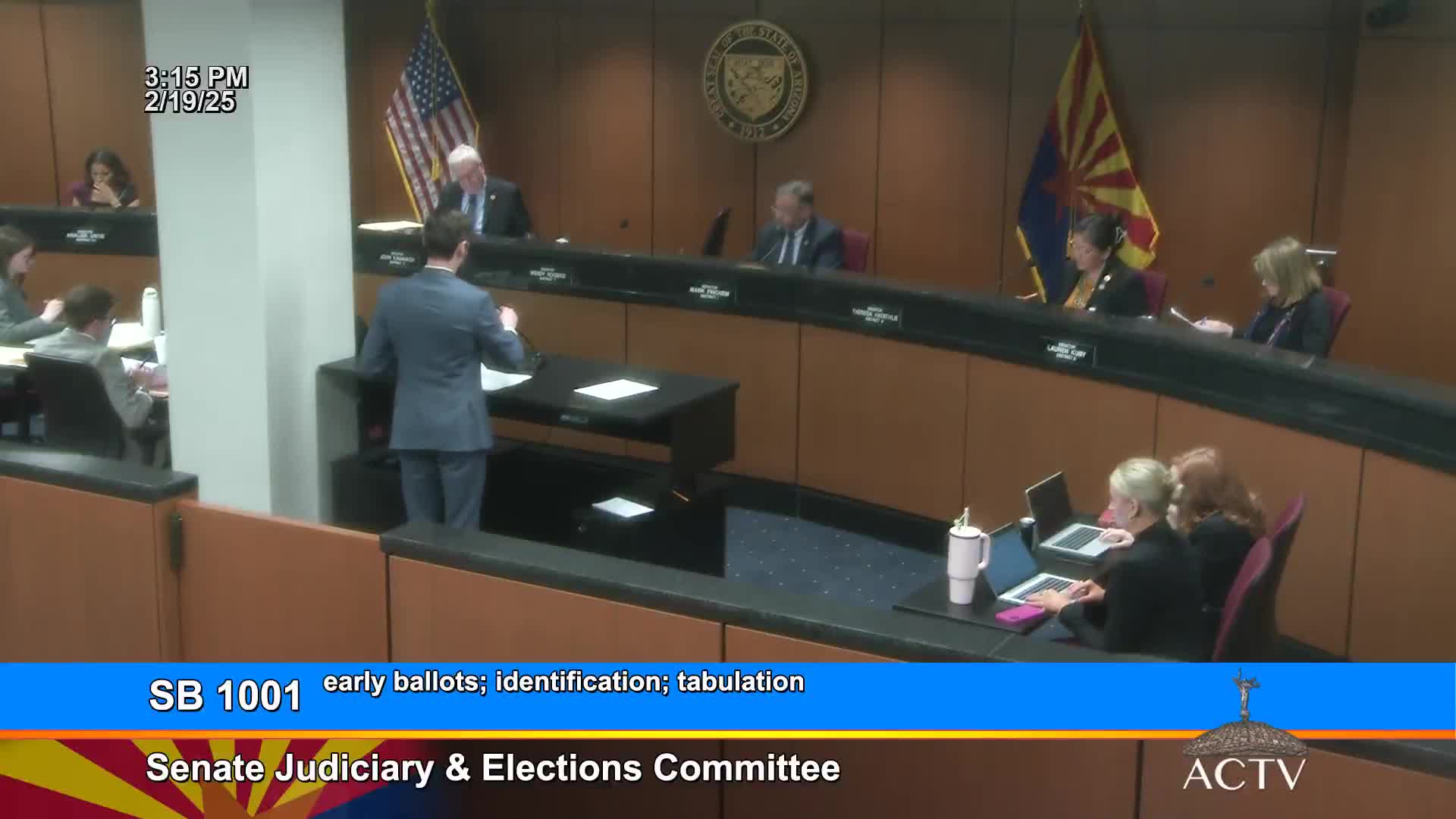
The Senate Judiciary and Elections Committee advanced Senate Bill 1,001 after testimony that split along election-access and security lines.
Sponsor Senator Mesnard said the bill is intended to speed reporting of election results and to treat voters who drop off ballots on election day the same as those who vote in person. The core change would require voters who bring a voted early ballot to a polling place after 7 p.m. the Friday before an election to present identification and sign the signature roster or the electronic poll book; counties could choose local procedures for checking ID. The bill also includes provisions about when early-ballot returns must be delivered to the county recorder, on-site tabulation requirements, and a cure process similar to the existing signature-cure timeline.
Caitlin Contreras of the ACLU of Arizona testified in opposition, saying the measure creates barriers for voters who may not have ID on hand and could produce long lines and confusion during the busy final days of voting; she noted that the Legislature set a later timeline for other ID-verification reforms and urged the committee to wait and evaluate those changes. Opponents also said county recorders have warned the change would create operational burdens and raise the risk that voters who rely on caregivers or other agents to drop off ballots could be disenfranchised.
Sponsor Mesnard said the bill would preserve early-ballot convenience while subjecting all election-day voters to similar verification procedures, and he said curing for missing ID would work the same way as signature cures after an election. The committee adopted a motion and gave the bill a due-pass recommendation in a recorded vote (4 ayes, 3 noes).