Get Full Government Meeting Transcripts, Videos, & Alerts Forever!
Get email alerts on the Public Safety topic
No spam. Unsubscribe anytime.
Panel approves bill adding elected officials and animal-control officers to aggravated-assault statute
Summary
Senate Bill 1038 would make assaults against elected officials and animal-control officers aggravated offenses; supporters said animal-control officers face serious, sometimes deadly risks while opponents warned that repeated additions dilute the statute’s meaning.
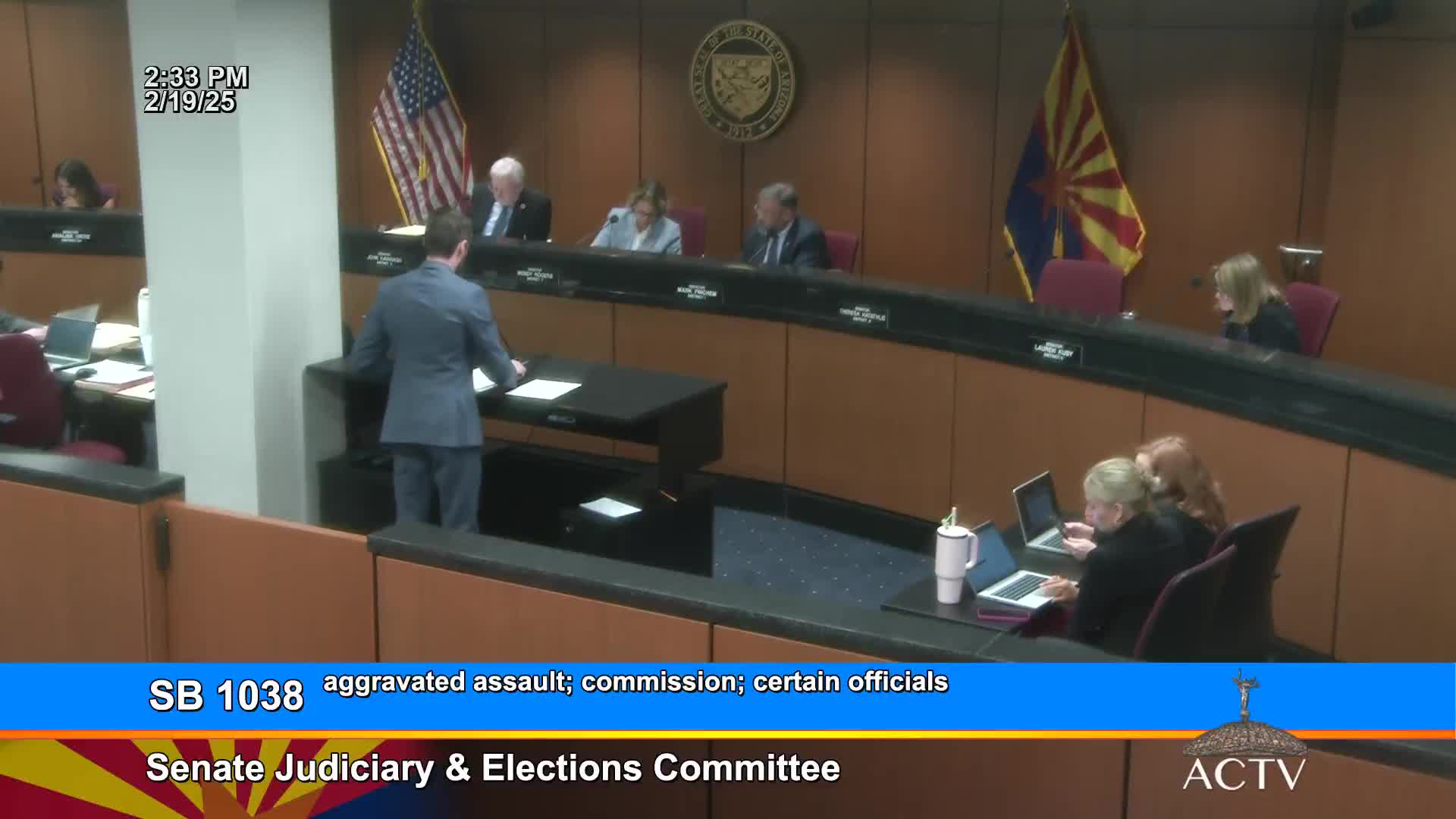
The Senate Judiciary and Elections Committee voted to advance Senate Bill 10-38 on Feb. 17 after supporters — including animal-control advocates and a police association representative — described assaults on animal-control officers as frequent and sometimes violent. The bill adds animal-control officers and elected officials to the list of protected classes for which an assault is classified as an aggravated assault under state law.
Sponsor Senator Kavanaugh said the change parallels existing protections for code-enforcement officers, park rangers and other public-service workers and emphasized the bill applies only when the assault occurred because the victim held the protected role. Karen Michael of Animal Defense League of Arizona and Humane Voters read testimony from a senior animal-control officer who described repeated violent incidents against animal-control workers including stabbings, machete attacks and vehicular assaults; the Arizona Animal Control Association submitted a letter describing assaults that required major medical care.
Arizona Attorneys for Criminal Justice urged caution. Katie Gibson McLean said every addition to the statute risks diluting the special-status protections and noted that ordinary assault already can be prosecuted; she highlighted prosecutions where noncontact conduct (threats, spitting) can meet assault elements and urged restraint before expanding protected classes.
Committee members debated deterrence and “just deserts” arguments. Some members said enhanced penalties are appropriate when someone is assaulted because of their public-service role; others said evidence for deterrence is thin and adding protected categories repeatedly reduces meaningfulness.
The committee recorded a due-pass recommendation for SB 10-38 (4 ayes, 3 noes).