Get Full Government Meeting Transcripts, Videos, & Alerts Forever!
Get email alerts on the Rent Reporting Pilot topic
No spam. Unsubscribe anytime.
Committee advances pilot to report tenant rent payments to credit agencies, rejects multiple amendments
Summary
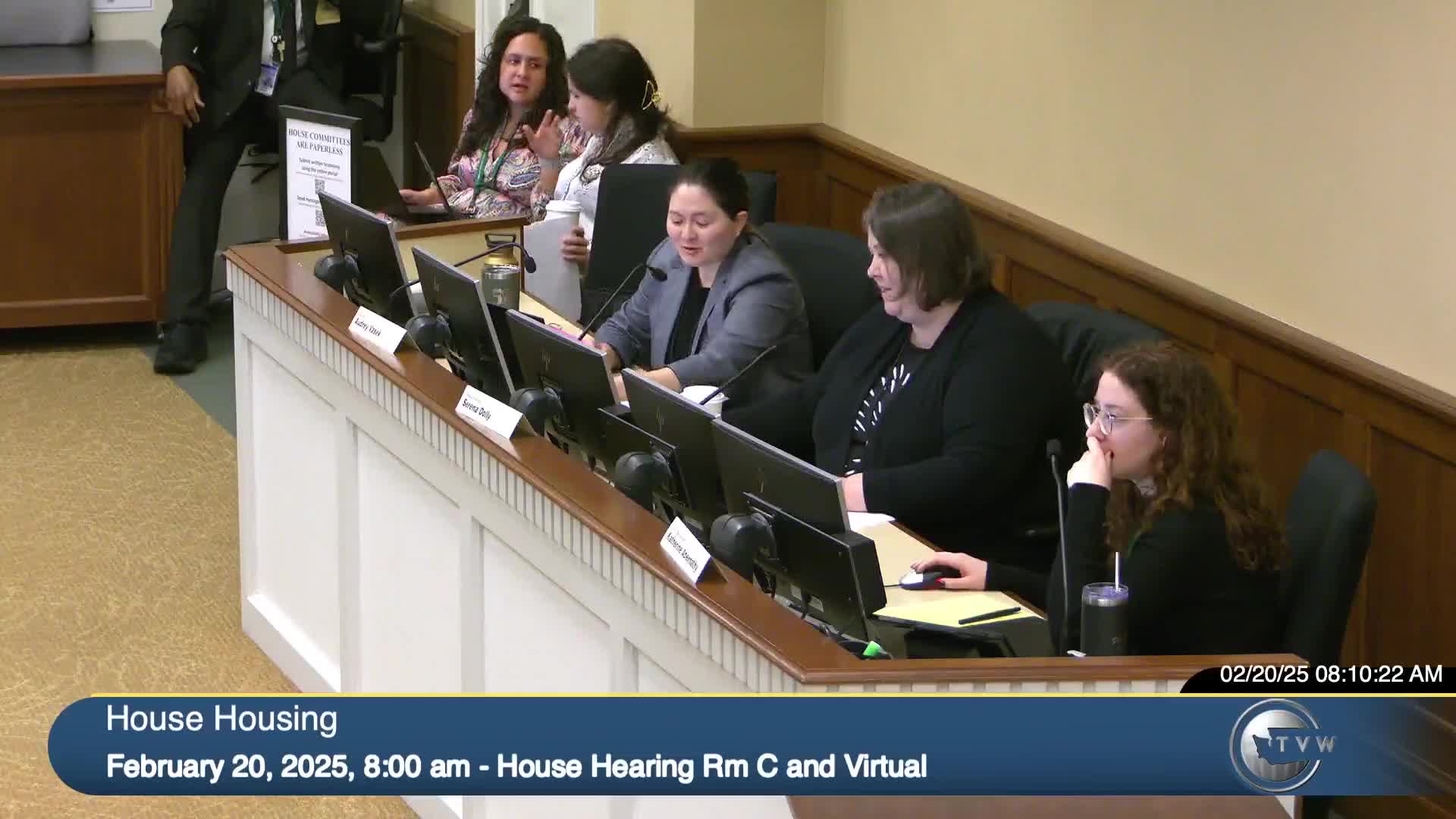
The House Housing Committee voted Feb. 20 to report substitute House Bill 19‑27, a Department of Commerce‑administered pilot to report tenant rent payments to consumer reporting agencies, to the House with a due‑pass recommendation.
The House Housing Committee on Feb. 20 voted to report substitute House Bill 19‑27, a pilot program to report tenant rent payment information to consumer reporting agencies, to the full House with a due‑pass recommendation.
The substitute transfers responsibility for the pilot from the Department of Financial Institutions to the Department of Commerce, allows Commerce to administer the program directly or contract with a third party, and requires Commerce to adopt rules, guidelines or policies for reporting mechanisms. The substitute directs recruitment of participating landlords and tenants by March 1, 2026, and requires the pilot’s final report to include a comparison of participating tenants’ credit scores before and after participation (with tenant authorization).
Why it matters: Supporters said rent‑payment reporting can help tenants build credit and expand access to housing and homeownership. Opponents warned of administrative burden on small housing providers, privacy and consumer‑protection questions, and potential negative effects if reporting excludes late or missed payments.
Staff briefing: Audrey Vasek, staff to the committee, summarized the substitute and a set of six amendments. Proposed amendments included raising the pilot recruitment targets (from 10 landlords/100 tenants to 20 landlords/200 tenants), eliminating tenant opt‑out, requiring landlords be reimbursed for reasonable expenses, mandating the reporting of all tenant payments (timely, late and missed), replacing the pilot with a statewide free program, and replacing the pilot with a Washington State Institute for Public Policy study.
Key debate: Representative Jacobson moved amendments to increase participant counts and to require landlords be reimbursed; Representative Lowe moved an amendment to require reimbursement; Representative Jacobson also moved amendments to require reporting of all payments and to remove the tenant opt‑out. Supporters argued broader reporting and larger samples would give more useful data; opponents said the pilot should remain small, voluntary and simple so Commerce can implement it.
Amendments and votes: The committee considered several amendments; none of the substantive amendments described in staff briefings were adopted. Roll calls and voice votes rejected proposals to increase participant numbers, to mandate landlord reimbursement or to require reporting of all payments. One amendment to replace the pilot with a study (moved by Representative Jacobson) was also not adopted. The sponsor said Commerce and stakeholders will continue to refine pilot parameters.
Final action: Substitute House Bill 19‑27 was reported out of committee on a roll call of 10 ayes and 7 nays. The substitute now moves to the House floor.
What was not decided: The committee did not commit to a larger enrollment for the pilot, did not mandate landlord reimbursement, did not require reporting of all payments, and did not convert the pilot to a statewide mandatory program; those issues remain subject to later negotiation.
Next steps: The substitute will be scheduled for House voting and may be amended further on the floor.