Get Full Government Meeting Transcripts, Videos, & Alerts Forever!
Get email alerts on the Manufactured Housing Ownership topic
No spam. Unsubscribe anytime.
Committee advances bill limiting large corporate ownership of manufactured-home communities after heated debate
Summary
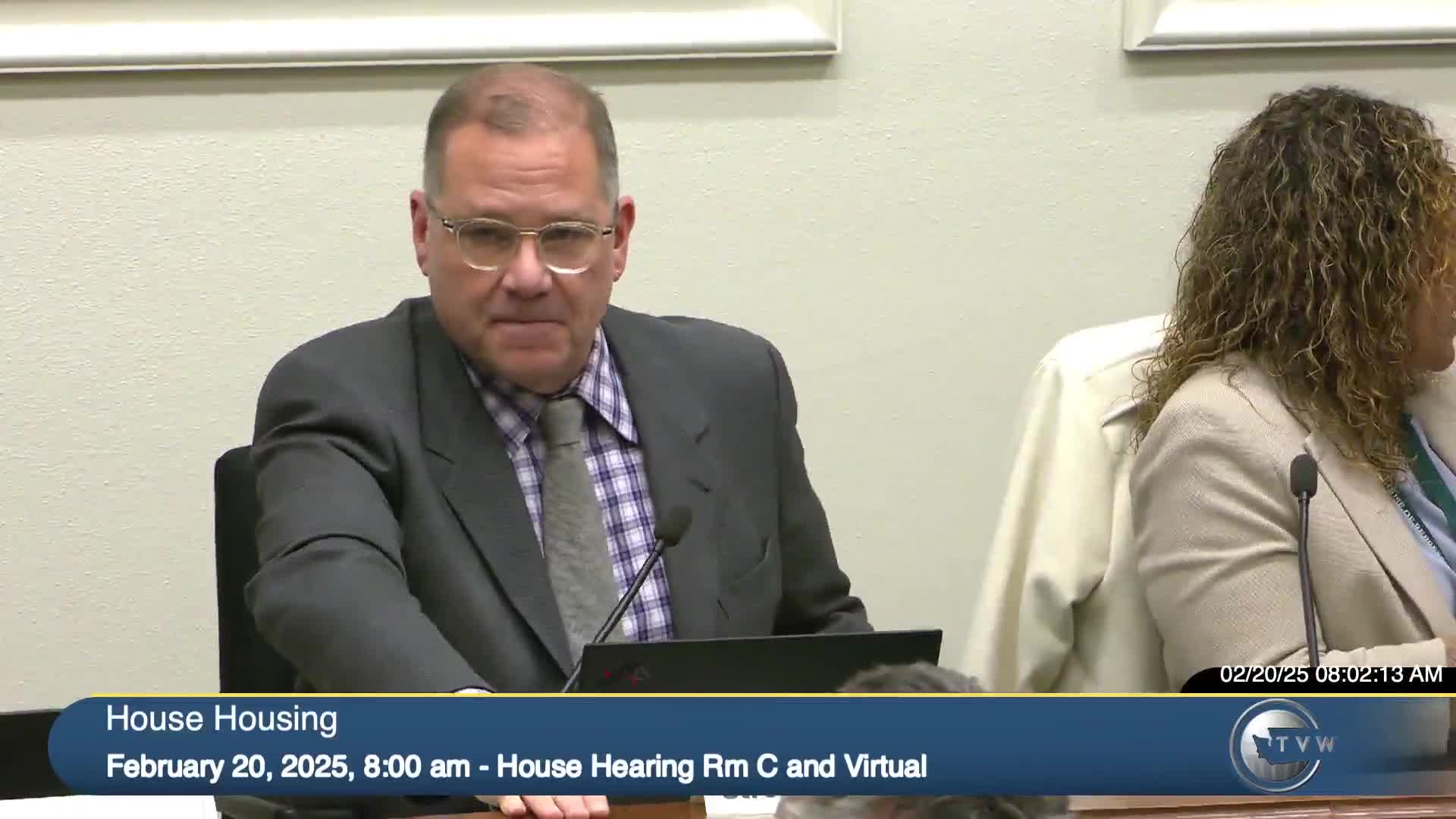
The House Housing Committee on Feb. 20 moved substitute House Bill 17‑68 out of committee with a due‑pass recommendation after extended debate over limits on business or investment entities owning manufactured‑home communities, and after adopting an amendment raising the civil penalty for failing to comply with a court order.
The House Housing Committee on Feb. 20 moved substitute House Bill 17‑68 out of committee with a due‑pass recommendation after more than two hours of debate over ownership limits for manufactured‑home communities.
The substitute limits an investment or business entity that already has an interest in more than five manufactured housing communities or 200 lots from obtaining additional ownership interests, while preserving a list of exemptions for community land trusts, resident nonprofit cooperatives, local housing authorities, federally recognized tribes and certain nonprofit preservation organizations. The bill also ties violations to civil enforcement under the state Consumer Protection Act and, as amended in committee, permits increased civil penalties for failure to comply with a court order.
Why it matters: Manufactured‑home communities supply some of the most affordable homeownership and rental options for seniors, veterans and low‑income households. Committee members said they introduced ownership limits to protect long‑term tenants from sharp fee increases and sales to investors not based in the local community; opponents argued the measure risks constitutional challenge and would curtail generational wealth building by local and minority entrepreneurs.
Staff briefing: Serena Dolly, staff to the committee, outlined the bill and listed 10 proposed amendments, including measures that would narrow the ownership restriction to foreign investors or to entities owning at least 1,000 communities; exemptions for certified minority‑ or women‑owned firms; changing the ownership threshold to 50% interest; and a proposal to remove Consumer Protection Act enforcement. Dolly also described an amendment to require an Attorney General opinion before the bill takes effect.
Key debate: Representative Engel said she was concerned about limiting Americans’ ability to own property and urged the committee to confine the restriction to foreign investors. Representative Dufo pushed the opposite argument, saying the bill potentially violates the Commerce Clause and state constitutional protections and asked the committee to require an Attorney General opinion before the measure takes effect. Representative Jacobson and others raised concerns about availability of capital and passive investors who might hold minority stakes.
Amendments and votes: The committee considered a long list of amendments. Most proposed carve‑outs (for minority‑ or women‑owned businesses and other narrow exemptions) were defeated on roll calls or withdrawn. The committee adopted one amendment, moved by Vice Chair Hill, that establishes an additional civil penalty—up to $125,000—after a court order to sell property for a violation of the ownership restriction. That amendment (referred to in the hearing as SCRE 117) was approved by voice vote. Other amendments were withdrawn or failed on roll calls.
Final action: The substitute House Bill 17‑68 was reported out of committee with a due‑pass recommendation (9 ayes, 8 nays). The committee chair directed that the adopted amendments be incorporated into the substitute as it moves to the next stage.
What was not decided: The committee did not adopt exemptions for certified minority‑ or women‑owned businesses; it did not remove the Consumer Protection Act enforcement mechanism; and it did not require Department of Commerce study in place of the substantive restriction. Several members said they expect litigation questions about constitutionality if the bill advances.
Next steps: The substitute will move to the full House for further consideration.