Get AI Briefings, Transcripts & Alerts on Local & National Government Meetings — Forever.
Committee advances bill to broaden access to unclaimed-property account information; testimony highlights reunification rates and safeguards
Loading...
Summary
The Arizona House Ways and Means Committee returned House Bill 2517 as amended with a due-pass recommendation after testimony that the current unclaimed-property reunification rate is low and that public access plus private locators could increase returns to rightful owners.
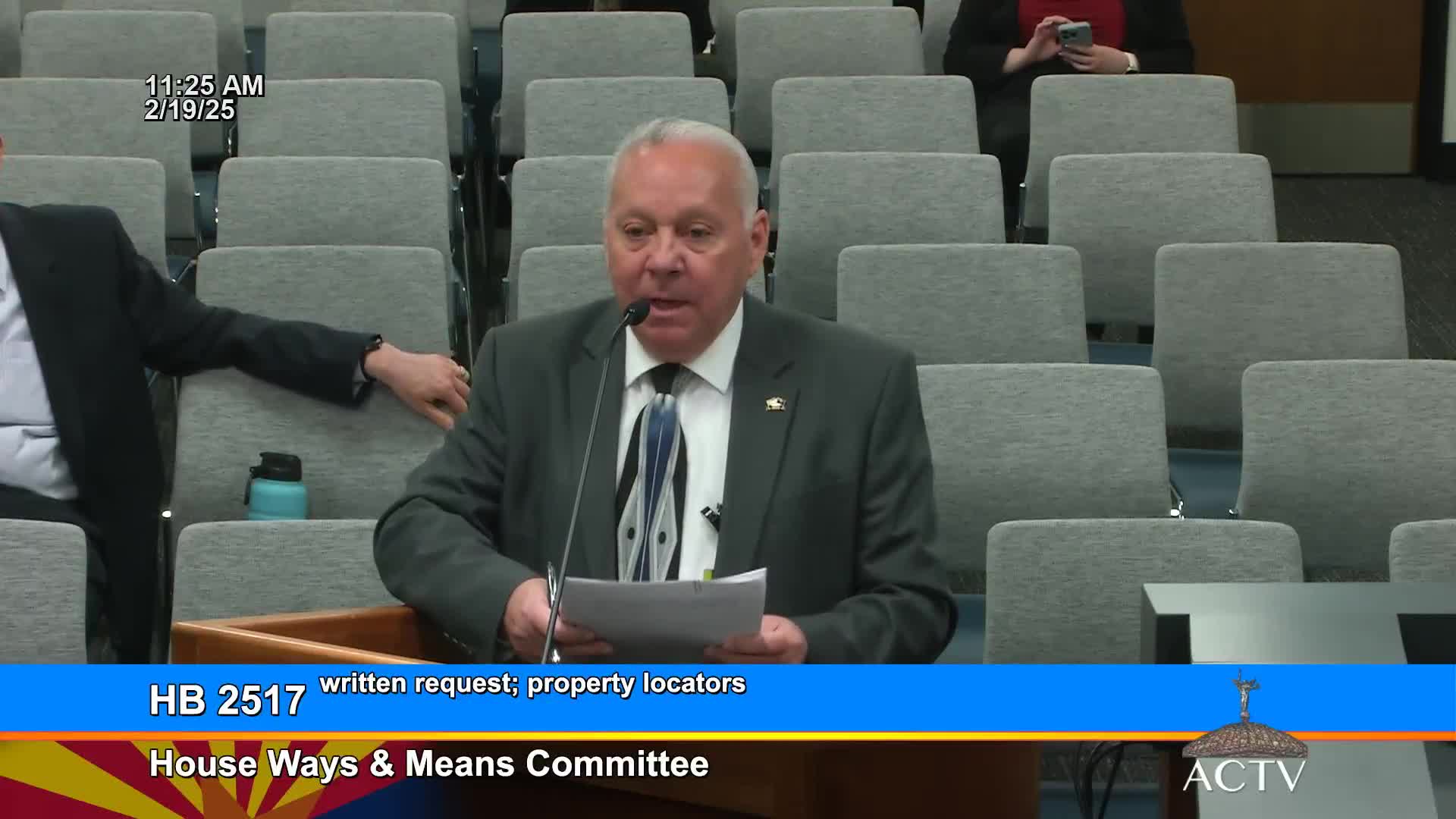
The House Ways and Means Committee returned House Bill 2517 as amended with a due-pass recommendation after extended public testimony and an amendment that narrowed and clarified data sharing and disclosure rules.
Under the amended bill, the Department of Revenue would make nonconfidential unclaimed-property account information available in a public database and would be required to promote awareness of unclaimed property. The amendment also permits the disclosure of confidential information in limited circumstances to claimants, successors in interest and to state-registered locators who enter agreements with the department; the bill sets a maximum fee a locator may charge at 30% of the recovered amount.
Sponsors and witnesses said Arizona’s current reunification rate is low — witnesses and industry representatives cited return rates near the low 20-percent range for the state — and that other states with broader disclosure and active private-sector partnerships (for example Florida and Texas) achieve higher reunification rates. Industry witnesses described the logistical work locators perform, including probate searches, beneficiary identification and advancing fees in complex claims, and said those services are complementary to state unclaimed-property offices.
Department of Revenue staff told the committee its unclaimed-property administrative budget is about $1.5 million and that the state receives roughly 200,000 claims per month and processes claims through existing staffing. Witnesses from locator firms said they work on a contingency basis and do not charge owners before a recovery; they described typical contingency fees that vary by case and said 30% is the statutory cap in Arizona’s current proposal. One witness estimated national reunion rates would rise significantly if the state adopted broader disclosure practices and partnered with locators.
Opponents and some committee members voiced concerns about consumer protection, particularly for seniors and vulnerable individuals, and asked about safeguards against fraud. Industry witnesses said typical practice includes allowing owners time to verify claims, not meeting claimants in person, and flagging files where capacity or fraud is a concern. Committee members asked the Department of Revenue to continue outreach and to coordinate oversight and to report back on implementation issues if the bill proceeds.
On the roll call, HB 2517 as amended was returned with a due-pass recommendation (recorded vote: 5 ayes, 4 nays). Sponsors said the amendment was designed to balance reunification and consumer protections.