Get Full Government Meeting Transcripts, Videos, & Alerts Forever!
Get email alerts on the Disability Services topic
No spam. Unsubscribe anytime.
Committee backs bill to create state study committee on assistive technology for people with disabilities
Summary
House Bill 2801, as amended, would establish a study committee to examine assistive technology needs and options for Arizonans with developmental and other disabilities. The committee would produce a report by Oct. 1, 2026. Sponsor Representative Connolly and advocates, including a constituent and nonprofit founder, testified in favor; one member
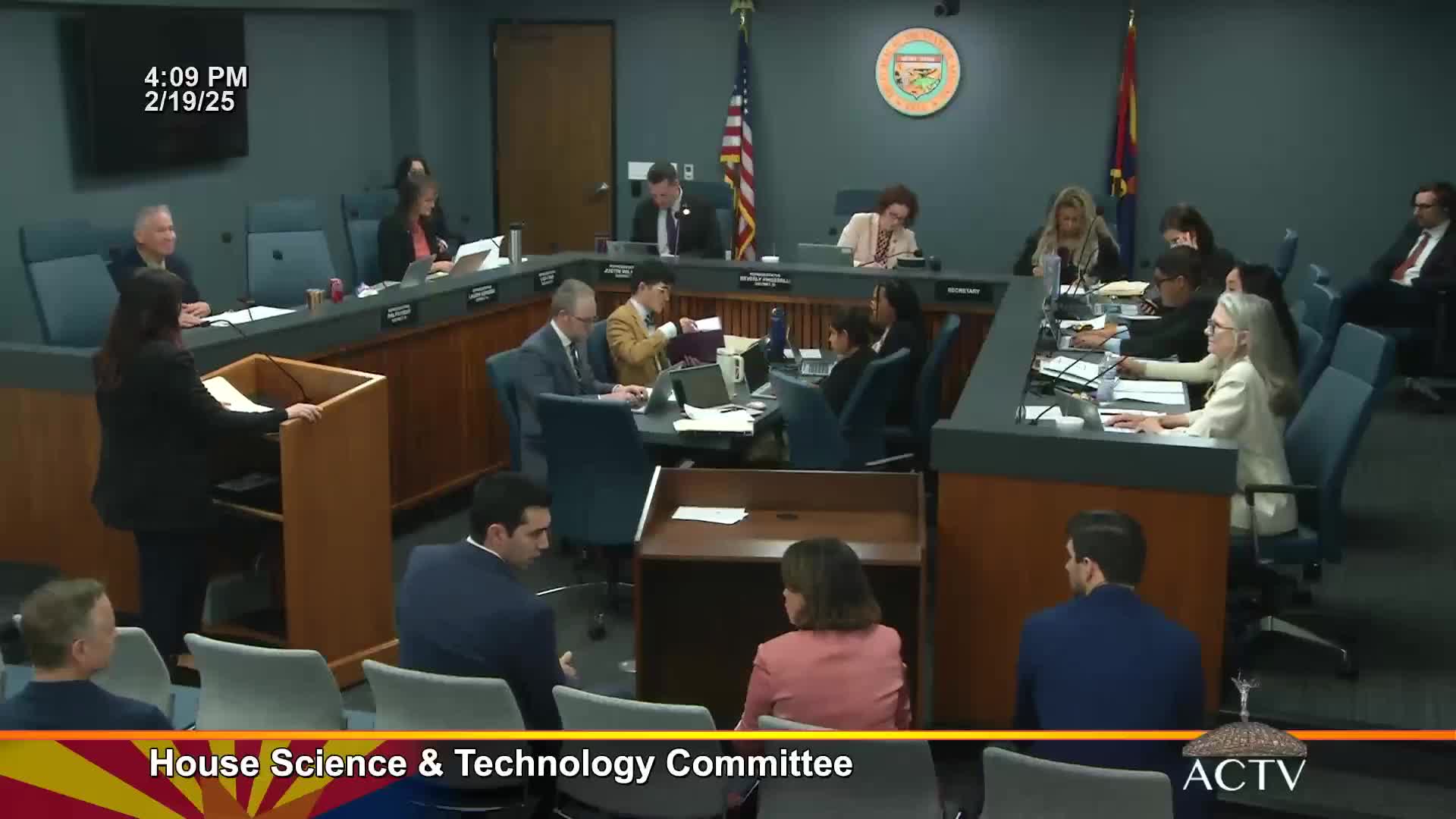
The House Science and Technology Committee recommended House Bill 2801, a measure to form a legislative study committee on assistive technology aimed at expanding access to tools that help people with disabilities, including students with IEPs.
As amended, the bill creates a study committee composed of 15 members appointed by the president of the state senate and the speaker of the house, meeting twice a year. The committee must submit a report of activities and recommendations to the governor, the president of the senate and the speaker of the house by Oct. 1, 2026.
Representative Connolly, the bill sponsor, described the measure as the result of a constituent’s vision to ensure people with developmental disabilities have access to technologies that support learning, employment and independence. "I believe in pursuing technologies," Connolly said, and told the committee she brought the measure in part because personal experience led her to value technology solutions.
Sam Shepherd, founder of a nonprofit advocating for people with developmental disabilities, testified that assistive technology is broadly defined in federal law and includes items from classroom tools to mobility devices and software. Shepherd said Arizona lags some other states on initiatives such as "technology first," and argued that a state committee would help bring stakeholders together and recommend concrete steps. "Technology first is really a framework that describes how we can use technology before other solutions when helping individuals with disabilities gain independence," Shepherd said.
Committee members asked questions about the scope of assistive technology; Shepherd and the sponsor described examples ranging from specialized writing tools to AI-driven aides, wheelchairs and environmental design adjustments. Representative Fink said she supported the concept but preferred private-sector solutions and voted nay on final passage citing that concern. The committee adopted an amendment changing appointment authority to legislative leaders and reducing meeting frequency; the committee then returned the bill with a due-pass recommendation by roll call vote of 7 ayes, 1 nay, 0 present, 1 absent.
The bill record includes testimony from individuals with lived experience and a nonprofit representative and directs the committee to produce a research report and recommendations on statewide assistive-technology approaches by Oct. 1, 2026.