Get AI Briefings, Transcripts & Alerts on Local & National Government Meetings — Forever.
Committee OKs technical cleanup to last year’s tax-lien law to clarify excess-proceeds sales
Loading...
Summary
House Bill 2878, a technical cleanup to 2024’s SB 1431, was returned with a due-pass recommendation after testimony from an attorney who helped draft the clarifications. Changes refine timing, court procedures and credit-bid calculations for court-ordered excess-proceeds sales in tax-lien foreclosures.
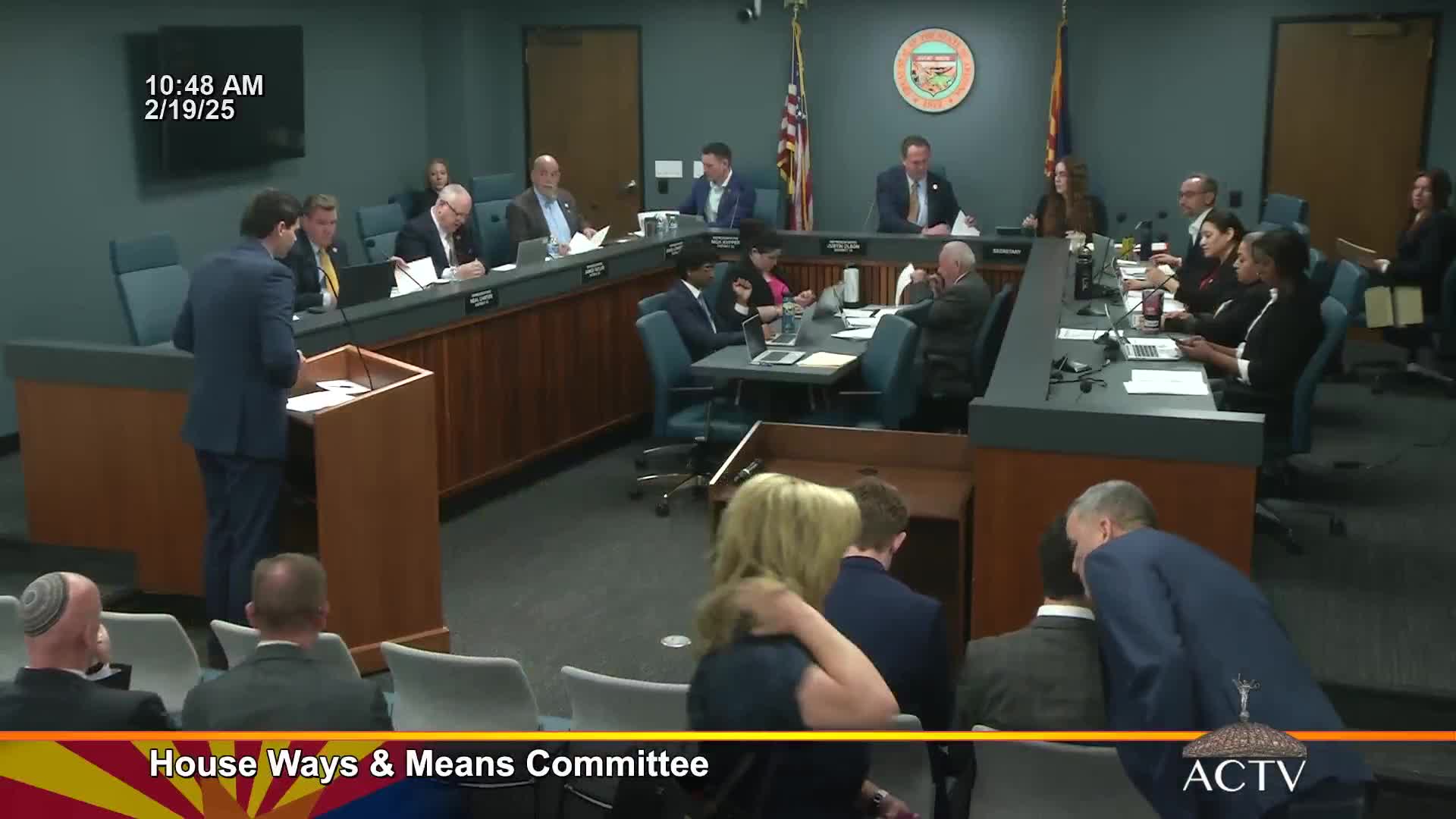
The House Ways and Means Committee voted unanimously to return House Bill 2878 with a due-pass recommendation after staff and an outside attorney summarized technical corrections to last year’s tax-lien reform (Senate Bill 1431).
Representative Sarah Liguori, sponsor of the cleanup bill, told the committee the changes were brought forward by a constituent and practitioners who identified ambiguities in SB 1431’s language. Mark Manoil, an attorney with more than three decades of tax-lien practice, testified in detail about six technical fixes the bill would make.
Manoil said the clarifications would: (1) set clearer timelines for when a delinquent taxpayer may request an excess-proceeds sale; (2) resolve conflicting references to sale scheduling across multiple statutory subsections; (3) harmonize how a plaintiff’s credit bid is calculated so it excludes other state liens and encumbrances that should be paid from the sale waterfall; and (4) allow plaintiffs (including tax-lien investors) the option to request an excess-proceeds sale when they prefer sale proceeds rather than taking title.
The committee’s discussion focused on how the original statute used multiple deadlines and inconsistent references. Manoil and staff explained the bill retains the general goal that a sale occur within a short window after judgment while allowing necessary flexibility for practical impediments (injunctions, force majeure, scheduling conflicts). Committee members asked clarifying questions about which subsections would be changed and why.
No public opposition was recorded. The committee voted to return the measure with a due-pass recommendation (roll call recorded as 9 ayes, 0 nays). If enacted, the bill would not change core policy but would reduce procedural uncertainty for county treasurers, tax-lien investors and courts handling these foreclosures.