Get Full Government Meeting Transcripts, Videos, & Alerts Forever!
Get email alerts on the Property Taxation topic
No spam. Unsubscribe anytime.
Committee advances property‑tax bill to let counties lower rates, limits income approach for rentals
Summary
The Senate Revenue and Taxation Committee unanimously recommended first substitute Senate Bill 295, which aims to let counties reduce property‑tax rates more freely for five years, bars county assessors from using the income approach to value rental properties, and directs MCAT revenue to local government associations that manage the trust.
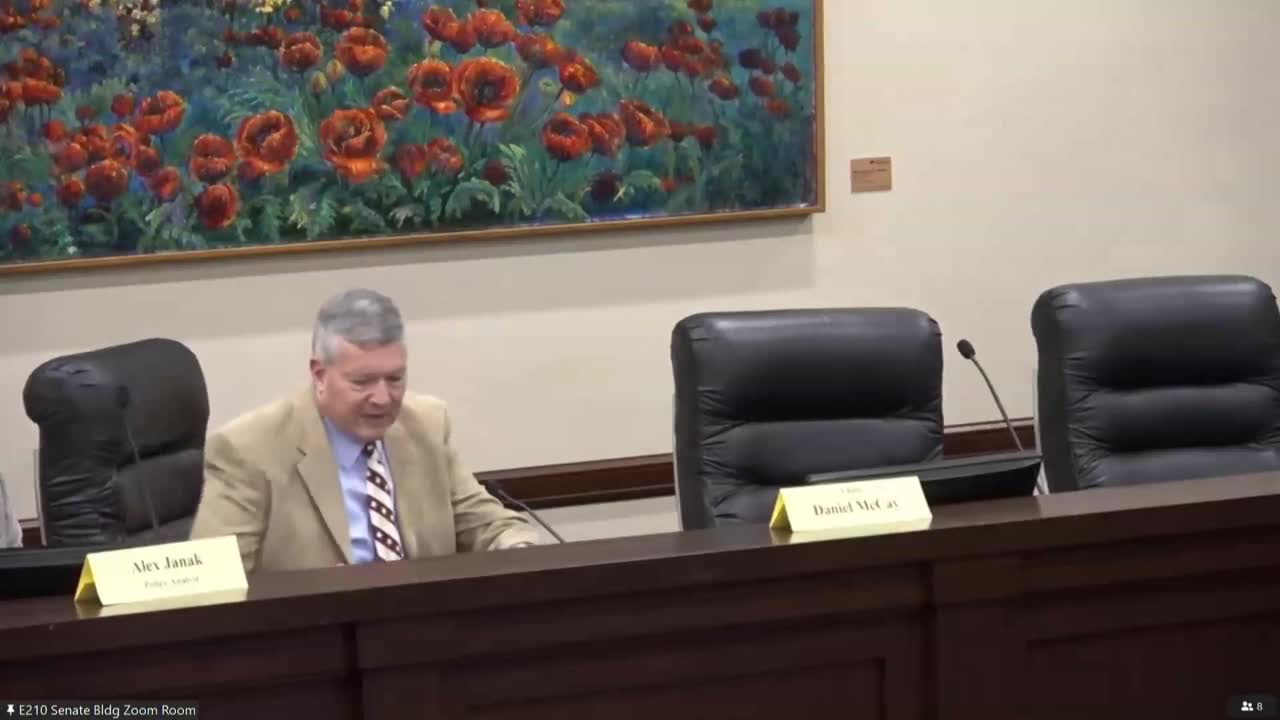
The Senate Revenue and Taxation Committee voted to recommend first substitute Senate Bill 295 to the floor. Senator Dan McKay, presenting the bill, said it responds to county concerns about revenue volatility, property‑tax rate adjustments and multi‑county appraisal trust (MCAT) funding.
Senator McKay told the committee the measure has three main elements: it creates temporary authority (described in committee as a five‑year provision) to encourage counties to reduce property‑tax rates when they experience excess revenue rather than fear later re‑raising rates; it prohibits county assessors from using the income approach to valuation for rental properties; and it authorizes revenue from MCAT to be placed with the League of Cities or the Utah Association of Counties, which manage MCAT operations.
Senator McKay said the idea came from a county commissioner, Bill Wright, who raised the concern that counties sometimes retain higher rates out of fear of future shortfalls. The bill’s five‑year provision is intended to “change that culture,” McKay said.
There was no public comment in committee, and Senator McKay moved to pass the first substitute. The committee approved the motion unanimously.
If enacted, the bill would alter assessor valuation practice for rental properties and provide a mechanism for MCAT funding to flow to local government associations managing the trust. The committee did not identify further fiscal or implementation specifics in the hearing; local assessors and county officials will be stakeholders in implementation.