Get Full Government Meeting Transcripts, Videos, & Alerts Forever!
Get email alerts on the Imitation Firearm Amendments topic
No spam. Unsubscribe anytime.
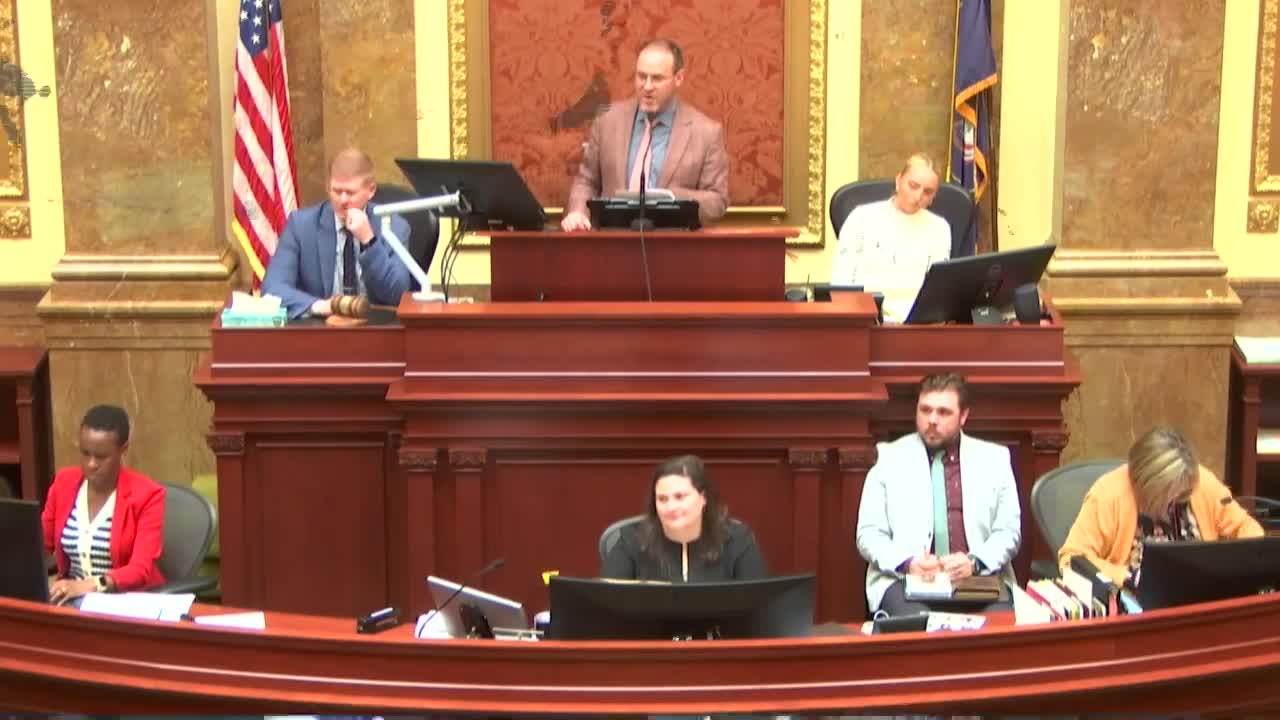
House debates, then encircles bill targeting altered toy guns in public
Summary
Lawmakers debated a bill to address realistic-looking altered toy guns and to create an educative enforcement path for juveniles. After extended floor discussion and amendments, the House voted to "encircle" the bill (set it aside) for further consideration.
The Utah House considered a third substitute of HB 1-87, Imitation Firearm Amendments, a measure prompted by high-school reports and police concerns about toy guns altered to look like real firearms.
Sponsor Representative Fitzsimmons described the bill as aimed at preventing dangerous misunderstandings, saying the measure makes unlawful for minors to knowingly possess altered toy guns in public spaces where they might be mistaken for real firearms. He emphasized the bill is designed as an educative tool rather than a punitive measure: a warning typically precedes any citation.
Law enforcement supporters told members they had seen incidents in which realistic toys in school parking lots led to chaotic, near-tragic responses by officers and the public. Representative Wilcox said local departments had reported events in which students were nearly shot after realistic imitation firearms prompted emergency responses.
The bill drew questions about scope and intent. Representative Kyle said the current language could criminalize merely carrying an altered toy down the sidewalk and requested stronger limiting language about brandishing or threatening behavior. Sponsor Fitzsimmons and backers said they intended the law to cover public places where the general public might be endangered, and to rely on warnings and officer discretion in many cases.
Representative Quinn, who worked with the sponsor, described the bill’s evolution from a punitive approach to an educational one and said stakeholders had negotiated language to avoid impacts on cosplay, theatrical performances and trick-or-treating.
After extended debate and a motion from Representative Jack, the House voted to encircle the bill — meaning it was set aside on the calendar for later consideration rather than moving immediately to final passage. The motion to encircle carried by voice vote; the bill was not finally passed on the floor during the session captured in the transcript.
Lawmakers asked for clarifying language about intent, brandishing, threat and how the statute would treat altered devices received from others. Sponsor and law enforcement said officers would continue to exercise discretion and that the substitute version sought to give police an explicit, non-punitive tool to educate juveniles and reduce the risk of mistaken-response incidents.