Get Full Government Meeting Transcripts, Videos, & Alerts Forever!
Get email alerts on the Campaign Finance Federalism topic
No spam. Unsubscribe anytime.
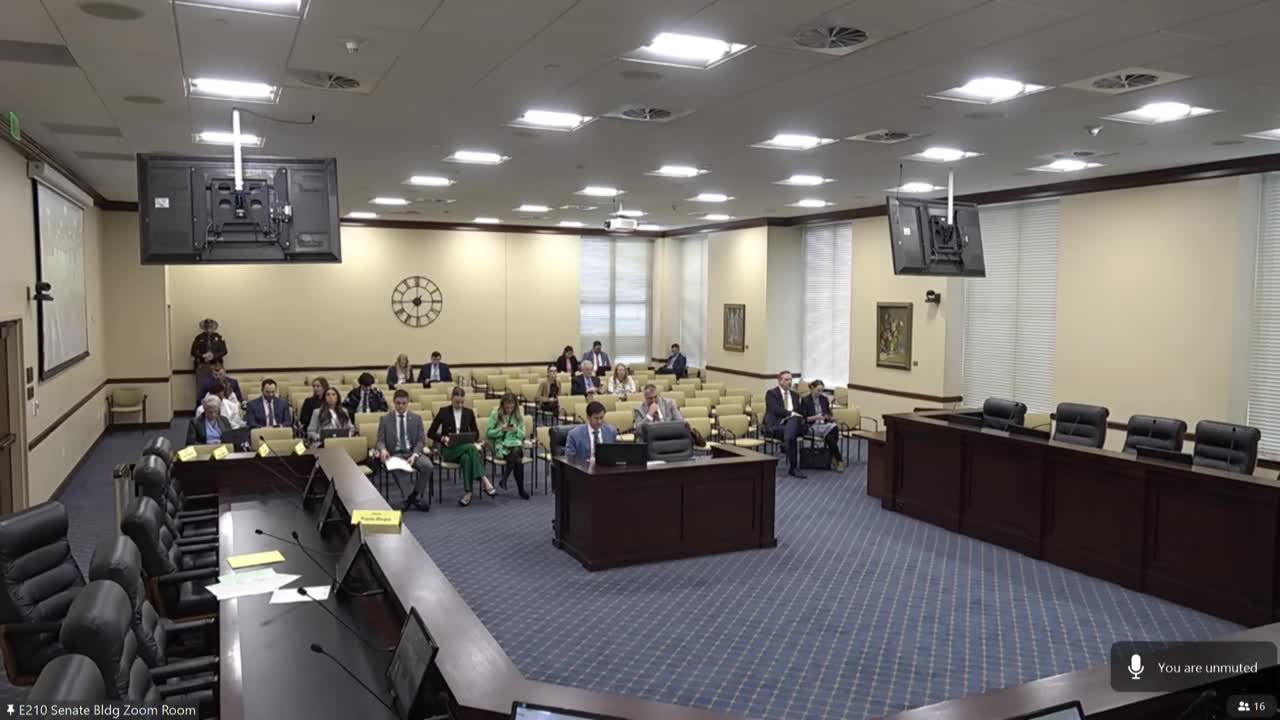
Committee endorses resolution urging Congress to let states set campaign finance rules
Summary
The committee recommended a substitute for Senate Joint Resolution 7, which urges Congress to propose a constitutional amendment to empower states on campaign finance rules and to emphasize federalism; the measure passed unanimously with online and in‑person comment for and against.
The Senate Revenue and Taxation Committee voted to pass a substitute of Senate Joint Resolution 7, calling on Congress to propose a constitutional amendment that would reinforce state authority over campaign finance and protect free‑speech principles tied to elections.
Sponsor Senator Cullimore presented the substitute and said the resolution “recognizes principles of federalism” and calls on the federal delegation to support measures that preserve state control over campaign finance rules. The resolution is nonbinding; committee discussion described it as a statement of principles rather than new law.
Public commenters offered mixed views. Amaya Mueller of the Sutherland Institute supported the resolution, saying it “promotes the constitutional principle of federalism” and defends states’ authority to set campaign finance rules. Kalijah (spelled K‑a‑l‑i‑j‑a) Robinson, chapter vice president of Young Americans for Freedom at Weber State, also testified in favor and raised concerns about foreign money influencing elections. An online commenter, Cale Westin, urged attention to transparency and dark‑money concerns and referenced HR1 as a federal alternative.
Senator Cullimore moved the substitute and the committee approved it unanimously; chair McKay recorded the final tally as six members voting in favor when online members were included.
The resolution’s text frames the issue as a matter of federalism and free speech and asks Utah’s federal delegation to support either federal action that preserves state authority or a constitutional amendment. Because it is a joint resolution (a statement), it does not create binding state law but signals the Legislature’s policy position to federal representatives.