Get Full Government Meeting Transcripts, Videos, & Alerts Forever!
Get email alerts on the Guardianship Supported Decision Making topic
No spam. Unsubscribe anytime.
House approves guardianship overhaul, creates supported decision-making option
Summary
The Utah House on Feb. 20 approved HB 3-34 to clarify which rights may be limited under guardianship orders and to authorize supported decision-making agreements intended to let some adults retain specified decision rights while receiving assistance. The measure passed the House and will go to the Senate.
The Utah House of Representatives on Feb. 20 approved House Bill 3-34, Guardianships and Supported Decision-Making Agreements Amendments, clarifying which rights can be waived under a guardianship and creating a statutory process for supported decision-making agreements.
Supporters said the bill narrows the binary between full guardianship and full autonomy by listing rights that a court may and may not remove, and by offering a formal way for people to contract for assistance in decision making without surrendering all rights.
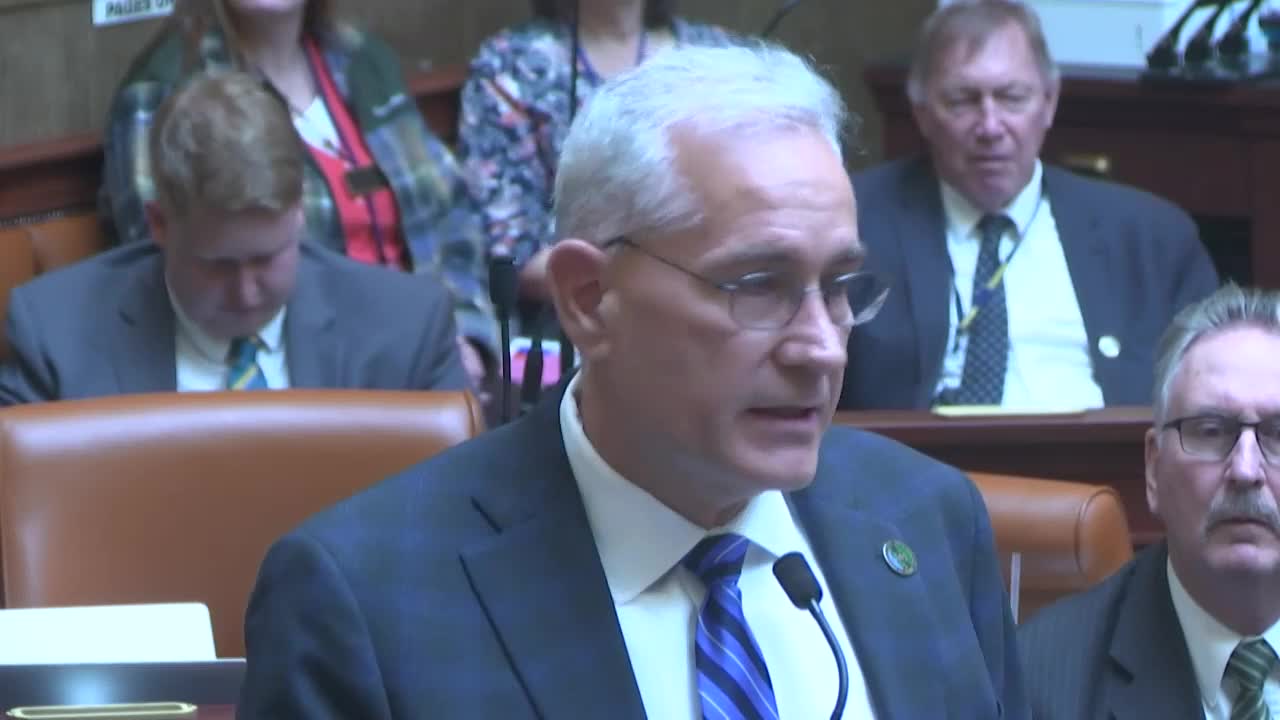
Sponsor Representative Abbott told colleagues the bill “fixes some issues that we have with the rights of incapacitated persons” and enumerates both rights that can be waived and rights that cannot be waived. "An example of a right that cannot be waived is that the person be treated with respect and dignity, or they have the right to have the court review their guardianship," Abbott said during floor remarks.
The bill requires courts and evaluating medical professionals to make explicit findings about which specific rights are limited when a guardianship is established. It also grandfathered existing guardianships so they remain in effect, while setting procedural requirements for future guardianship orders, including clearer medical-report content to assist judges.
Supported decision-making agreements, the bill says, allow an adult to designate another person to assist in decisions — for example, to accompany someone to medical appointments and help explain options — without transferring the full authority of a guardian. The bill requires that a guardian be notified if a person under guardianship seeks a supported decision-making agreement and allows the guardian time to object.
Several lawmakers who had opposed earlier versions told the House they now supported the bill after discussions with the sponsor and stakeholders. Representative Hawkins said he had voted no in committee but, after working with the sponsor, would support the measure on the floor. Representative Loubay, who works with people with intellectual disabilities and whose family includes an adult with such a disability, described the change as addressing a gap under current law that forced families to choose between full guardianship and no legal help.
During questioning, Rep. McPherson asked whether the bill would weaken protections for people legitimately in need of guardianship; Abbott replied that it should not, saying medical examiners’ reports will still document incapacity and the judge will make specific findings on which rights are limited.
The House approved HB 3-34 on a final vote; the bill passed the body and was sent to the Senate for its consideration.
The measure seeks to give courts clearer forms and guidance so families, judges and professionals understand exactly which rights remain with an individual and which are delegated to a guardian. It also creates a statutory pathway for supported decision-making as an alternative to full guardianship.