Get Full Government Meeting Transcripts, Videos, & Alerts Forever!
Get email alerts on the Species Protection Fund topic
No spam. Unsubscribe anytime.
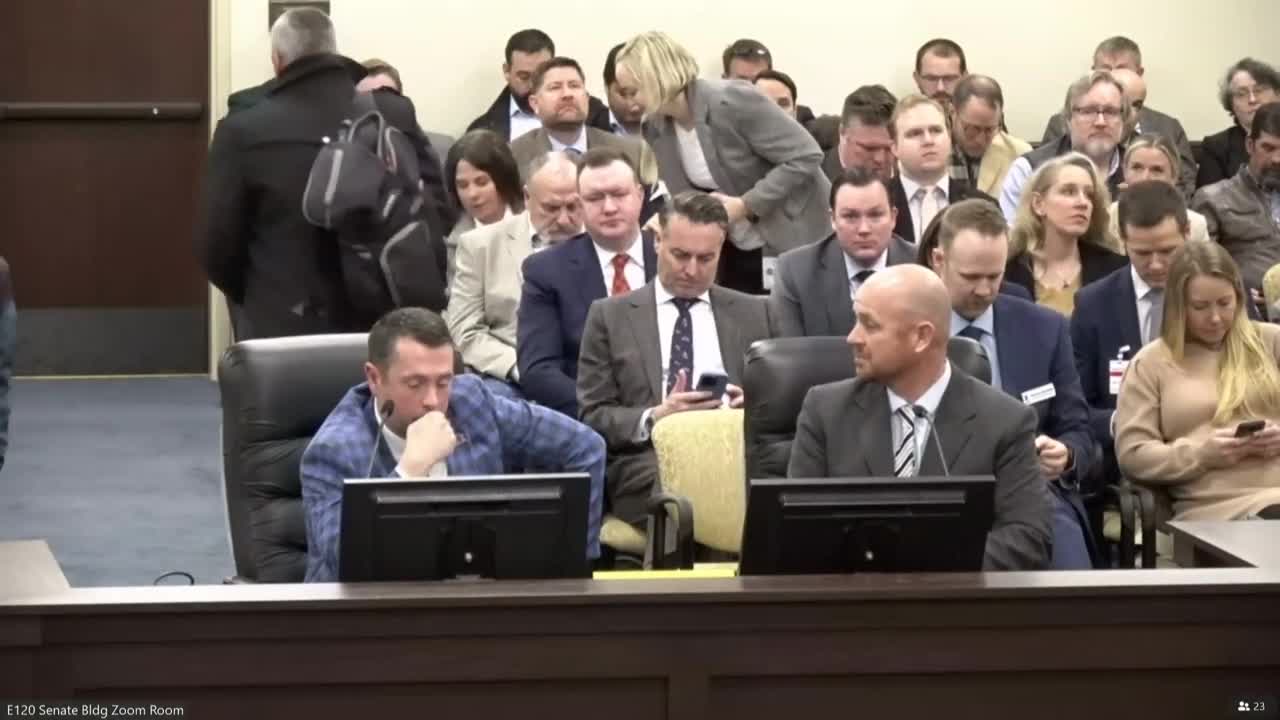
Committee approves HB 378 to create steady funding for species protection; debate centers on taxing wind and solar
Summary
The Natural Resources Interim Committee approved the first substitute to HB 378, a bill to establish a stable state species protection fund and to identify potential revenue streams including transmission royalties and a proposed levy on wind and solar projects.
The committee passed HB 378 (first substitute) on June 12, advancing a proposal to establish a steadier funding stream for the state's species protection account (previously called the Endangered Species Mitigation Fund).
Sponsor Representative Snyder said the fund supports work to prevent listings and to recover or de‑list species. The bill would identify and redirect several potential revenue streams into the species protection account: a portion of some transmission/royalty receipts, a proposed share of future depleted uranium disposal receipts (a revenue source being debated in the Senate separate from this bill), and a newly proposed rate applied to utility‑scale wind and solar projects. Snyder said the intent is to raise an aggregate $5–10 million per year to expand proactive conservation, studies and mitigation work. He described the proposal as modeled in part on approaches used in Wyoming.
Director Riley Peck (Division of Wildlife Resources) explained the fund's current limits and said more consistent revenue would allow the division to do proactive studies, mitigation and monitoring so the state can answer listing petitions with robust technical data rather than reactively responding to potential listings. He cited large historic costs for surveys and mitigation when a species becomes listed.
The bill generated substantial public comment and pushback from renewable developers, counties and trade associations who said a new tax on wind and solar — particularly if applied retroactively to contracted or already financed projects — would harm project economics, threaten jobs and local tax revenue, and could chill future investment. Theresa Foxley (R Plus Energies), Luke Peyton (DESRI), and Christian Gardner and others testified that projects were financed under existing rules and could not absorb the proposed additional annual charge without endangering project feasibility. Rural county and economic development representatives said the projects produce substantial local tax revenue and jobs. Several industry and resource trade groups (Utah Association of Counties, Utah Petroleum Association, Utah Mining Association, Utah Taxpayers Association, Utah Farm Bureau) supported a stable fund but urged alternative revenue approaches and more time to negotiate a compromise including non‑retroactive language.
Other commenters — central Utah water, sportsmen and conservation organizations, the advisory board for the existing mitigation fund, and representatives of oil, gas and mining — urged the committee to establish reliable, predictable funding, arguing the fund has had multi‑year variability that reduces the state's ability to prevent listings and mitigate impacts. Steve Erickson (Downwinders) objected to including depleted uranium receipts as a funding source and said that material presents unique public‑health and siting concerns; he urged removing that proposed source.
Representative Shallenberg moved to adopt the first substitute and Representative Chiu moved the favorable recommendation; the committee adopted the substitute and then passed the bill with a favorable recommendation. Committee and public testimony recorded a mix of support for the fund and strong objections to the proposed wind/solar levy, especially if applied retroactively to in‑flight projects.