Get Full Government Meeting Transcripts, Videos, & Alerts Forever!
Get email alerts on the Economic Development topic
No spam. Unsubscribe anytime.
West Richland council approves zoning change allowing data centers in light industrial and urban transition zones
Summary
Council adopted Ordinance O3-25 to permit data centers in Urban Transition and Light Industrial zone districts; staff said the use can bring significant tax revenue with limited additional city service demand, and the applicant owns substantial property north of Rupert Road.
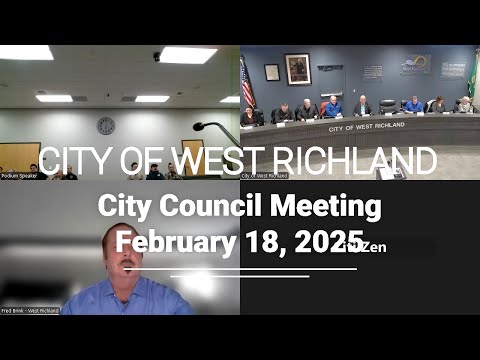
The West Richland City Council voted unanimously on Feb. 18, 2025, to adopt Ordinance O3-25, a zoning-text amendment that allows data centers as a permitted use in the Urban Transition (UT) and Light Industrial (LI) zones.
Community Development Director Eric Menon Hall presented the staff report, describing the change as an amendment to the land-use matrix to permit data centers. “This amendment was applied for by Frank Tiggs LLC,” Menon Hall said, and he noted the applicant owns a substantial amount of property north of Rupert Road and in areas east of Sand Hill and near DNR property.
Why it matters: Menon Hall said data centers can generate significant tax revenue for the city while imposing relatively low demands on city services because of a low employee-per-acre ratio. Council discussion noted both the revenue potential and longer-term property-tax considerations.
During debate, Councilmember Bloom cautioned that much of the tax revenue from data centers is equipment-based and will depreciate, which could shrink the tax base over time: “A lot of that large tax revenue that we would get from data centers are actually equipment based, which will depreciate,” Bloom said. He urged the council to consider long-term management of the tax base.
Councilmember Moran asked for a plain-language description of a data center. Menon Hall replied: “Simple terms, it's a warehouse full of computers... they also are your AI processors.” Menon Hall described data centers as increasingly common in the region and noted their potential to produce revenue without large increases in city service demand.
The Planning Commission and the city’s subcommittee both recommended approval. The council approved the ordinance by unanimous voice vote.
Implementation: Menon Hall said the change simply amends the city's land-use table and does not itself approve any specific project; any future data-center proposal would still require applicable permits and environmental review. The staff report identified the applicant by name and described the general locations of property holdings that could be affected.