Get Full Government Meeting Transcripts, Videos, & Alerts Forever!
Get email alerts on the Flood Mitigation topic
No spam. Unsubscribe anytime.
Findlay mayor says federal, state and local commitments keep flood-mitigation work on track; downtown recreation plan tied to benching
Summary
Findlay Mayor Christina Mearn said Friday that federal, state and local investments have positioned the city to advance long‑pending flood mitigation work and that a proposed downtown recreation area would be phased to follow benching tied to those flood projects.
Findlay Mayor Christina Mearn said Friday that federal, state and local funding have set the city up to complete long‑planned flood mitigation work and that a proposed downtown recreation area will be phased to follow that benching work.
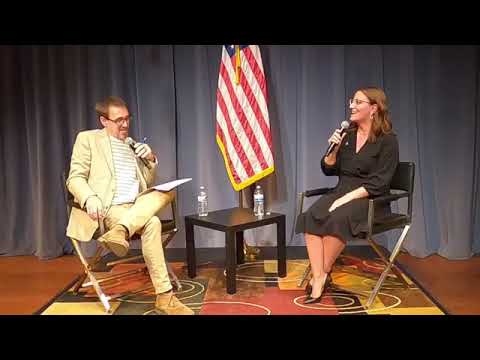
Mearn told WFIN host Chris Oakes that the city has a FEMA pledge of $28,000,000 and a Federal Railroad Administration (FRA) grant of $7,000,000 that have helped move projects forward, and that the state has committed $60,000,000 over a 10‑year period. She said local actions — a dedicated sales tax, property acquisition without eminent domain, and city and county funds — strengthened the city’s case for federal dollars.
Those investments, Mearn said, were essential to winning competitive grants and to making the flood projects shovel‑ready. “By us doing that and putting the investment into the environmental studies and all of those different aspects, we set ourselves up for success,” she said.
Why it matters: The flood work is framed by city officials as necessary to unlock economic development in low‑lying downtown parcels. One of the largest pieces is a 19‑acre area north of the river adjacent to Main Street that the administration proposes converting into a recreation area designed to tolerate periodic flooding.
Mearn described the downtown site as unsuitable for buildings but suitable for flood‑resilient amenities — pathways, a multipurpose stage, a skate park and shelters — and said planners are working with Strand (design consultant) on a recreation plan. She stressed that some elements will be designed to be flooded and remain usable the rest of the year.
Cost, timing and phasing: The mayor said the city’s goal would be to limit the city’s share to no more than $10,000,000 over time while acknowledging high‑end estimates that include contingencies reaching as much as $40,000,000. She said conservative cost estimates include contingencies and soft costs and that the project will likely be phased. Mearn specifically noted the pedestrian bridge as an expensive component that could be tied to a philanthropic gift.
Mearn said no substantial construction on the downtown recreation amenities will occur before benching begins; limited work on the South Bank and riverwalk retaining wall could happen sooner because those areas need near‑term repairs. She described benching and dirt movement for flood projects as a way to avoid moving soil twice.
Context and next steps: The mayor said the city will pursue additional public engagement and a mix of local donor, state and federal funding to reduce the city’s direct cost. She framed the recreation plan as a long‑range, multi‑phase effort that could take years to implement and would rely on partnerships and competitive grants.
Provenance: Transcript excerpts include Mearn’s remarks on the FEMA pledge, FRA grant and state funding and the description of the 19‑acre downtown benching and recreation plan, and the mayor’s cost and phasing comments.
Ending: City officials said public engagement and grant‑seeking will continue in 2025; no construction on the main downtown recreation elements is expected until benching related to flood mitigation is underway.