Get Full Government Meeting Transcripts, Videos, & Alerts Forever!
Get email alerts on the Public Health topic
No spam. Unsubscribe anytime.
Mosquito and Vector Control District briefs council on West Nile, ticks, yellow-jacket control and local services
Summary
Representatives of the San Mateo County Mosquito and Vector Control District briefed Half Moon Bay’s City Council on Feb. 18 about West Nile virus surveillance, tick‑bite prevention, yellow‑jacket control and district services available to coastal residents.
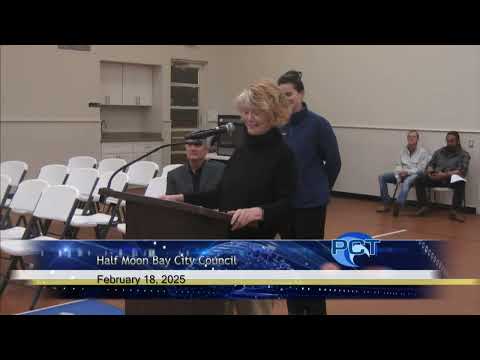
Representatives of the San Mateo County Mosquito and Vector Control District presented an update at the Half Moon Bay City Council meeting Feb. 18, outlining the district’s coastside services and public outreach on mosquito-borne disease, ticks and stinging‑insect control.
Katie Martin, the council’s representative to the district board, and Rachel Curtis Robles from district staff described services the district provides at no extra cost to property owners, funded by property taxes and special‑benefit assessments across San Mateo County. “We are an independent special district. We’re funded by property taxes and special benefit assessments from throughout the County,” Curtis Robles said. She noted the district’s technicians are assigned by zone and that there is a coastside technician who responds to requests Monday through Friday.
The district runs integrated pest management (IPM) operations and uses pesticides only as a last resort. Curtis Robles urged residents to report biting mosquitoes and dead birds; the district uses reports to target standing‑water sources and to carry out West Nile virus testing. She said, “even a bottle cap of water is enough water to breed mosquitoes,” and described mosquito‑fish placement (for unmaintained pools, troughs and decorative ponds), larval source reduction and tick‑bite prevention education kits. The district reported that its tick‑prevention kit program enrolled more than 1,300 people countywide, with just under 10% of participants from Half Moon Bay.
Council members and residents raised questions about yellow‑jacket control, gophers and pesticide environmental impacts. Curtis Robles said the district offers yellow‑jacket nest control on a next‑business‑day schedule where appropriate and that the district completed an environmental review that limits where certain pesticides can be used. On reporting dead birds, Curtis Robles advised residents to use the statewide hotline (dial or search for the California “report dead bird” hotline), saying, “At this time of the year, the hotline is a warm line. You’ll record a message and they’ll give you a call back.” She added that during summer months the hotline is staffed.
Katie Martin, who said she has served on the district board for about 11–12 years, also highlighted recent recognitions for the district: Certificate of Transparency, a Certificate of Distinguished Special District, and the Government Finance Officers Association’s Certificate of Excellence in Financial Reporting for its fiscal year ending June 30, 2024. She noted the district’s headquarters in Burlingame recently acquired a building that requires retrofit work to serve as a warehouse for vehicles and equipment.
Resident Kimberly Williams asked whether the district partners with county, state or national park organizations on tick education; Curtis Robles said the district regularly provides training and materials to county parks rangers, friends-of-park groups and other partners and that the district now offers the tick kit in Spanish. On pesticide runoff concerns, Curtis Robles said the district’s EIR guides where and when treatments are used and that staff are trained and certified to limit environmental impacts and avoid long‑lasting products in storm drains.
The district staff closed by inviting residents to report biting mosquitoes, dead birds and other concerns through the district’s service request channels.