
Indigenous parents’ advisory committee issues “yes‑and” vote, presses Richfield Public Schools for curriculum, staffing and accountability
Get AI-powered insights, summaries, and transcripts
Sign Up Free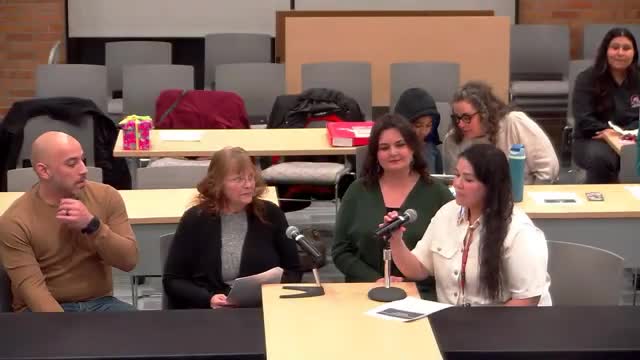
Summary
The Richfield Indigenous Parent and Guardian Advisory Committee voted 5–2–1 in favor of a “yes‑and” finding about the district’s progress on Indigenous education, while outlining five specific expectations for curriculum, staff training, hiring and academic outcomes.
Sam Weaver, the district’s indigenous education coordinator, told the Richfield School Board on Feb. 18 that the Indigenous Parent and Guardian Advisory Committee (IPAC) held its required annual voter conference and delivered a “yes‑and” vote on the district’s Indigenous education work.
The committee’s vote was 5 yes, 2 no and 1 non‑vote, Weaver said. “It was not a yes vote that we are super thrilled with everything that the district is doing. It was a yes and vote,” she said, explaining the committee’s intention to acknowledge progress while pressing for additional work.
IPAC members presented five areas of expectation they said the district must address: develop and deliver Indigenous history, knowledge and culture across the curriculum for all students; provide culturally relevant curriculum specifically for Indigenous students; mandate training and accountability about Indigenous cultures for all staff who interact with students; take steps to improve academic outcomes and close achievement gaps for Indigenous students; and hire additional Indigenous staff to support the work, including consideration of classification and compensation.
Janelle McCarty, identified as IPAC chairperson, said curriculum exposure should begin with grade‑school hands‑on experiences and recommended adding Dakota and Ojibwe to the district’s global languages program. “We need to increase the amount of Indigenous content taught to all grades and across all subject areas,” McCarty said.
Tony Garcia, an IPAC speaker, described personal benefits he has observed when Indigenous content is taught. “It kinda gave her more confidence in her culture, and it made her feel more comfortable embracing who she is,” he said, describing his daughter’s classroom work.
McCarty and other IPAC speakers told the board they want clearer mechanisms to remove or contextualize curricular texts that are inaccurate or harmful and asked the district to use purchased texts alongside supplementary materials that bring Indigenous perspectives into literacy instruction.
Board members pressed for specifics. Chair Eric Carter asked whether the two IPAC members who voted no felt the presentation addressed their concerns; Weaver said it did. Weaver also told the board IPAC had highlighted two particular priorities for the no votes: broad delivery of Indigenous history to all students and the hiring and fair compensation of additional Indigenous staff.
Superintendent Steve Younowski said the district is already working on training and curriculum efforts. He told the board that Minnesota licensure rules require cultural‑competence training and that the district has begun offering training (the administration said it started with a 7 Grandfather Teachings program) and is exploring how to accelerate training timelines and extend expectations to non‑licensed staff who are not covered by licensure requirements.
Weaver and IPAC members asked the board to hold the district to an accelerated timeline and to provide clearer accountability mechanisms for staff who do not meet expectations. IPAC requested that the district report back on progress; the superintendent said the group expects to return within a year or sooner with updates and that the district aims to provide language‑course development progress and follow‑up responses this spring and early summer.
Ending: The board received the presentation and a schedule for updates; IPAC members said they will return with progress reports and the district said it will continue curriculum and training work and provide follow‑up at future meetings.