Get Full Government Meeting Transcripts, Videos, & Alerts Forever!
Get email alerts on the Solid Waste topic
No spam. Unsubscribe anytime.
Milwaukie councilors discuss ending rolling 10‑year solid waste franchise, commission fall public hearing
Summary
City staff and haulers briefed council on the city’s rolling 10‑year solid waste franchise, food‑waste and bulky‑waste cost drivers, customer service reporting and recycling/drop‑box recovery concerns; councilors directed staff to prepare for a public hearing this fall and to narrow FY26 rate‑study questions for consultant analysis.
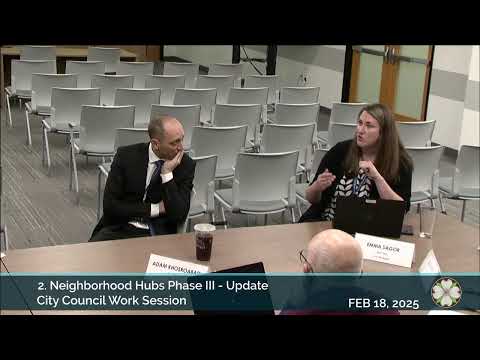
Milwaukie officials and private haulers discussed the city’s solid‑waste franchise framework and rate drivers during the Feb. 18 work session, focusing on the city’s rolling 10‑year franchise term, the cost of food‑waste composting and bulky‑waste collection, drop‑box recycling recovery rates and customer service channels.
The discussion matters because the city’s franchise language — adopted as part of the 2015 solid‑waste code — automatically renews for an additional 10‑year term each January unless the city gives notice at least 30 days before Jan. 1 to begin termination proceedings. That structure, several councilors said, would lock in the current franchise holders for another decade if the council does not act now to start termination proceedings.
Finance Director Michael Osborne briefed the council on the code and recent regional comparisons. “So we went through and reviewed our solid waste rates for FY '25,” Osborne said, summarizing past consultant work and a regional October summit that included Metro and area haulers. He asked the council what additional analysis or actions staff should pursue in the FY26 rate‑setting process.
Councilors and the city attorney clarified how the code works. The city attorney said the code’s rolling feature means that if the city gives formal notice to terminate the franchise system, the existing franchise holders would transition to a fixed 10‑year term and the earliest expiration would be January 2036. The attorney added that changes to future franchise terms would apply to a subsequent solicitation or RFP, not to the existing franchise holders, unless those holders agreed otherwise.
Several councilors expressed concern that the rolling 10‑year clause limits future councils’ leverage. One councilor called the rolling notice requirement “just craziness” and said the clause effectively ties the hands of future elected bodies; another asked whether changing the code now would affect the three current franchisees, and staff said the existing franchise rights and obligations would remain for the statutory transition period.
Councilors and staff identified several immediate topics for follow‑up: (1) have the city’s rate consultant Chris Bell quantify how much of Milwaukie’s rates are driven by the food‑waste compost program and by the annual bulky‑waste days, (2) compile a clearer regional table comparing franchise duration and service mixes, (3) clarify customer‑service reporting and a single point of contact for complaints, and (4) collect data on drop‑box/recycling recovery rates and whether standardization of recovery reporting is possible.
Haulers at the meeting — including Dave Huber of Waste Management Public Sector and Josh Brown of Buick Disposal and Recycling — urged cooperation rather than immediate market changes. Dave Huber described tools for online customer tickets and said the haulers can work with the city on recovery‑rate improvements. Josh Brown said Metro fees and facility capability drive much of the diversion performance and regional cost pressure.
Councilors did not adopt any ordinance or motion in the work session; rather, a majority signaled support for staff to prepare for a formal public hearing on potential termination of the rolling franchise and for staff to return in the fall with a recommended timeline and the requested analyses. Staff said a formal notice and public hearing would be required if the council wants to initiate termination under the current code.
The council also asked staff to keep customer‑service channels and complaint tracking centralized so residents know whether to call the city or a hauler directly. Osborne noted he has been the primary city contact but that staffing changes and an organizational assessment may shift responsibility; haulers also said their online ticketing system can create service tickets tied to the Milwaukee community page.
Council members asked staff to report back in the fall with: the Chris Bell analysis isolating food‑waste and bulky‑waste cost impacts on Milwaukie rates; a regional franchise‑term comparison table; options for a single public complaint portal and clarification of staff POC; and data on recycling/drop‑box recovery rates and reporting standards. Staff also agreed to solicit written comments from the haulers in addition to today’s remarks.
While councilors expressed differing views about the policy merits of the rolling franchise (some citing the capital‑investment rationale from haulers and others calling it restrictive), no formal change to the code was made at the session. The city attorney and staff outlined the procedural steps needed to begin a termination process and the statutory consequence that existing franchise holders would receive a fixed 10‑year term if the city proceeds.
Notes and context: the city adopted the current franchise language in March 2015; the three active franchise operators named in discussion were Waste Management, Waste Connections and a third small hauler serving a limited east‑side area. City staff and haulers agreed they will provide more detailed written materials ahead of a fall public hearing so the council and public can assess tradeoffs between rates, service levels and franchise duration.
What’s next: staff will commission the targeted rate analysis and compile comparative franchise‑term information. The council directed staff to plan a fall public hearing and to provide a documentation “time capsule” summarizing staff recommendations and the analysis for subsequent councils.