Nampa planners say city short about 2,700 housing units; report highlights growth, density and revenue trade-offs
Loading...
Summary
Planning staff told the City Council the 2024 Planning & Zoning annual report shows a roughly 2,700-unit housing shortage, rising population and affordability pressures, and shifting development patterns that affect tax revenue and infrastructure demand.
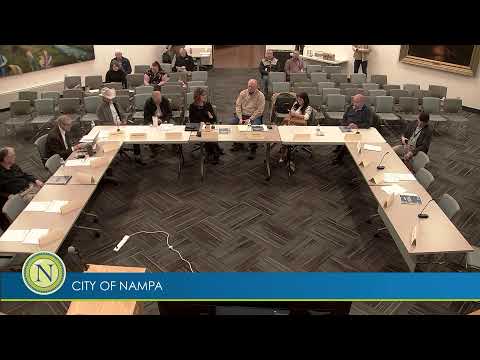
Planning staff presented the City of Nampa’s 2024 Planning & Zoning annual report at a workshop, telling council members the city faces a shortage of roughly 2,700 housing units and that growth and development patterns are changing the city’s revenue and infrastructure calculus.
Rodney (Planning staff presenter) said the city’s population and housing numbers show accelerating demand: “the number is almost a 20,000, as of 2024,” and the city recorded a 3.7% increase over 2023, he said. Staff called out a tightening housing market the report attributed to in‑migration and limited supply.
The report matters because planners said the shortfall is already affecting affordability and land use decisions. “Seventy percent of Nampa households right now cannot afford a home in Nampa,” Bree (Planning staff presenter) told the council, summarizing a finding from the housing analysis. The presentation tied demographic and income measures to land use and revenue data to show trade‑offs between low‑density single‑family development and higher‑density options that produce more tax revenue per acre.
Key findings and figures presented: - Estimated housing shortage: about 2,700 housing units (city housing study cited by staff). - Population and demographics: staff reported a notable year‑over‑year increase and gave Nampa’s median age as 35.3. - Median household income: presented as about $71,752 (staff-cited figure). - Housing affordability: staff told council that, using household income alone, about 70% of households could not afford a typical Nampa home at current prices. - Approvals and pipeline: planners reported 578 total land‑use applications in 2024, 134 public hearings and 194 pre‑application meetings; 116 multifamily units were approved in 2024 and, since 2018, roughly 5,000 units have been approved, with about 2,200 building permits pulled to date. - Density trends: preliminary plats approved in 2024 averaged about 3.99 dwelling units per acre; if all pending approvals were built at the submitted densities the city’s preliminary plot density would drop to an estimated 2.89 units per acre, staff said. - Area of city impact and buildout: staff reported about 47,000 acres in the area of impact and said the city is roughly 50% annexed; build‑out scenarios in the packet ranged widely, with low‑end and high‑end hypothetical totals summarized for council consideration. - Enclave parcels: staff said there are about 1,700 enclave parcels totaling roughly 2,700 acres; if annexed they estimated those parcels could yield about $2,000,000 in ongoing tax revenue (staff caveated that figure as tied to assessed values and development status).
Staff and council members discussed causes and responses. Rodney said planners are trying to add data to emotional debates about growth and property rights and emphasized the city’s role in enabling reasonable use of private land. “We’re not in the business of developing housing,” Rodney said, adding the city’s role is to make land available and provide infrastructure and services where appropriate.
Councilmembers and members of the public raised ideas and concerns: several speakers suggested increasing townhomes or small for‑sale products to help first‑time buyers get equity rather than building only apartments; one commenter tied regional wildfire displacement to near‑term population inflows from California. Staff and council also discussed agricultural preservation tools and “APA” (agricultural preservation area) designations administered by county authorities; staff noted that county APA designations can carry multi‑year commitments that affect the use of eminent domain and development options.
Planners also presented tax‑revenue comparisons by zoning: denser zones generally yield higher tax revenue per acre and per parcel, staff said, and council members asked staff to return with comparisons of revenue versus service costs (police, roads, water, parks) by zoning type so the council could more directly compare fiscal impacts.
Staff said the packet includes a more detailed dataset and offered to prepare follow‑up materials on infill vs. sprawl trade‑offs, the cost to extend utilities to large‑lot estate development in the county, and the fiscal impact of enclave parcel annexation. Councilmembers asked staff to add reminders about the benefits of infill when enclave properties come forward for annexation or platting.
The presentation closed with staff asking council to use the report as a reference for upcoming decisions and with an agreement to follow up on several technical requests (cost comparisons by zone, buildout clarifications and a closer look at enclave parcel implications).