Get Full Government Meeting Transcripts, Videos, & Alerts Forever!
Get email alerts on the Public Safety Police topic
No spam. Unsubscribe anytime.
College Place police chief outlines staffing, bodycams and facility needs
Summary
Police Chief Troy Tomares told the Youth Advisory Commission the department is staffed at 18 commissioned officers, operates body-worn cameras since 2021, and is still seeking funding for a new police building after a bond failed to reach the 60% threshold.
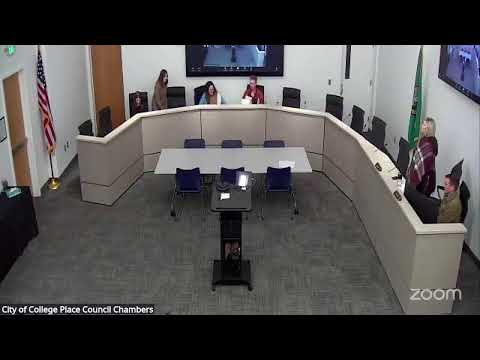
College Place Police Chief Troy Tomares told the Youth Advisory Commission on Feb. 19 that the department is operating with 18 commissioned officers, including 11 patrol officers, and that the city remains understaffed for its roughly 10,000 residents.
Tomares said the department is funded for 11 patrol officers, one school resource officer and two detectives and that the department has used body-worn cameras since February 2021. “We are well understaffed to serve our community,” he said, citing the Department of Justice guideline of 2.5 officers per 1,000 residents as a reference point.
The chief described the department’s organizational structure and duties — patrol officers handling traffic and immediate response, two detectives (one on general investigations and one on the drug task force), a school resource officer assigned to local schools, and two full-time and one part-time clerks who handle paperwork. He noted the department’s Axon body-camera contract will require renegotiation in 2026 and called the cameras a tool for transparency and officer protection.
Tomares highlighted accreditation and data reporting: the department achieved state accreditation for the first time in 2020 and is one of about 67 accredited agencies in Washington, and he said the department publishes annual and bias monitoring reports so the public can review enforcement trends.
On facilities, Tomares told commissioners the department sought voter approval for a new police building in the most recent bond measure but fell just under the 60% supermajority needed for passage. He described the current building as undersized and aging — originally built in the 1950s and repurposed multiple times — and said staff will continue exploring funding options.
The chief also summarized the hiring process and timeline for new officers (application, oral boards, background checks, polygraph, academy training and probationary field training), and said recruitment and retention remain ongoing concerns as the city grows.
The presentation concluded with an invitation to review the department’s operations plan and reports on the city website and to contact the chief by email for follow-up questions.