Get Full Government Meeting Transcripts, Videos, & Alerts Forever!
Get email alerts on the Public Service Commission Budget topic
No spam. Unsubscribe anytime.
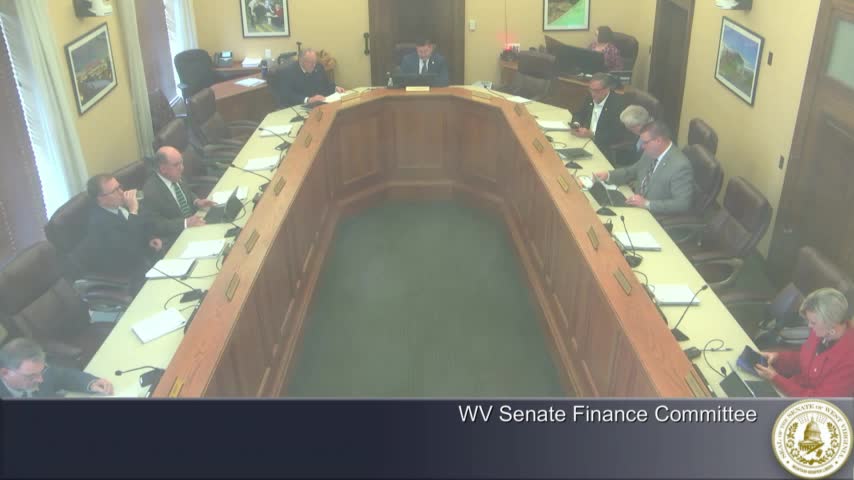
PSC tells Senate finance its $26.8 million base budget is unchanged; flags vacancies, E‑911 fees and pending pipeline hearings
Summary
Charlotte Lane, chairwoman of the West Virginia Public Service Commission, told the Senate Finance Committee the PSC’s base budget request remains $26,826,023, described the commission’s special‑revenue funding mix and highlighted staffing shortages, E‑911 fee distributions and pending hearings on abandoned pipeline lines.
Chairwoman Charlotte Lane of the West Virginia Public Service Commission told the Senate Finance Committee that the commission’s base budget request is unchanged from last year at $26,826,023 and that the PSC is funded entirely by special revenue, not general revenue.
Lane said the PSC’s appropriations are largely supported by assessments on utilities and described the current assessment rates: “Right now, our assessment is at 26¢,” she said, and the property assessment is set at 0.065 (65% of the 10¢ statutory maximum). Lane said the 26¢ assessment produces roughly $13,800,000 and the property assessment brings in about $4,400,000. She described the commission’s three appropriated state funds as the utility fund (the largest), gas pipeline safety and motor carrier, and said federal funds support pipeline safety and motor carrier work.
The nut of Lane’s presentation was that the PSC is a largely self‑funded regulator with concentrated cash flows early in the fiscal year: “97% of this revenue is received in the first 2 months of the fiscal year,” she said. The commission reported the PSC “big fund” (utility fund) at more than $23,000,000, pipeline safety at about $507,000 and motor carrier at about $3,200,000.
Lane walked senators through the E‑911 fee distribution (the commission collects the subscriber fee and passes it through). She described the $3.64 total E‑911 fee per subscriber and a statutory split she summarized as 19¢ to the West Virginia Division of Homeland Security, 10¢ to the West Virginia State Police and 8¢ to the wireless tower fund. She said the total amount distributed from February 2007 through February 2024 is “almost $742,000,000.”
Staffing and hiring were a focus of the hearing. Lane said the PSC has about 217 employees and roughly 74 vacancies, and that hiring is difficult because the agency needs candidates with “sophisticated financial backgrounds, legal backgrounds, engineering” skills. She described recruitment outreach to state universities to attract candidates.
On small water and sewer utilities, Lane reviewed statutory authority that the legislature gave the PSC to act when utilities are failing. She said the PSC now can, after hearings and investigation, determine a utility is “failing or distressed” and designate a capable utility to take it over. Lane said the commission has pursued roughly 20 such takeovers and is working on funding transition costs, including possible assistance from the infrastructure council, and said the PSC will consider phased‑in rate changes where appropriate.
Senators pressed Lane about utility rate drivers, fuel and procurement issues, and smart meters. Lane noted the PSC reviews fuel costs and purchasing decisions by companies such as AEP and FirstEnergy; she said a prior Supreme Court matter led the PSC to disallow $257,000,000 in costs that the commission said resulted from higher‑cost purchases from the PJM market rather than generating capacity the utilities could have used. That matter, she said, is before the commission for rehearing.
On pipeline abandonment and the Hope Gas matter, Lane said the abandonment and conversion cases remain pending and that the commission expects hearings in May. She said Hope Gas has taken over lines Equitable sought to abandon and that the commission is examining options for roughly 600 FarmTap customers and the producers who use gathering lines.
Lane also addressed whether public service commissioners should be elected. Asked by a senator whether the PSC should be elected, Lane replied, “I would say no because then you would have people going around claiming that they're going to lower your utility bills,” and argued electioneering could create unrealistic promises about rates.
The presentation closed with senators asking follow‑up questions about premium increases for PSC employees’ benefits, the commission’s division structure and the timing of upcoming hearings. Lane said the PSC will continue to answer legislators’ questions as matters proceed.
Votes at the meeting that were recorded on the transcript were procedural: the committee approved minutes from Tuesday, Feb. 18, 2025, on a voice vote after the vice chair moved to accept them, and later the committee voted to adjourn.