Get Full Government Meeting Transcripts, Videos, & Alerts Forever!
Get email alerts on the Judicial Appeals Court Oral Arguments topic
No spam. Unsubscribe anytime.
Appeals court hears dispute over mortgage notice and buyer's title in longtime foreclosure fight
Summary
At oral argument before a three-judge panel of the Massachusetts Appeals Court, lawyers debated whether mortgage default notices were properly sent under contract paragraphs 15 and 22, and whether a third‑party purchaser at a 2012 foreclosure sale is a bona fide purchaser after a later judgment voided the sale and reinstated the mortgage.
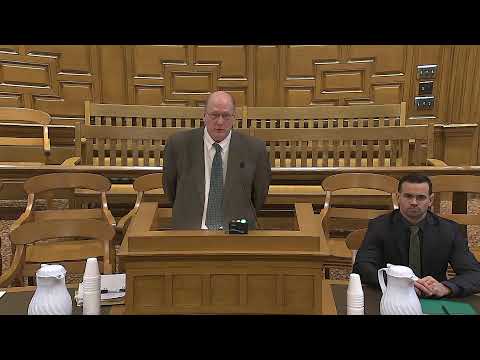
A three-judge panel of the Massachusetts Appeals Court heard oral argument in case 24P0486, Espanola v. Murphy, over whether a borrower received required mortgage default notices and whether a third‑party purchaser at a 2012 foreclosure sale holds title despite a later judgment voiding the foreclosure and reinstating the mortgage.
Attorney Luke McCall, representing appellant Eileen Murphy, told the panel the underlying foreclosure was “conducted basically without her knowledge, without notice of the default,” and said the case’s long history — a 2012 foreclosure later called unlawful on appeal and a January 2017 judgment voiding the foreclosure deed and reviving the mortgage — drives the legal issues now before the court. McCall said the record shows a settlement and judgment in a superior‑court case restored Murphy’s mortgage and that multiple notice and accounting questions remained, including whether Nationstar, the mortgagee, provided required default notices under the mortgage’s paragraph 15 and paragraph 22 requirements.
The judges pressed McCall on factual details that the lower court had accepted as undisputed. The panel questioned whether Murphy or her co‑borrower, Paul Murphy, had changed a notice/mailing address and how that change — if it occurred — would affect the sufficiency of mailed default notices. McCall said service was effectuated in the superior‑court action and that some relevant notices were sent to the property address and to counsel, but he acknowledged he lacked certain discovery documents showing an explicit address‑change instruction directly from Paul Murphy to the mortgagee.
Attorney Eaton, representing appellee Gene Espinal (the purchaser at the foreclosure sale), argued the record shows notices were mailed to the Lowell property and that “notice to one is notice to both,” asserting compliance with the mortgage terms. Eaton told the panel the purchaser would be protected as a bona fide purchaser under the statutory provisions referenced in argument unless there was evidence in the record of the foreclosing mortgagee’s failure to comply with notice requirements.
The lawyers disputed several specific points that the panel flagged as legally significant: whether mailing mortgage statements to a different address can be treated as a formal change of the contract’s notice address; whether a first‑class mailing to the property satisfied paragraph 15; whether paragraph 22 required separate notice to both borrowers with an accurate cure amount; and whether returned‑to‑sender or unclaimed mail entries in the loan file established lack of effective notice. McCall emphasized an accounting dispute: after the court unwound the 2012 foreclosure, the mortgagee purported to add taxes, insurance, fees and interest onto the reinstated loan and demand payment, a practice McCall described at argument as “not fair.”
The panel also questioned whether the purchaser, Espinal, had any notice of title infirmities before buying at the foreclosure sale and how title examiners and foreclosing counsel had treated possible defects. Eaton said purchasers generally assume the foreclosing mortgagee complied with requirements and that review before recording focuses on the foreclosure notice and statutory compliance.
One collateral point on the record: the panel noted the property’s condition and current occupancy status. Eaton said the house in Lowell is probably “not livable” now and “empty,” and the parties stated an appeals‑court order set the use‑and‑occupancy payment at $1,000 a month.
Oral argument concluded with no decision announced from the bench. The judges asked detailed questions of both lawyers and appeared focused on the legal consequences of where and how the mortgage notices were sent, the proper application of paragraph 15 and paragraph 22 of the mortgage contract, and whether the buyer qualifies for statutory protections as a purchaser at a foreclosure sale.
The court recessed after both lawyers finished argument; a ruling will follow in the appeals court’s normal course.