Get Full Government Meeting Transcripts, Videos, & Alerts Forever!
Get email alerts on the Fire Safety topic
No spam. Unsubscribe anytime.
Council approves purchase of two fire engines; councilmember seeks fire master plan and station siting study
Summary
Council approved early acquisition of two fire engines and councilmember Arias referred staff to develop a fire master plan and explore station siting, staffing and funding; the fire chief warned that recent Southern California fires show the need for continued preparedness and coordination with water and mutual‑aid partners.
Bakersfield — The Bakersfield City Council on Jan. 22 approved the purchase of two new fire engines and heard a referral from Councilmember Arias asking staff to develop a city fire master plan and begin design work for a new station, with particular attention to South Bakersfield.
The council approved the early acquisition authorizing procurement of two fire engines; the consent item (7D3) passed with Councilmember Weir absent. Vice Mayor presented the purchase as a forward-looking replacement and expansion measure; the consent item file notes the city’s recent fleet additions and the multi-year lead time for apparatus procurement.
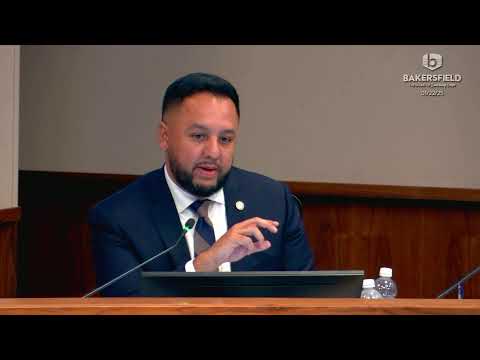
Councilmember Arias said the council should go further and directed staff to prepare a fire master plan that would identify station locations, staffing needs and a design program for a new station, and recommended the item be considered for funding during the next budget cycle. “I would like the community development committee to explore how we add, within our development codes, … a substation,” Arias said, arguing the city needs to plan for growth in the south and to “begin the design process for a new fire station.”
The fire chief briefed the council on lessons from recent Southern California fires and the limits of firefighting systems under extreme conditions. The chief said the Palisades and Eaton fires formed a “perfect storm” of dry fuel and high winds and that the fires sometimes spotted “a half to three quarters of a mile” ahead of the main fronts — a dynamic that strained water supply and mutual‑aid operations. “When you hook up a hundred fire engines to water systems, it’s very difficult to design a system to handle that much water flow,” the chief said.
Council discussion highlighted staffing and mutual‑aid arrangements. Councilmembers urged that any master-plan work include staffing projections, station siting tied to call volumes, and a review of the city’s joint‑powers agreement with county partners. Councilmember Coleman said infrastructure and staffing must be “future proofed” so stations and departments have adequate personnel as growth continues.
Council approved the purchase of the two engines (consent item), and council directed staff to return with more detailed planning work; members suggested using Public Safety and Vital Services (PSVS) funds or other sources to finance planning and design. The council also asked staff to report back on the city’s JPA arrangements with the county and to quantify staffing needs and call‑volume trends.
Votes at a glance
• Consent item 7D3 — Purchase of two fire engines: approved (motion recorded; Councilmember Weir absent).