Get Full Government Meeting Transcripts, Videos, & Alerts Forever!
Get email alerts on the Family Preservation Accountability Act topic
No spam. Unsubscribe anytime.
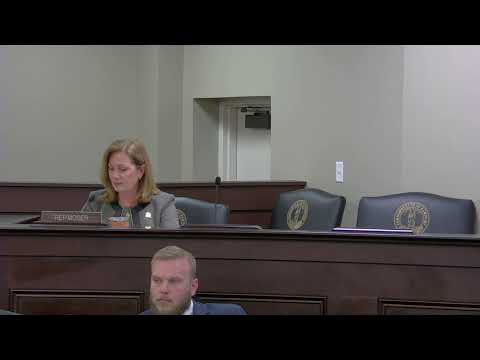
Committee backs Family Preservation and Accountability Act to expand sentencing alternatives for caregivers
Summary
The committee voted to advance a committee substitute for House Bill 291, the Family Preservation and Accountability Act, which would allow a criminal defendant to move the court to consider their status as a primary caregiver when sentencing for certain nonviolent felony convictions.
The committee voted to advance a committee substitute for House Bill 291, the Family Preservation and Accountability Act, which would allow a criminal defendant to move the court to consider their status as a primary caregiver when sentencing for certain nonviolent felony convictions. The substitute adds options judges may use, such as supervised programs, counseling, and parenting services, while preserving judicial discretion.
Representative Wilson, sponsor of the committee substitute, described the measure as a tool to prioritize family unity and reduce the collateral harm of parental incarceration. “The intent of the bill is to prioritize family unity, reduce harm from the separation of parents and children, and offer a rehabilitative approach,” Wilson told the committee.
Witnesses and advocates offered testimony about the bill’s goals and evidence. Amanda Hall of dream.org recounted her personal experience of parental incarceration and urged alternatives that keep families together when safe. “While being locked up was painful, by far, the worst pain was being separated from my kids,” Hall said. Courtney Downs of Kentucky Youth Advocates and Scott West, a criminal defense practitioner representing policy organizations, cited data on the number of children affected and argued alternatives such as probation and supervised rehabilitation can reduce recidivism and harms to children.
Judge Patricia Sumi, a general jurisdiction circuit judge in Kenton County, testified in opposition in part and cautioned about definitional and procedural consequences of requiring judges to make findings about caregiver or dependent status during criminal sentencing. She said such determinations can require evidentiary hearings and risk overlapping with family-court proceedings; she urged procedural adjustments, stronger information flows from defense counsel and probation, and clarified routes to provide services through probation and parole.
Supporters noted the substitute does not require judges to impose alternative sentences; it requires that, upon a defendant’s motion, the court determine whether the defendant is a caregiver or involved parent and then may consider alternative sentencing options. Proponents said the substitute includes edits to address judges’ procedural concerns and to limit the finding’s use outside the sentencing context.
The committee substitute passed on a unanimous 13–0 vote and was recommended to the full House with a favorable expression.
Votes at a glance
• House Bill 291 (committee substitute) — Motion to report favorably (mover: not specified in transcript; committee substitute adopted). Committee vote: 13 yes, 0 no. Outcome: passed committee with favorable expression.
Status and context
Supporters framed the bill as preserving caregiver-child relationships and reducing long-term harms to children from parental incarceration; some judges and court observers urged careful drafting to avoid procedural burdens and overlaps with family-court determinations. Committee members asked for operational clarity on how evidence about caregiving status would be gathered and transmitted to sentencing judges.