Get Full Government Meeting Transcripts, Videos, & Alerts Forever!
Get email alerts on the Employment Justice Administrative Law topic
No spam. Unsubscribe anytime.
Committee approves bill to delay newly appointed workers’ compensation ALJs taking office until Senate confirmation
Summary
Senate Bill 201 would prevent newly appointed administrative law judges for workers' compensation from assuming office until the Senate confirms them and allow for retention votes similar to board members; committee approved the measure to reduce turnover and encourage applicants.
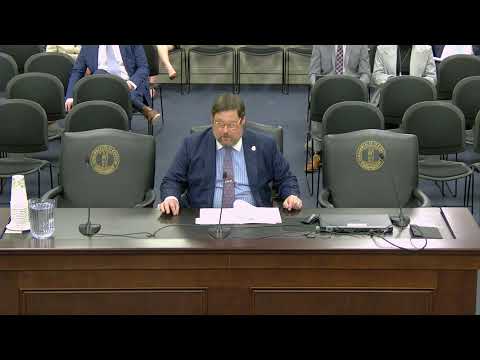
Senate Bill 201, presented by Chair Tom Wheeler, would require that newly appointed administrative law judges (ALJs) in the workers' compensation system not take office until the state Senate confirms them. The measure also allows sitting workers' compensation board members to be handled by a retention vote by the nominating committee, aligning their process with that used for ALJs.
Wheeler said the change aims to address recruitment problems that arose when applicants were hesitant to leave private practice for ALJ positions because they might not be confirmed and would then be left without a job. "Now there seems to be a hesitancy to apply for these positions because they're afraid if they take the position and they shut down their law practice or leave their job, then perhaps they won't be confirmed by the senate," Wheeler said. Under the bill, newly appointed ALJs would not assume office until confirmed; exceptions would be allowed in cases of death or disability. The bill also extends the terms of current ALJs through June 1 of the next year for those not pending Senate confirmation.
Committee members asked whether the bill would affect pay rates or caseloads. Wheeler said salaries are set by statute (equal to circuit judges) and that the commissioner reviews case loads before authorizing positions. "The salary itself is actually set by statute. It's the same as a circuit judge in the Commonwealth of Kentucky," Wheeler said.
A motion and a second were recorded and the committee approved the bill by roll call. Senators indicated support during the roll call and the committee reported the bill favorably to the Senate.