Get Full Government Meeting Transcripts, Videos, & Alerts Forever!
Get email alerts on the Sewer Infrastructure topic
No spam. Unsubscribe anytime.
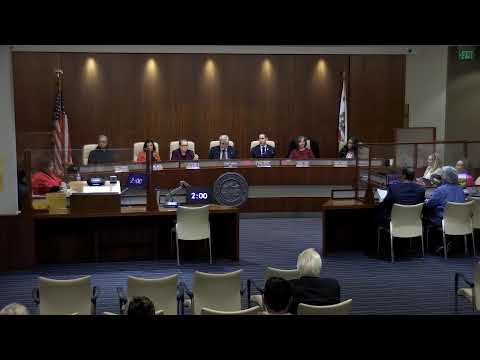
Richmond council adopts 45-day moratorium on new connections to Keller Beach sanitary sewer
Summary
The Richmond City Council approved an urgency ordinance establishing a 45-day moratorium on issuing building permits that require new sewer connections to the aging Keller Beach sanitary sewer, while directing staff to study interim solutions including holding tanks and possible rerouting.
The Richmond City Council voted unanimously to adopt an urgency ordinance imposing a 45-day moratorium on issuance of building permits that would require new connections to the Keller Beach sanitary sewer.
The moratorium, approved after a public hearing and staff presentation, is intended to reduce the risk of sanitary sewer overflows (SSOs) into the San Francisco Bay while the city pursues interim and long-term engineering solutions. "The Keller Beach sanitary sewer is a critical but aging piece of infrastructure and without intervention it presents serious environmental risks," Robert Armijo, deputy public works director and city engineer, told the council.
Council members were briefed on the sewer's history and condition: the line was installed around 1959; Coastland Engineering's prior condition assessment rated portions of the pipeline as grade 5 (imminent failure); and Baykeeper entered settlement agreements with the city in February 2002 and again in February 2018 that require condition assessment and remedial work. Armijo said some sections are inaccessible for modern maintenance and that adding new connections would increase the risk of overflows that can harm water quality and public health.
At the hearing, staff described a three-track approach: (1) select consultants to complete a feasibility and engineering study and to develop interim standards for sewage holding tanks; (2) pursue community engagement via a contracted facilitator (Kearns and West) after resolving contract issues; and (3) issue an RFP to replace the prior engineering consultant (Coastland) and produce a final engineered solution. "The moratorium ensures we stop exacerbating the problems while we work on the solutions," Armijo said.
Several residents and property owners urged faster alternatives. Longtime resident and wastewater engineer Norm Hanche told the council he had identified roughly 50–60 houses that, in his view, could be rerouted to nearby sewers by relatively simple manhole and gravity line work. "I've followed and engaged as much as I can ... I supported that (the first moratorium). I think that was the right thing to do," Hanche said, urging staff to study rerouting during the 45-day window.
Online speakers and neighborhood representatives echoed the request for feasible reroutes and urged a clear workaround for a small number of approved projects that have been delayed for multiple years. Staff acknowledged public frustration, the heated meetings that preceded Coastland's withdrawal, and the need for a transparent work plan. The ordinance the council approved includes a staff direction to prepare a scope of work for a feasibility study to determine whether sewage flow into the Keller Beach line can be reduced by measures including, but not limited to, rerouting flows from specified local streets and to report back before the moratorium expires.
Council members and staff clarified that the moratorium will not be effective until the California Department of Housing and Community Development (HCD) approves it, and that applicants may still submit permit applications for processing during the interim. Staff also noted an existing relief procedure in the moratorium language that allows individual projects to seek exemption if they meet criteria and are reviewed by planning and engineering (one such relief was approved recently by the planning commission).
Next steps identified by staff include finalizing contracts with Kearns and West for public facilitation, advancing a work authorization with the firm developing holding tank standards, issuing an RFP for a replacement engineering consultant, and preparing a detailed work plan on alternative routings and interim measures. Armijo told the council the final engineered solution will move through planning, design, permitting and construction and will likely take multiple years to implement.
Votes at a glance: The council approved the consent calendar unanimously earlier in the meeting (motion by Council Member Robinson; seconded by Council Member Jimenez). Later, the council adopted the 45-day urgency ordinance with an added Section 6 directing staff to prepare a feasibility scope on possible reroutes. The moratorium motion was made by Vice Mayor Cepeda and seconded by Council Member Brown; the vote was unanimous.
The council directed staff to return with the feasibility work plan and other recommended actions prior to the moratorium's expiration and to continue engagement with residents and stakeholders during the interim period.