Get Full Government Meeting Transcripts, Videos, & Alerts Forever!
Get email alerts on the Wildfire Preparedness topic
No spam. Unsubscribe anytime.
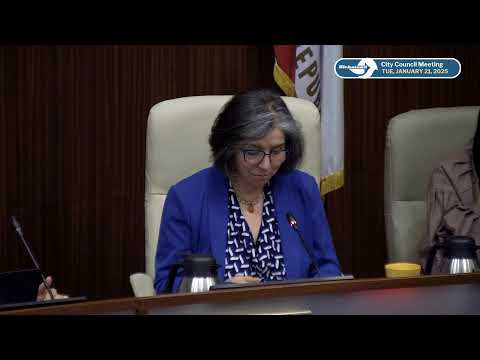
Richmond City Council creates ad hoc wildfire preparedness committee, narrows scope to wildfire
Summary
The Richmond City Council voted unanimously Jan. 16 to form an ad hoc committee of council members and staff focused on wildfire preparedness, with immediate community meetings requested and budget recommendations to follow.
The Richmond City Council voted unanimously Jan. 16 to form an ad hoc committee to focus on wildfire preparedness, directing city staff and council members to conduct outreach, identify needs and bring budget and code-change recommendations back to the full council.
Council Member Wilson moved to narrow a broader disaster-preparedness request to wildfire preparedness and to establish an ad hoc council–staff group; Vice Mayor Cepeda, Council Member Bana and Council Member Brown volunteered to serve on the committee. The motion—amended on the floor to require immediate community meetings in neighborhoods with high wildfire risk and to request that the committee develop budget proposals—passed unanimously.
Council discussion emphasized the narrow operational focus: Council Member Robinson and others asked staff to target wildfire areas with the highest risk and to avoid an overly broad “all hazards” report that would be too time-consuming for a small emergency-staff team. Council members said they wanted a practical set of recommendations timed to the midyear budget process so the council could consider specific resource requests.
Fire Chief Aaron Osorio briefed the council on existing work and constraints: Richmond already has a Community Wildfire Prevention Plan adopted in 2020, conducts high‑severity‑zone parcel inspections (roughly 2,900 inspections last year), participates in regional mutual aid and CAL FIRE coordination, and maintains an Office of Emergency Services with limited staffing. Chief Osorio said the city has focused on education to gain voluntary compliance on vegetation management but noted that enforcement and abatement avenues exist and would require multi‑department coordination (fire, public works, city attorney) and staffing if the council pursues them.
Council members pressed for clear next steps: staff were asked to bring a needs assessment identifying staffing, equipment, community engagement, and possible municipal code updates; Chief Osorio noted the state will soon publish updated high‑severity maps that staff will present for adoption and warned there are consequences to adding areas into a mandated inspection zone. Several council members suggested the ad hoc committee begin with community meetings to address urgent neighborhood concerns and to inform a longer-term comprehensive approach.
The council recorded the ad hoc committee membership on the record and asked staff to return with a recommended schedule, initial needs assessment and any proposed code updates or budget requests that would improve wildfire preparedness and mitigation.