Get Full Government Meeting Transcripts, Videos, & Alerts Forever!
Get email alerts on the Egle Overview topic
No spam. Unsubscribe anytime.
EGLE director outlines agency structure, water and brownfield work, PFAS coordination and grants
Summary
Phil Roos, director of the Department of Environment, Great Lakes and Energy (EGLE), briefed the committee on EGLE’s organization, grant-driven budget, water and air programs, brownfield redevelopment, remediation and the Michigan PFAS Action Response Team (MPART).
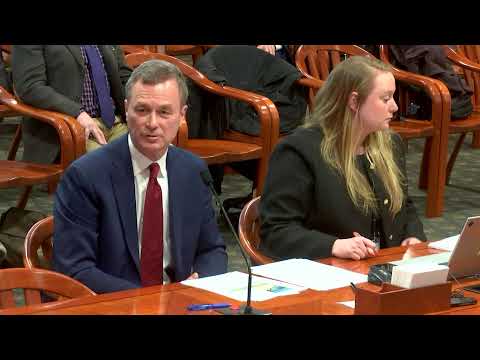
EGLE Director Phil Roos and legislative liaison Sydney Hart provided the House Natural Resources and Tourism Committee with an overview of the department’s mission, structure and major program areas, emphasizing the agency’s regulatory role and the economic and public-health consequences of its work.
Roos told the committee EGLE employs more than 1,500 scientists, engineers and staff and that more than half of the department’s budget is grant funding that flows back to local communities for projects such as drinking-water infrastructure upgrades. Roos said water infrastructure grants alone supported roughly 75,000 jobs in the last five years.
Roos summarized key divisions: air quality (monitoring, permitting and a new MyEnviroPortal to digitize permits), water resources (permits for discharges, wetland mitigation and monitoring), drinking-water and environmental health (overseeing more than 10,000 public water supplies and reviewing roughly 250,000 public water samples), materials management (waste and recycling programs) and remediation and redevelopment (brownfields and leaking underground storage tanks). He also described the Michigan PFAS Action Response Team (MPART) as a coordinating body across seven agencies for PFAS contamination response.
On remediation and redevelopment Roos said EGLE has provided more than 400 brownfield grants that helped spur about $7,000,000,000 in private investment and supported roughly 34,000 jobs. He said the department has undertaken process improvements and digitization to accelerate cleanups and that about 26,000 contaminated sites are tracked in state programs. Roos added the department has increased the number of sites cleaned annually through internal process changes.
Committee members asked about EGLE’s environmental justice work and the Marquette office in the Upper Peninsula. Roos cited EJ grants and coordination with permitting teams and offered to follow up with more specific examples and exact staffing numbers for the Marquette office.
The committee treated the presentation as informational; no formal EGLE actions or votes were recorded during this meeting.