Get Full Government Meeting Transcripts, Videos, & Alerts Forever!
Get email alerts on the Insurance Education topic
No spam. Unsubscribe anytime.
Insurance 101: MSU expert briefs House committee on risk, rates, reinsurance and consumer protections
Summary
Tom Humphreys of Michigan State University gave a high-level overview of insurance principles to the House Insurance Committee, covering risk transfer, underwriting, reinsurance, deductibles, uninsured/underinsured motorist coverage, claims handling and tools consumers can use to locate life insurance benefits.
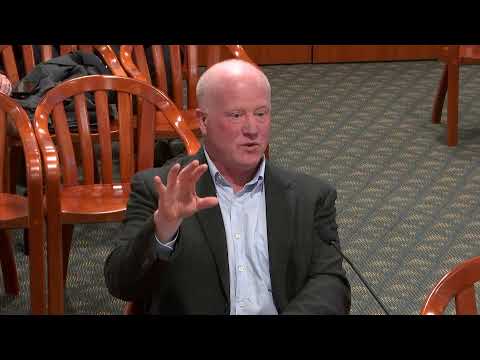
Tom Humphreys, director of the insurance and risk management program at the Eli Broad College of Business at Michigan State University, told the House Insurance Committee that insurance "helps facilitate commerce" and that without it "our modern financial system really wouldn't work." He delivered a high-level "Insurance 101" presentation for new committee members and answered questions on deductibles, reinsurance and consumer tools.
Humphreys summarized core concepts for legislators: insurance pools risk and relies on the law of large numbers to predict losses; underwriting and risk selection combat adverse selection; indemnity aims to restore a policyholder to the financial position they were in before a loss; and premiums are built from loss costs, overhead and profit. He described deductibles and coverage limits as consumer choices that help keep premiums affordable and explained that the Department of Insurance and Financial Services (DIFS) reviews rates to ensure they are not excessive, inadequate or unfairly discriminatory.
On catastrophic losses and geographic spillover, Representative John Fitzgerald asked whether distant disasters affect Michigan rates. Humphreys said insurers buy reinsurance—"insurance for an insurance company"—and that large losses in states such as California and Florida can increase reinsurance costs that in turn put upward pressure on premiums nationally, though the impact may be larger in the hardest-hit states.
Humphreys also walked members through components of common policies: liability and collision/comprehensive for auto, uninsured and underinsured motorist coverages, homeowners dwelling and contents coverage plus loss-of-use (additional living expenses), and life insurance types (term, whole life, universal). On life insurance, he told members that "getting it early is critical" because premiums and underwriting get less favorable as a person ages or develops health conditions.
On locating life insurance benefits for heirs, Humphreys flagged two resources: the National Association of Insurance Commissioners (NAIC) policy locator and a similar monthly-matching tool the Department of Insurance and Financial Services runs in Michigan. He recommended that people run both searches to locate potential policy benefits when a policyholder dies.
Committee members asked about deductibles and consumer education. Humphreys said rising repair and replacement costs are driving premium increases and that agents are advising customers on deductible choices by weighing premium savings against potential out-of-pocket costs in a loss.
The presentation was framed as an orientation; members did not take formal action on policy changes. Chair Mike Harris thanked Humphreys for the overview and the committee adjourned.