Get Full Government Meeting Transcripts, Videos, & Alerts Forever!
Get email alerts on the Dei Restrictions topic
No spam. Unsubscribe anytime.
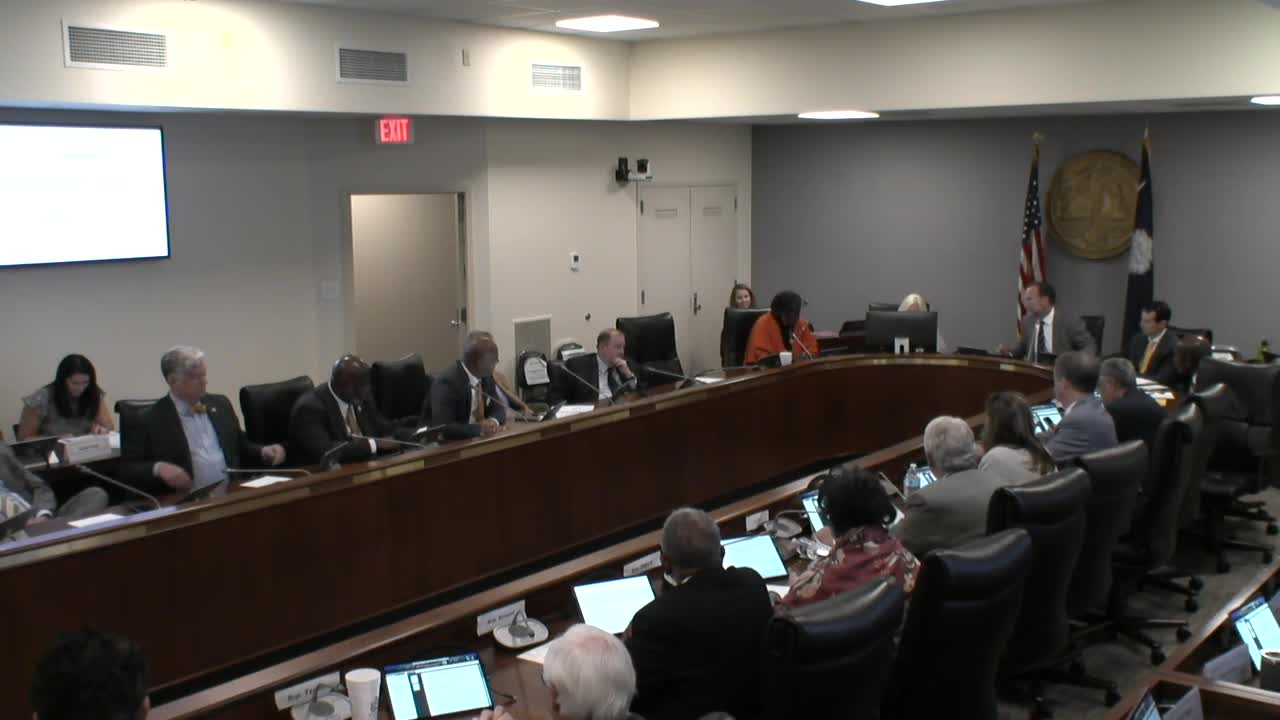
Committee approves proviso restricting DEI uses of state funds after extended debate
Summary
The committee passed an amendment limiting the use of state funds for diversity, equity and inclusion (DEI) offices and activities across state agencies and public institutions, while carving out academic instruction, research, student organizations, guest speakers, certain student‑achievement activities and data collection.
The House Ways and Means committee approved an amendment that restricts state funds from being used to create or mandate DEI offices, compel DEI statements from applicants, give hiring preference based on race or gender, or require DEI training — while explicitly exempting academic instruction, scholarly research, student organizations, short‑term guest speakers and permitted data collection.
Representative Ballantine presented the amendment as a "scalpel approach" intended to provide precision after prior broader proposals. "What we've got here is we've got a scalpel approach, which is more precision, which is a better way to handle this," Representative Ballantine told the committee.
Members pressed for specifics on scope and impact. Representative Weeks asked for a definition of what qualifies as a DEI program; Ballantine said he could not enumerate every program but said the change is intended to align state spending with merit‑based decisions and federal compliance. Representative Dillard raised questions about whether the amendment would apply to public institutions only or to all institutions of higher education that receive state funds; the author said the proviso applies to entities receiving state funds and that the intent was to limit the measure to public funding.
Representative Cobb Hunter, referencing prior subcommittee sessions, said committee members had asked institutions how much state money they spend on DEI and reported that institutions had said no state funds were being spent on DEI. Questions were also raised about whether to add explicit language addressing legacy admissions; the author declined to add that language at this time, saying he preferred to move the amendment forward and revisit other proposals later.
After extended discussion, committee members approved the amendment by voice vote. Supporters said the language clarifies permissible activity while preventing perceived preferential treatment; opponents cautioned that the amendment could be unnecessary if institutions are already not spending state funds on DEI or could have unintended consequences.
Ending: The committee adopted the DEI proviso amendment and moved on; members indicated they may revisit related questions (for example, legacy admissions or private institutions receiving state dollars) in later consideration.