Get Full Government Meeting Transcripts, Videos, & Alerts Forever!
Get email alerts on the Utilities Water Sewer topic
No spam. Unsubscribe anytime.
Selectmen approve 2% water and 7% sewer rate increases; ask staff for capital-cost breakdown
Summary
After a consultant recommended modest rate increases, the Wolfeboro Board of Selectmen voted to raise water rates 2% and sewer rates 7% effective on March bills and asked staff to provide a breakdown of capital and operating costs and options for shifting funding responsibility between ratepayers and taxpayers.
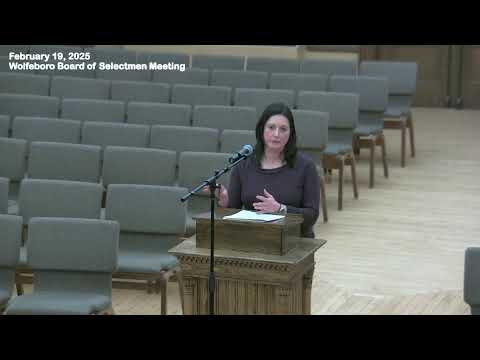
Wolfeboro — The Board of Selectmen voted Feb. 19 to implement a consultant-recommended 2% increase in the town’s water rate and a 7% increase in the sewer rate, and directed staff to prepare more detailed modeling of how capital and operating costs are allocated between ratepayers and the general fund.
The vote: The board approved the rate adjustments as presented by town and Public Works staff using Underwood’s modeling. The board recorded the new unit rates in the presentation as $12.44 for water and $20.37 for sewer, with the changes to be programmed for the March 1 billing cycle and billed in April.
Why it matters: Utility-rate changes affect all customers connected to town systems and feed into capital planning for infrastructure work. Board members used the item to revisit a longer-running policy question: how much of sewer and water capital costs should be paid by user rates versus by town-wide taxation.
What was said: Steve Bridal of Public Works reviewed the consultant recommendations and the draft rate schedules. He described the specific percentage increases and the billing implementation plan. Selectmen asked for additional projections; one member asked staff to model scenarios where user fees covered a target share (for example, 60% of sewer costs) to avoid shifting growing capital costs onto general taxation.
Board direction and next steps: Members asked staff and the consultant to produce additional, layered financial scenarios that separate operating costs, debt service, depreciation or capital reserve funding and other shared/common costs — a “layer cake” approach several members recommended. One board member also requested a legal check on whether the town’s current practice of placing some capital costs on the tax rate is consistent with state RSAs; staff said a legal opinion could be sought but asked the board to consider timing and cost for that work. Underwood provided a fee estimate for expanded modeling.
Background: The board previously heard an initial presentation from Underwood at a Feb. 5 meeting. The consultant model showed pressures from projected capital outlays and debt which, if maintained at previous funding levels, would require growing support from taxation unless rates are adjusted.
Ending: The board approved the rate motion at the meeting and requested additional analysis. Staff will program the new rates into the billing system and return with the requested cost-allocation scenarios and information on capital-reserve treatment, potential legal review and options for presenting a policy change to voters if the board decides to pursue one.