Waynesboro public works outlines infrastructure capacity, projects and development review process
Loading...
Summary
A Waynesboro Public Works representative briefed the Planning Commission on water, sewer, stormwater, streets, refuse and engineering programs, highlighting capacity margins, ongoing projects and the city's public improvement review and acceptance process.
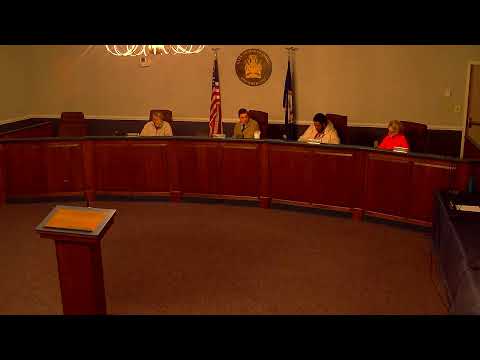
Waynesboro Public Works gave the Planning Commission an overview of the department's operations, current projects and how new development ties into city utilities and streets. Britt, a Public Works Department representative, said the department manages water, wastewater, stormwater, streets, refuse and fleet programs and reviews and inspects public improvements for new subdivisions.
The presentation centered on how growth affects the distribution infrastructure that delivers service rather than the treatment plants. Britt said the city serves roughly 9,000 water and sewer customers and maintains about 410 miles of public infrastructure. "The raw water tank will help ease some of the strain" on source wells and treatment during high demand and drought, Britt said, and the tank at Coiner Springs is scheduled for completion March 25. He added that the water and wastewater treatment plants are operating at roughly 50 to 60 percent of capacity, and that distribution constraints'including long pump run times at booster stations'are a key concern as development grows.
Why it matters: commissioners and staff said the city is seeing a surge of residential subdivision activity, and Public Works emphasized that the city must ensure new streets and utilities are built to standards that the city can maintain after acceptance. That affects long-term maintenance budgets, emergency access and the timing of upgrades to mains and pumps.
Water and sewer details: Britt described the water system as fed from the Coiner Springs plant and delivered through multiple pressure zones; most new development is in the main pressure zone and the Red Top zone. He said the Shenandoah Village Drive booster pump station has exceeded design run-time limits at times and that the Virginia Department of Health requires pump redundancy. On sewer, Britt said the wastewater plant treats about half of its capacity and the city divides the collection system into roughly 20 "sewer sheds." He flagged the southern interceptor through downtown and certain upstream areas for closer monitoring because of high wet-weather flows and inflow-and-infiltration (I&I) from aging pipes.
Ongoing projects and condition work: Public Works is lining failing sewer pipe and rehabilitating manholes to reduce I&I; Britt said the current scope includes about 3,600 linear feet of sewer mains, 2,500 linear feet of laterals and rehabilitation of 31 manholes. The stormwater program completed a Harmon Avenue drainage project and converted the Hopeman Station pond to a constructed wetland to meet pollution-reduction targets. The department also completed a flush, clean and camera contract that inspected roughly 7,700 linear feet of storm pipe and 76 storm structures last year.
Streets, development standards and acceptance: The pavement management program uses an overall condition index (OCI) and coordinates resurfacing with pending utility and ADA work. Britt explained the city relies on VDOT urban maintenance funds for street maintenance and that new streets must meet VDOT subdivision acceptance requirements to be eligible for that program. He walked commissioners through the five-step public improvement process: preliminary design (preliminary plats, rezonings, PUDs), plan review, construction inspection and testing, a warranty period, and final acceptance. Since mid-2023 Public Works reviewed eight public improvement plans across seven subdivisions totaling about 570 lots, and finalized acceptance phases that created roughly 54 new residential utility connections, Britt said.
Development review timing and capacity planning: Britt told commissioners that plan review for a subdivision typically takes six months to a year from initial submittal to approval and that each review cycle usually takes 30 to 45 days. He said water-use design assumptions often use 3.2 people per household and roughly 100 gallons per person per day as planning figures, and that peaking factors and distribution limitations (mains, slopes, depth) determine whether mains need upsizing. Commissioners requested that Public Works provide build-out or projection scenarios showing how planned development would affect distribution and plant capacity; Britt agreed staff could prepare further details for commission review.
Other operations: The refuse enterprise faces theft and overflow challenges and needs fleet upgrades as routes expand, Britt said. The fleet maintenance program services roughly 600 vehicles and equipment items. The stormwater division manages MS4 compliance delegated by the Department of Environmental Quality and the city's phase 3 Chesapeake Bay action plan for required pollution reductions through 2028. Britt said the department started a strategic planning process in July 2023 to set mission, values and priorities for 2024 and beyond.
Public questions and traffic issues: Commissioners asked whether speed bumps are feasible given snow-removal needs; Public Works said speed cushions and similar measures have pros and cons and that snow operations and emergency access are high priorities. Commissioners also raised safety concerns about heavy trucks approaching the East Main and Delphine intersection and asked whether engineering changes or enforcement could reduce truck speeds; Public Works said traffic-calming measures must be balanced with maintenance and emergency access needs.
Minor subdivision review: staff presented a single minor subdivision (a lot-line adjustment near Ivy Street, north of the Anna Maria Estates development) as a clerical item. The presenter described the lot-line change and said no further questions were raised in the meeting record.
Votes at a glance: the commission adopted the meeting agenda, approved the Jan. 21, 2025 meeting minutes and later adjourned; each motion passed on voice votes recorded in the transcript as "Aye" with no recorded opposition.
Ending: Commissioners did not take further formal action on the substantive items covered; the presentation concluded with requests for more detailed capacity projections and for Public Works to provide additional project and build-out figures for future review.