Get Full Government Meeting Transcripts, Videos, & Alerts Forever!
Get email alerts on the Housing Short Term Rentals topic
No spam. Unsubscribe anytime.
Port Hueneme council asks staff to start community outreach on short‑term rental rules
Summary
After a lengthy presentation and public comments from homeowners association representatives, the council unanimously directed staff to hold community engagement as the next step in considering short‑term rental regulations, with members expressing interest in at least a moderate regulatory approach.
The Port Hueneme City Council voted unanimously to direct staff to begin community engagement and workshops on possible short‑term rental (STR) regulations after receiving a staff overview and hearing from HOA representatives who asked the city to provide uniform rules for the coastal zone.
Staff explained that the city currently has no STR‑specific ordinance and that at least 14 units report and pay transient occupancy tax (TOT). A broader online search found roughly 50 listings advertised on Airbnb or VRBO, though staff said the true number of active, taxable units is likely smaller. Staff emphasized that almost all advertising for Port Hueneme STRs appears to be within the coastal zone, which adds complexity because the California Coastal Commission generally disallows outright bans in the coastal zone and requires local coastal program amendments for significant restrictions; the commission has, however, approved reasonable regulations in other cities.
City staff outlined the policy toolkit other coastal cities use: permitting and licensing, mandatory TOT payment, operational standards (occupancy caps, minimum stays, parking and trash rules), health and safety requirements, and enforcement pathways including progressive penalties and permit revocation. Staff identified three broad options for council consideration: no action, moderate regulation focused on “good neighbor” requirements plus permitting and oversight, and comprehensive regulation (zoning overlays, caps by neighborhood, stronger enforcement). Staff recommended beginning with public outreach to clarify community priorities before drafting an ordinance.
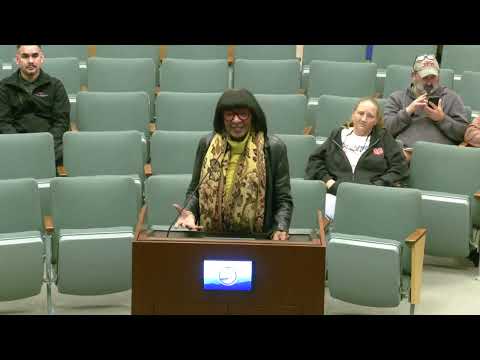
Multiple public commenters representing homeowners associations urged the council to adopt an ordinance to give HOAs tools they lack or to provide a consistent framework for enforcement. Jan Burke, speaking for the HOA coalition, said the coalition wants consistency across HOAs and "to partner with the city to come up with a… ordinance or a guideline to help us to create something that works for the city, works for the HOAs, and that we're all playing on the same level playing field." David Scrivner, president of the First State Village Homeowners Association and vice chair of the HHOAC, told the council that HOA escalation processes are slow and often unenforceable and urged rules with “teeth” so repeat offenders can be barred from operating STRs.
Council members voiced differing emphases: several said they wanted to begin community outreach, and at least two members said they favored a moderate regulation approach as a starting point (good‑neighbor rules, permit and licensing, 24‑hour local contact for complaints, parking and trash obligations). Council discussed resource implications — monitoring listings, processing permits, and enforcement — and the likelihood that the city would need to charge permit fees and rely on TOT revenue or enforcement revenue to cover program costs. Staff estimated that a community engagement process, plus drafting and adopting an ordinance and then submitting any coastal zone amendments to the Coastal Commission, would likely take several months (roughly 3–5 months in a typical schedule) and that Coastal Commission review adds time for coastal‑zone rules.
The council’s formal action was to receive the staff report and "move forward with additional community engagement"; the motion passed unanimously with Council Member Grama, Council Member Hernandez, Council Member Perez, Mayor Pro Tem Lopez and Mayor McQueen Lisonbee voting yes. Staff said it will design public workshops and a survey and return to the council with recommended regulatory options informed by community feedback.