Get Full Government Meeting Transcripts, Videos, & Alerts Forever!
Get email alerts on the Council Appointment topic
No spam. Unsubscribe anytime.
Roanoke City Council interviews three finalists to fill Cobb vacancy; candidates emphasize housing, public safety and fiscal stewardship
Summary
The Roanoke City Council conducted public interviews of three finalists — Rabbi Cathy Cohen, Evelyn Powers and Patricia White Boyd — for the unexpired term of Joseph L. Cobb (ending Dec. 31, 2026). Council said it will consider the applicants in closed session and has not recorded a public vote.
Three finalists interviewed publicly before the Roanoke City Council to fill the unexpired term of Joseph L. Cobb, which runs through Dec. 31, 2026. The council conducted candidate interviews in open session and said it will return to closed session to consider the appointment; no public vote was recorded at the meeting.
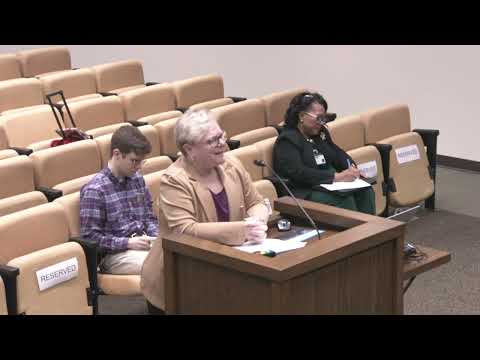
The interviews focused on housing, public safety, equity and fiscal management — issues candidates said they would prioritize if appointed. Rabbi Cathy Cohen, Evelyn Powers and Patricia White Boyd each delivered opening remarks, answered a set of council questions and summarized why they seek the seat.
Rabbi Cathy Cohen, rabbi of Temple Emanuel and chair of the Gun Violence Prevention Commission, described community programs she said she led and emphasized collaboration. "I believe strongly in building a vibrant, safe, and healthy city through community involvement and bringing people who would generally not know each other together," Rabbi Cathy Cohen said. She told council the commission led an early gun-lock distribution to Roanoke City Schools, saying the initial phase distributed "8,000 gun locks across the city." Cohen described her reading-buddies program at Westside Elementary and Lincoln Terrace School and said the work of the Gun Violence Prevention Commission contributed to a large drop in violent crime: "close to 50 ... slightly larger than 50% reduction in violent crime last year," she said.
Evelyn Powers, who described 43 years of municipal service including "the last 20 years as the elected city treasurer," framed her candidacy around fiscal stewardship and operational experience. Powers recounted negotiating tax-penalty changes that reduced immediate late penalties for taxpayers, describing the result as a "2% sliding scale" and describing her work to align business tax penalties with other tax categories. She also described helping found a Virginia investment vehicle in 02/2014 that she said now holds more than $1 billion in assets, saying the pool improved localities' ability to invest liquid funds.
Patricia White Boyd, who served six years on council including two years as vice mayor and who identified herself as administrator of Blue Ridge Senior Services, stressed constituent outreach and economic development. "I'm tenacious," Patricia White Boyd said. "If there's something that needs to happen or something we need to do, I find ways to get it done," citing community fundraising she led for a public memorial and fundraising for a legislative campaign.
On policy specifics, candidates identified housing as a top near-term need. Rabbi Cohen said the city should be "laser focused" on the housing shortage and suggested rehabbing empty or poor-condition homes; Evelyn Powers raised incentives to return boarded-up properties to the tax rolls; Patricia White Boyd urged steps to encourage development across city quadrants, citing recent projects in Southeast, Northeast and near Melrose and urging attention to Northwest neighborhoods.
Candidates also addressed equity and service delivery. Rabbi Cohen discussed work on literacy and programs to support undocumented residents; Powers described citizen-facing improvements made while serving in the treasurer's office; White Boyd described her service on the Equity and Empowerment Advisory Board and programs to expand language access and service delivery.
Council members asked the same set of questions of each finalist (skills, relationship to staff, promoting equity, an example of public collaboration, resolving disagreement, and top priorities for the next one to three years). The dais included repeated references to the city manager form of government and to the city charter; candidates acknowledged the council's role in setting policy and delegating administration to the city manager.
The council said it will return to closed session to consider the candidates and later certify the closed meeting. The meeting record contains no public motion or vote on the appointment.
Summary of next steps: the council recessed and announced it will consider the applicants in closed session and reconvene later to certify the closed meeting; no appointment was announced in the public record provided.