Get Full Government Meeting Transcripts, Videos, & Alerts Forever!
Get email alerts on the Education Policy topic
No spam. Unsubscribe anytime.
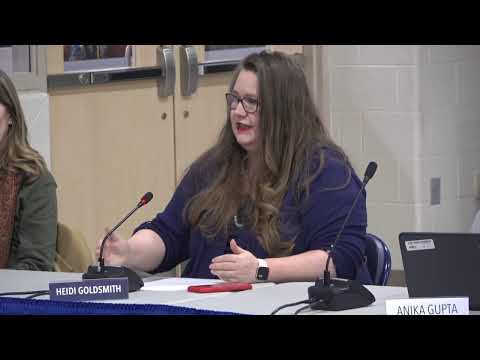
Board hears solicitor on Title IX/Section 504 litigation; policy committee realigns regulations to 2020 rule set
Summary
The board—s policy committee reported review of multiple Title IX-related policies after a court vacated 2024 Title IX regulations; solicitor flagged a separate federal court challenge arguing Section 504 may be unconstitutional, and board members discussed implications and an upcoming —welcoming schools— resolution.
The policy committee reported Feb. 10 that multiple policies tied to Title IX and related guidance were reviewed and sent to the solicitor for alignment with the 2020 regulatory framework after a court vacated the 2024 Title IX regulations.
"After the court case came out, vacating the 2024 regulations in regards to title 9, these policies came back. We made the judgment call to then realign those to 2020 and not necessarily just revert back to the other policies formats," the policy committee reported to the board.
During the meeting, solicitor Michael Fitzgerald warned the board of an evolving federal challenge outside the Title IX rulemaking: states involved in litigation are making a novel argument that Section 504 of the Rehabilitation Act may be unconstitutional. "...they're now arguing, and it's a novel argument, but it's an argument that has picked up a lot of steam, that section 5 0 4 is unconstitutional in and of itself," Fitzgerald said, summarizing recent federal litigation that could affect anti-discrimination enforcement for students with disabilities.
Board members sought to reassure the community and clarify process. Board member Mrs. Hermans said she does not believe pending litigation changes the district's obligations: "I don't think this fundamentally changes our responsibility to students, in making sure that they have the support..." Board member Mrs. Dierdorf noted a resolution she co-authored with district staff and other districts will be brought for adoption next week and urged community members to read the text in the agenda link.
Policy and next steps The policy committee listed specific policy numbers under review; the solicitor reviewed a set of policies to ensure they align with the 2020 regulations and those items were scheduled for first reading. Committee staff said policies 103 (with attachments 2 and 3), 104 (with attachments 2 and 3), 230.4, 240.7, 240.9, 250.2, 3170.1 and 824 were reviewed and would appear on the agenda for first reading. Additional policies (115 and 807) were forwarded to the solicitor and expected on the March agenda pending no substantive changes.
Board discussion emphasized the difference between executive orders or Dear Colleague letters and binding law. "Executive orders do not create new laws. They do not change laws. They do not provide legally binding rules for schools," one board member said, summarizing material in board memo and the solicitor's guidance. Fitzgerald added that while executive actions and agency guidance indicate possible federal enforcement direction, recent court decisions have reduced judicial deference to agency interpretations, making the legal landscape more uncertain.
What the board will act on No new policies were adopted at the Feb. 18 meeting; the committee's reviews and solicitor recommendations will appear as first-read items in upcoming board agendas. The welcoming-schools resolution referenced by Mrs. Dierdorf was scheduled for adoption next week, and the community was directed to the agenda link to review the resolution text before the vote.
Ending Board members reiterated a commitment to student safety and non-discrimination while acknowledging the evolving legal environment. The district will continue coordinating with its solicitor and update policy language as needed for legal compliance while proceeding with the planned first readings and the upcoming resolution vote.