Get Full Government Meeting Transcripts, Videos, & Alerts Forever!
Get email alerts on the Prehospital Blood Transfusion topic
No spam. Unsubscribe anytime.
Cobb County responders give on-scene blood products, stabilize ejected crash victim
Summary
Four days after launching a prehospital blood program, Cobb County fire responders administered packed red blood cells, plasma and TXA to a motor-vehicle crash victim who had been ejected, and the patient regained consciousness en route to surgery, staff said.
Four days after the Cobb County Fire Department initiated a prehospital blood program on Feb. 14, department responders administered two units of packed red blood cells, two units of fresh frozen plasma and 2 grams of tranexamic acid (TXA) to a motor-vehicle crash patient who had been ejected from their vehicle, stabilizing the patient and enabling transport to surgery, fire department staff said.
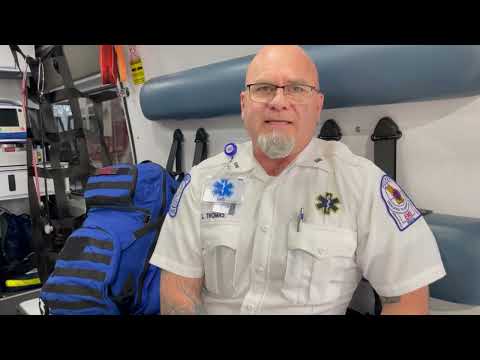
The program was carrying a two-unit supply of packed red blood cells and two units of fresh frozen plasma when crews responded to the crash, department staff members said during a recorded debrief. "We pulled up on scene and found a motor vehicle crash with an ejection. Fire crews are already, establishing IVs and getting her packaged up and ready to go," Staff member 2 said, describing the initial scene.
An ambulance was already on scene when Cobb County responders arrived, and a responder said they retrieved a cooler and equipment needed to give blood products. "I gave the first unit of packed red blood cells. I then finished flushing the line out," Staff member 1 said. After blood products were given, the patient27s blood pressure rose and she became responsive to voice, staff said.
Crews also gave 2 grams of tranexamic acid, a medication that helps limit internal bleeding, one staff member said. "I gave TXA. It's a clotting agent to prevent her from bleeding internally if there were any injuries," Staff member 3 said.
A colleague identified in the exchange only by the first name David was reported to have administered blood products during the response; the transcript does not provide a last name or formal role for David. Staff member 3 said the responder team believed the patient likely would not have survived transport under prior practice: "I truly believe that this would have happened a week earlier, that she would not have made it to the hospital. I believe she would have probably expired during transport. And with the blood products being given, we were able to get her to the hospital and get her to surgery."
No patient name, age or condition after surgery was provided in the transcript. The department27s description includes the specific on-scene supplies carried (two units packed red blood cells and two units fresh frozen plasma) and the use of TXA for suspected internal bleeding. There was no discussion in the provided excerpt about changes to eligibility, protocols, training, or broader program rollout beyond the Feb. 14 start date and the single incident detailed here.
The department account indicates the prehospital transfusion and TXA were used as part of the emergency medical response; further operational details and any formal after-action reports were not included in the provided transcript.