Get Full Government Meeting Transcripts, Videos, & Alerts Forever!
Get email alerts on the Midtown Cbd Establishment topic
No spam. Unsubscribe anytime.
Board establishes Midtown Community Benefits District after council walk‑on amid mixed community feedback
Summary
The Board approved creation of the Midtown Community Benefits District and its management authority following a walk‑on request; council and administration said the district provides cleaning, greening, workforce development and vandalism removal services, and community members raised questions about priorities and service focus.
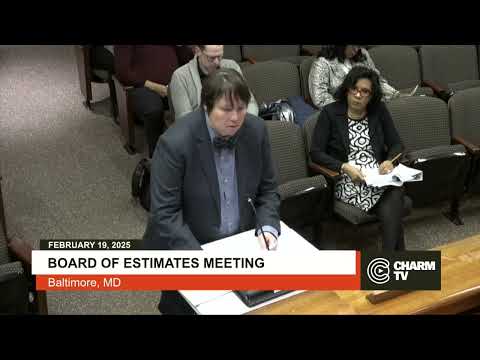
The Board of Estimates on Feb. 19 approved legislation to (re)establish the Midtown Community Benefits District (CBD) and its management authority following a walk‑on request from the administration and Councilman Zach Blanchard.
Councilman Blanchard summarized the legislation and its history, saying Midtown’s quadrennial reauthorization did not reach final passage in the prior council term and that, under legal guidance, the current action must proceed as a new establishment requiring a vote tied to parcel ballots if initiated by petition. Blanchard said the bill that reached first reader included only minor changes from the original 1996 statute.
Eric Souza, President, Midtown Community Benefits District, told the board the district’s service area stretches from North Avenue to Washington Monument and from Guilford to Madison Park and serves roughly 20,000 residents. He described operational services: trash can removal, vacuum services, bulk trash and alley cleaning, broom-and‑dustpan street cleaning, bulk graffiti removal, tree planting (178 trees in 2024), watering and tree maintenance, and a workforce development pipeline that partners with Living Classrooms and Roca. Souza said Midtown employs about 40 full‑time staff with an additional 15 seasonal workers for warmer months and that administrative costs are at most 3% of Midtown’s annual budget.
Blanchard and the administration acknowledged written and spoken community testimony both supporting and criticizing Midtown; some residents told the council the district had shifted away from “clean, green and safe” toward broader economic development and vibrancy programming. Blanchard said a 2025 strategic‑plan process would begin after authorization to solicit resident input and adjust priorities as needed.
Board members asked for specifics on services and workforce pipelines; Midtown representatives described a CRM‑based service request portal, a 48‑hour target turnaround for bulk trash pickup for Midtown‑handled requests, and pilot work on private property graffiti removal under release forms. The board approved the item by voice vote.