Get Full Government Meeting Transcripts, Videos, & Alerts Forever!
Get email alerts on the Health Insurance Pharmacy topic
No spam. Unsubscribe anytime.
Mercedes ISD hears pharmacy benefit review after spike in drug costs; pharmacy import program credited with savings
Summary
Pharmacy benefit managers told trustees the district saw a quarter-to-quarter spike in prescription costs driven by high-cost oncology and biologic drugs and that the district’s international importation program, prior authorization and targeted interventions are already cutting net costs.
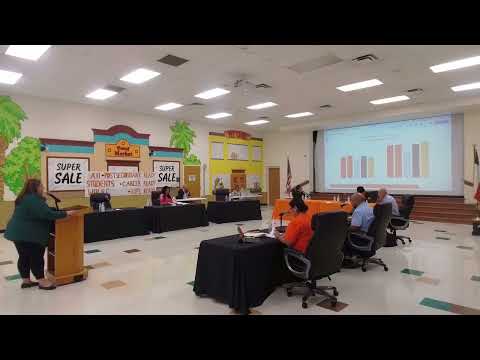
Mercedes ISD trustees received an in-depth briefing from the district’s pharmacy benefit manager and benefits consultant on prescription drug spending and the district’s health-insurance fund. The presenter said quarterly drug costs showed an unusual spike in the fourth quarter driven primarily by higher-priced generic fills for a lenalidomide product (generic for Revlimid) and new costly biologic therapies for inflammatory conditions, plus increased spending on GLP-1 agents used for diabetes and weight management.
Patrick McLaughlin, presenting on behalf of the pharmacy benefit manager, said the district’s gross prescription payments for the 12-month period totaled about $1.4 million. Manufacturer rebates—delivered quarterly—totaled roughly $450,000 for the year, bringing the net prescription cost to about $1.0 million. He identified three main drivers of a $100,000 increase between Q3 and Q4: a single member’s lenalidomide fills that cost more due to supply and sourcing changes; increased utilization or initiation of new biologic therapies for arthritis/psoriasis; and prescriptions related to insulin stimulants/GLP-1 weight-loss and diabetes medications.
McLaughlin described four cost-control tools already in place: (1) an international importation pharmacy program that routes certain high-cost medications through vetted foreign suppliers to obtain lower unit prices; (2) a prior-authorization (PA) process that checks clinical indications against national guidelines (FDA, AMA, specialty society) and stops claims that do not meet criteria; (3) targeted interventions for the plan’s highest-cost members (the top 15 members accounted for approximately 47% of total drug spend); and (4) a pilot to use federal 340B pricing pathways where appropriate.
McLaughlin said the importation program has shown early savings: moving selected high-cost prescriptions to international suppliers produced immediate per-prescription savings (in January the program generated approximately $9,500 in savings after the program resumed). He described operational headwinds: a Canada Post strike in November–December interrupted shipments and temporarily paused the program, and a generic supply shortage raised the cost of a lenalidomide fill for one member in Q4. McLaughlin reported steps taken to restore lower cost sourcing and that projected annualized savings from addressing the top five high-cost members could approach $187,000.
At the close of the pharmacy presentation, CFO Sylvia Garza briefed the board on the district’s midyear budget and health insurance fund status. Garza said the district’s health-insurance fund carried an assigned fund balance of $869,007.56 for 2023–24 but showed a midyear deficit trend; January claims alone exceeded $630,000 and the district provided an interfund transfer of about $350,000 from the general fund to cover January claims. She reported an updated projection showing the health insurance fund deficit growing through the midyear and said the district is pursuing both midyear cost controls and additional steps for the 2024–25 plan year. Superintendent Dr. Clinton and trustees said staff will continue to implement the pharmacy interventions and report back on realized savings.
No formal policy change or board-level amendment was adopted during the presentation; trustees asked staff to continue vendor coordination, member outreach for the international program, and work with Valley Risk Consulting and the benefits consultant to protect members while controlling costs.
Votes or budget amendments tied to health-insurance funding were not recorded at this presentation; CFO noted a likely need for a year-end budget amendment if midyear trends continue.