Get Full Government Meeting Transcripts, Videos, & Alerts Forever!
Get email alerts on the Land Use Regulation topic
No spam. Unsubscribe anytime.
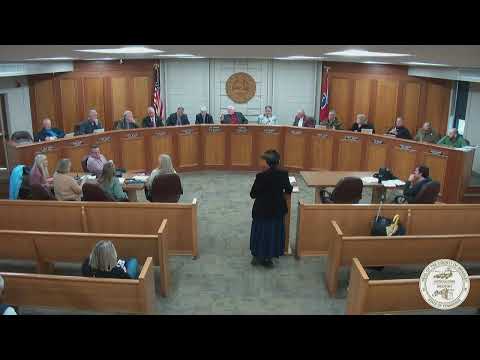
Commissioners table proposed cut to beer-permit setback after public comment, send measure to legal committee
Summary
A proposed resolution to shorten Bradley County's beer-permit distance from schools, churches and similar public gathering places prompted public testimony and commissioner debate about measurement method; the commission tabled the resolution and directed legal and legislative staff to draft precise language.
A resolution proposing to change Bradley County's beer-permit application procedure drew multiple public comments and extended discussion before the commission voted to table the measure and refer it to the legal and legislative committee.
The resolution, introduced by Commissioner Howard Thompson, would have set a 185-foot distance restriction between premises licensed to sell packaged beer and schools, churches and other public gathering spaces as stated in the motion presented to the commission. Speakers at the meeting said some businesses on U.S. 64 require a shorter setback to economically operate a convenience store or restaurant; one resident asked the commission to match the City of Cleveland's shorter internal standard.
County staff and commissioners queried the proposal on several technical points: the historical county distances (the record cited a 2008 change from 1,000 feet to 750 feet), whether prior requests to shorten distances had been made, and, centrally, how the county measures the setback'''"door-to-door" (from building entrance to building entrance) versus lot line/property line measurement. County legal staff said the beer board applies whatever regulations the commission sets, and that there is no administrative variance procedure: failure to meet the numerical distance is a disqualifier.
After discussion, Commissioner Alford moved to table the resolution until staff could provide clarifying language on measurements; the motion to table passed on roll call (10 yes, 4 no). Commissioners asked that the legal and legislative committee work with county staff (County Attorney/Crystal Freiburg and others named in the meeting) to draft precise measuring language and to consider alternatives to the proposed distance (examples cited in discussion included 85, 95, 250 feet). The commission also requested the county attorney provide the historical rules/regulatory language showing how measurement was handled in prior cycle changes.
Ending
Commissioners set the next step: legal and legislative will review the resolution wording and measurement rules, return clarified language, and bring the matter back to committee and the commission for further consideration.