Get Full Government Meeting Transcripts, Videos, & Alerts Forever!
Get email alerts on the Code Enforcement Fence Overgrowth topic
No spam. Unsubscribe anytime.
Magistrate denies continuance, orders compliance at Jensen Beach property after trustee objects over public‑records timing
Summary
Trustee Eric Ott objected that public-records and notice timing left him disadvantaged, but the magistrate admitted county evidence and ordered So to Trust to correct overgrowth, trash and fence permit issues by March 31, 2025, with a $100-per-day fine for continued violations.
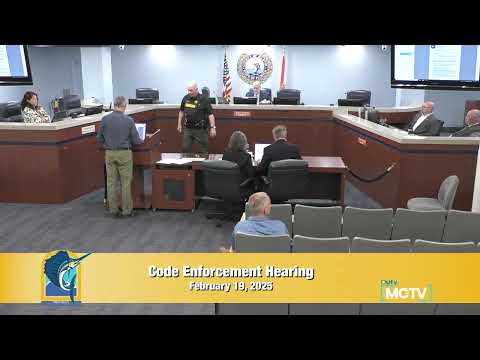
A Martin County special magistrate on Feb. 19, 2025 rejected due‑process objections from the trustee of a Jensen Beach parcel and ordered the trustee to correct overgrowth, trash and fencing violations by March 31, 2025 or face civil penalties.
Tamika Bush, a county code-compliance investigator, told the magistrate that staff inspected the property at 1507 Northeast Satong Avenue and found overgrowth, trash and a fence installed without a current permitted status. Staff marked several photographs and permit-history screenshots as evidence and issued a notice of violation Nov. 5, 2024 and amended notices that culminated in the Feb. 19 hearing. County staff posted the property and reissued an amended notice after a return-receipt issue.
Eric Ott, appearing as trustee for So to Trust, objected and asked for a continuance, saying he had submitted public-records requests and that several requested records were produced only the day before the hearing. Ott argued the amended notice and a “notice to abate” requirement meant he was entitled to at least 15 calendar days’ notice; he said he was “at a huge disadvantage here” without the records. He also contested the county’s characterization of fence work and permit history.
The magistrate explained that the code-enforcement hearing process differs from circuit-court discovery and that due process in this forum requires notice and an opportunity to be heard. The magistrate allowed both county exhibits and the trustee’s exhibits into the record, including an email exchange about fence panels and permit requirements. Staff and the trustee disputed whether fence panels were replaced or reinstalled; county staff said a 2016 fence permit had expired and that some new panels were present.
After hearing testimony and reviewing emails between county staff and the trustee, the magistrate found the violations existed and set a compliance deadline of March 31, 2025. The order imposes a $100-per-violation, per-day fine for continued noncompliance and awards the county $575 in investigative costs. The magistrate specifically addressed the due‑process objection, saying the trustee had an opportunity to be heard and that code enforcement hearings do not follow formal discovery rules. On the record the magistrate said: “Due process in this case constitutes basically an opportunity to be heard.”
The trustee’s communications with county staff—including email exchanges about whether replacing existing fence panels required a permit—were admitted as exhibits. County staff also noted that the property-appraiser maps and county roadway delineation showed areas where maintenance responsibility fell to the property owner under county code. The magistrate said the property owner is responsible for maintenance up to the roadway edge in primary-service districts and ordered remediation consistent with county code.