Get Full Government Meeting Transcripts, Videos, & Alerts Forever!
Get email alerts on the Pedestrian Safety topic
No spam. Unsubscribe anytime.
Public Works director outlines pedestrian‑safety snapshot and priorities for Gaithersburg
Summary
Public Works Director Brian Fields briefed the Planning Commission on a 10‑year pedestrian crash review, current city efforts and potential next steps including a $450,000 federal Safe Streets grant, a Russell Avenue shared‑use path and other engineering, education and enforcement measures.
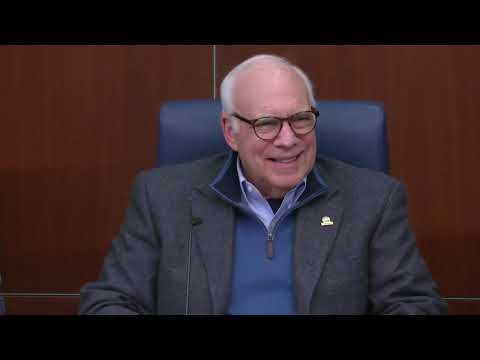
Brian Fields, Gaithersburg’s new Public Works director, presented a citywide pedestrian‑safety overview at the Planning Commission’s Feb. 19 meeting, summarizing a 10‑year crash review, current programs and recommended next steps.
Fields said the city examined a 10‑year crash period and found 91 pedestrian crashes within Gaithersburg city limits, including 10 fatal crashes. He told the commission that six of the 10 fatalities occurred at night and that alcohol was present in two crashes. “Our goal is to have safe streets for all users of the city's transportation system, including pedestrian, cyclists, drivers, transit users, and those performing construction or maintenance,” Fields said.
Fields described existing and planned city activities across the traditional “4 E’s” (education, engineering, enforcement and emergency medical services). Current engineering efforts include street resurfacing that upgrades crosswalks and curb ramps, annual striping maintenance, site‑specific improvements in response to complaints, implementation of new development standards and capital projects such as a Russell Avenue shared‑use path now in design. He said the city has about $20 million planned over the next five years for pedestrian and intersection improvements across multiple projects.
Fields described a new 20‑mph pilot program for select neighborhoods and noted the city’s LED streetlight conversion has improved lighting at many pedestrian crossings. He also described a federal Safe Streets and Roads for All grant application of roughly $450,000 intended to support a comprehensive safety plan and recommended improvements; the grant’s status was described as uncertain pending federal award decisions.
The director discussed several countermeasures and relative costs: marked crosswalk maintenance (hundreds of dollars), raised crosswalks and flashing beacons, rectangular rapid flashing beacons (RRFBs) as pedestrian‑activated warning devices, new traffic signals (costing upwards of $500,000) and pedestrian bridges (multi‑million dollar range). Fields specifically noted that the crosswalk at the Bloom Park entrance on Watkins Mill Road could be a good candidate for an RRFB given nearby condominium and park activity.
Fields said retrofitting high‑speed arterial roads such as parts of Great Seneca Highway and sections of 355 is costly and complex, and that many severe crashes occur on higher‑speed roads that were built for a different era of development. He cited three broad root causes for pedestrian hazards in Gaithersburg: vehicle speed, cultural/behavioral issues (distracted driving, poor pedestrian habits, impairment) and incomplete or inconsistent pedestrian infrastructure.
Commissioners and staff discussed sidewalk gap mapping, safe route‑to‑school projects and local examples of traffic‑calming and raised crosswalk installations. Fields said the city has a sidewalk gap map and planned sidewalk work in the proposed fiscal‑year 2026 budget; he also noted a safe‑routes‑to‑school project to implement traffic‑calming and new sidewalks around three local schools.
Fields said police data show an average of about 34 DUI arrests per month in Gaithersburg and that bicycle and pedestrian severe crashes are more common on higher‑speed county and state roads where infrastructure is less protective. Commissioners encouraged exploring both hard engineering solutions and lower‑cost, community‑oriented design experiments and said they want staff to continue tracking best practices.
Fields closed by urging more resources to accelerate implementation: additional staff, capital funding for sidewalks and traffic calming, and coordinated advocacy for improvements on state and county roads. No formal action was taken by the commission; the briefing was presented for information and to inform future decisions.